You are viewing 1 of your 1 free articles
Experts believe minor building works and self-certification changes could cut approval delays but raise risk of non-compliance
Plans to cut the workload of the Building Safety Regulator (BSR) could mean many high-rise projects are spared a three-month wait for sign-off, but may also raise the risk of non-compliance, experts have told Inside Housing.


 Experts believe minor building works and self-certification changes could cut approval delays but raise risk of non-compliance #UKhousing
The government revealed this month that it is mulling over two reforms to building safety regulations, which it claims will save time and costs for building owners.
One is to downgrade the category of building work relating to individual flats and small changes to communal areas, which would mean these need less paperwork to go through the BSR, which deals with all works in high-risk buildings.
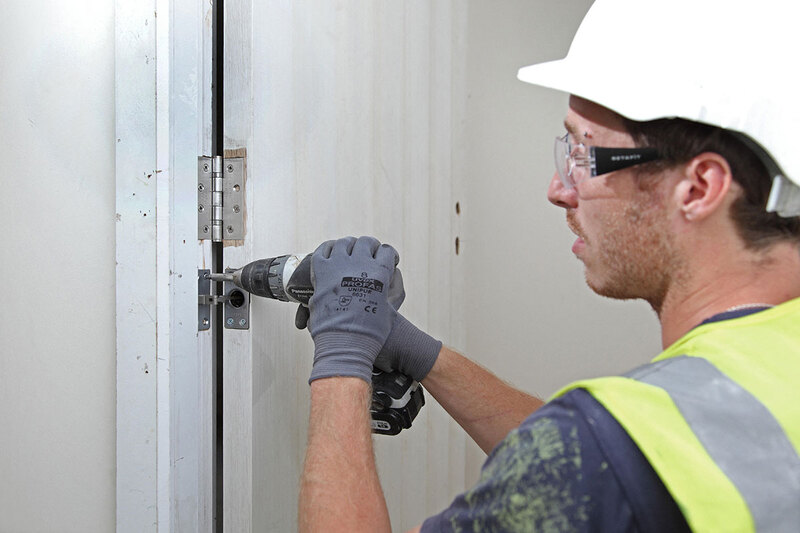
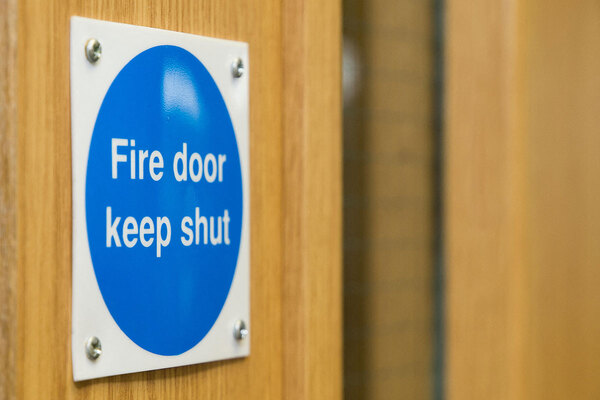
The other is to bring in self-certification schemes for fire door works and competent person schemes for minor building works, which would allow these to bypass formal building control altogether.
Officials claimed that the changes would still maintain standards and that making the BSR’s workload “proportionate” would not compromise safety.
But while some gave support to the move, others pointed out the potential trade-offs it could bring at the BSR, which was set up following the Grenfell Tower fire to strengthen building safety standards.
Read more


Michael Wharfe, a partner at Devonshires law firm, highlighted that the move comes after another consultation on scrapping Gateway 2 requirements for phone masts and fibre-optic cable installations, which recently closed.
He said that consultations on these reforms are “sensible developments which show that industry pushback is being appreciated”.
“What we have experienced is that the new higher-risk building work regime has been pulling disproportionate amounts of work into the BSR’s approval remit, which has contributed to the significant, well-publicised Gateway 2 delays,” he added.
“There are various types of work that are common and low-risk, which do not reasonably require Gateway 2 applications with the full suite of prescribed documents.”
If the plans go ahead, the BSR will be able to ask for extra information for minor applications if needed, and regulations covering active fire safety measures in communal areas would not be affected, Mr Wharfe explained.
In his view, the changes would reduce the administrative burden for many projects stuck in the Gateway system – though they would not bring down overall application numbers.
Instead, Mr Wharfe believes the biggest impact would come from a competent persons scheme, though this would take a long time to set up and need “extensive evidence gathering” to make sure there were safeguards.
He said that while self-certified work can be carried out at high-rise blocks in theory, it is usually not allowed in practice and happens infrequently.
“The real benefit would come from a combination of these proposals and suitable competent persons schemes, which would remove many projects from the Gateway system completely,” he told Inside Housing.
“In doing so, the BSR would be reviewing much fewer applications and those applications would not be subject to the statutory 12-week decision period – meaning works could start on site almost immediately.”
Tom Thurlow, partner at law firm Weightmans, had a more mixed response.
“Reducing BSR approvals and cutting paperwork should in theory help ease delays and improve the flow of projects, but as always, we will have to wait and see whether the ‘good in theory’ ideas result in ‘good in reality’ outcomes,” he said.
“There is also of course always the risk that they come with a trade-off, with less oversight increasing the risk of non-compliance: ironically (perhaps) the very thing the regime changes were introduced to deal with in the first instance.”
Mr Thurlow said the risk could be reduced through a centralised register of construction products and fire safety testing, including fire doors.
But he cautioned that any predictions are hampered by the fragmented approach to regulation.
“More broadly, though, it seems that many post-Grenfell intended reforms are still being developed in parallel but not necessarily in tandem: until there is a clearer, more joined-up framework, any view on their overall impact has to be cautious,” he added.
Giles Grover, co-lead at End Our Cladding Scandal, also warned about the potential risks of the change.
“Speeding up remediation is important but must not come at the cost of safety,” he said.
“‘Proportionality’ remains a double-edged sword that risks causing loopholes without robust safeguards and firm oversight.
“Over the last three years, we have seen the harm caused by that lack of oversight at the 4,500-plus buildings... where developers allowed to mark their own homework and continue their unrelenting focus on their bottom line over safety.”
As an example of issues with the current regime, he said that getting regular door checks and fixing problems quickly, as required under fire safety regulations, is “impossible” in blocks covered by developer remediation contracts where developers are liable for costs.
Mr Grover also said it is not clear how the changes would make it faster to put in alarm systems to replace waking watches.
Alarm installations are considered high-risk under building safety regulations, meaning the work needs to go through the BSR, but are a less costly way of ensuring fire safety in buildings with unsafe cladding than waking watch patrols.
“We welcome the principle of targeting resources effectively and where the risk is highest,” Mr Grover said.
“But these proposals look like they will do little to address the lived reality of leaseholders and residents trapped in unsafe homes, still facing spiralling costs and enormous delays, and still facing a merry-go-round of buck-passing when trying to find out when they might be able to move on with their lives.”
Sign up to Inside Housing’s Building and Fire Safety newsletter
Sign up to Inside Housing’s fortnightly Building and Fire Safety newsletter, now including a monthly update on building safety from Inside Housing’s contributing editor Peter Apps.
Already have an account? Click here to manage your newsletters.
Sign up for the Warm and Safe Homes Summit 2026
Taking place on 15 April 2026 at 155 Bishopsgate in London, the Warm and Safe Homes Summit is a must-attend event for all those responsible for improving the quality, safety and energy efficiency of UK homes for tenants and residents.
Across the day of expert-led sessions, panels and case studies, delegates will deep-dive into the latest strategies for decarbonising housing stock, strengthening building safety culture, driving tenant-centred retrofit programmes and embedding robust compliance and governance practices.
Attendees will also explore practical approaches to funding, procurement and data-led asset management to support long-term sustainability goals.
The summit will bring together more than 500 housing professionals from across asset management, sustainability, building safety, tenant engagement, procurement, governance and compliance.
Related stories