You are viewing 1 of your 1 free articles
A last push for the reclassification of housing as essential infrastructure
Next week’s Spending Review will seal the fate of the affordable housing sector for the foreseeable future. A group of six housing partnerships met with a major investor, a lender, a representative of the business community and a senior economist to see if there is a unified call for housing to be reclassified as essential infrastructure. Inside Housing editor Martin Hilditch reports


 A last push for reclassification of housing as infrastructure #UKhousing
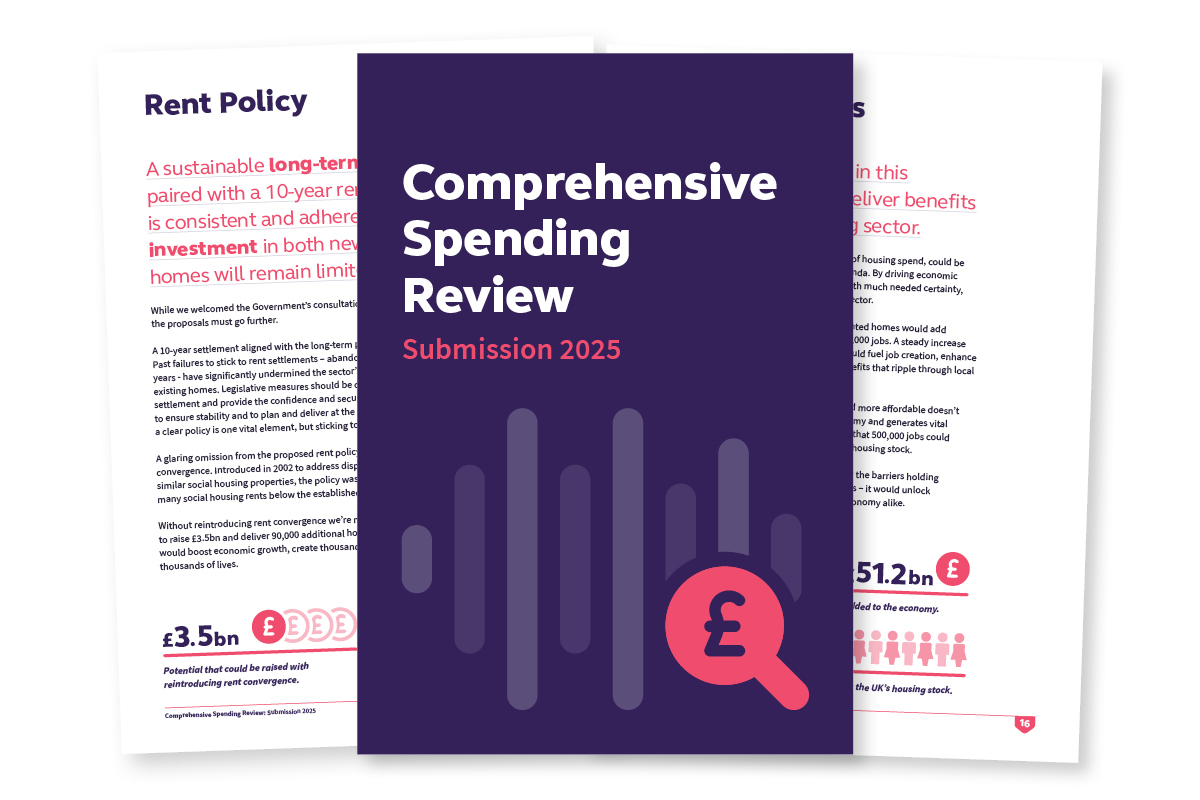
Last month, six housing partnerships across England came together to outline their vision for the long-term future of housing ahead of the Spending Review.
It was the first time that these partnerships, in the devolved regions across Yorkshire, Greater Manchester and Merseyside, along with Homes for the South West, have joined up to make a Spending Review submission. Between them, the members own or manage more than 1.7 million homes across the UK, so they are key players in driving the government’s ambitions.
But they weren’t finished when they sent the document off to the government. Shortly after publishing their proposals, they aimed to show that it isn’t just housing partnerships who back their central thesis – that there needs to be more long-term funding certainty if the government is to deliver on its 1.5 million homes target. In fact, they assembled a group including investors, lenders, business and a former joint head of the UK Government Economic Service to talk through them in a bid to amplify their message.
Read more



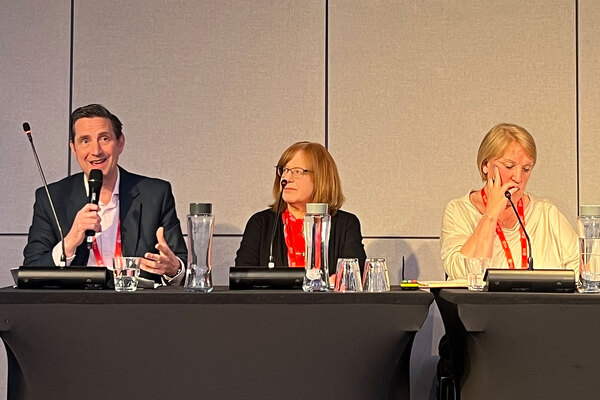
The discussion, chaired by Inside Housing, focused on one ask in particular: the call for the reclassification of housing as infrastructure spending. It is the most prominent ask in the groups’ joint submission. It argues that reclassification is “the only way we can deliver the pipeline of new homes needed, alongside the decarbonisation of existing homes and the renewal of our towns and cities”.
Housing, it states, is “fundamentally” essential infrastructure. As things stand, while major projects relating to energy, transport, water and waste are classed as nationally significant infrastructure projects, housing is perpetually reliant on shorter-term funding cycles.
The partners see reclassification as essential to driving additional external investment in the sector.
It could also change the government’s thinking about the sector from a cost to be endured, to investment linked to the UK’s long-term success.
In some ways, it could be argued that while the submission contains big ideas, it is really a cry for stability, predictability and scalability.
So, was there unity in the room? What are the key asks from the various partners heading into the Spending Review? Here are the arguments that each player thinks should sway the Treasury.
The housing association chief executive
Charlie Norman, chief executive of Mosscare St Vincent’s Housing Group, and chair of the Greater Manchester Housing Partnership, opens proceedings with a passionate call for change.
The reclassification of housing as infrastructure spend is essential to “help support proper place-making and place-shaping, increase investment and jobs, and drive economic growth”, she argues.
“Housing being classified as infrastructure spending will help that longer-term plan, the confidence of the board, the confidence of investors and stop the stop/start cycle of bidding for money that just drives up costs and reduces confidence. We really do think this is key to unlocking economic growth and cost pressures on the system.”
She also touches on one of the other key asks in the submission, that the current “cocktail of funding streams” for housing should be simplified into just two clear categories – one dedicated to building new homes and another targeting investment in existing homes.
“The fact is that there are just so many pots of money accompanied by that stop/start bidding cycle,” Ms Norman adds. “It’s so complex and unhelpful. It would be easier and better to streamline funding, to make things simpler, faster and a smarter investment proposition.”
The investor
With the joint submission claiming that the reclassification of housing as infrastructure spending is crucial for driving additional investment, there is a lot hanging on the opinion of the next guest today.
Julia Goldsworthy is the head of social impact investment at Legal & General, and she says the housing partnerships’ call for long-term certainty is “in very high-level terms absolutely what investors are looking for as well”.
Outlining some of the government’s housing goals, she states that “all of that is going to need capital, and there is not going to be enough in the public purse to deliver it on its own, so accessing capital from long-term institutional investors is going to be essential to maximise scale and impact”.
Ms Goldsworthy strongly agrees that reclassification of housing as infrastructure is an important step for the government to take. In fact, she rapidly reels off “half a dozen or so ways in which classifying housing as infrastructure could be a key tool” in creating the right conditions to help institutional investors commit even more strongly to the sector.
These include “perception and signalling”, with reclassification enabling “institutional investors to view housing as a longer-term, more stable investment, which then lowers the risk and makes investment more predictable”.
Another benefit would be “recognising that housing and more conventional infrastructure need to go hand in hand to create and sustain communities”.
It opens up some of the pathways to explore the kind of funding models that are needed to help deliver that infrastructure and housing together and most importantly get the sequencing of that delivery of infrastructure and housing the right way round to help keep communities and residents on board, she says.
This isn’t just about how individual investors behave, she adds. “It’s about creating the opportunities for them to move in concert and collaborate.”

The lender
Paul Eyre, head of residential and housing finance at NatWest, says he has a personal buy-in to the discussion today.
“I am a child of social housing,” he states. The stability it gave his family had all kinds of benefits to his education and a knock-on positive impact on their financial and mental well-being.
Anything that reduces long-term certainty in the sector “will mean that housing associations, who by their very nature are conservative organisations because they have to be, will just not do a bunch of things that they maybe would do if they had certainty”.
However, he says that reclassification would not change the way that NatWest viewed the sector. “We already view housing as infrastructure,” he says. “It is something that’s built for the long-term.”
Perhaps it is time the government caught up with this view?
“Anything that will give them [housing associations] more certainty and enable them to do more for the families and communities that really need it up and down the country gets my vote,” Mr Eyre adds.
The business community
Mark Goldstone, policy manager – head of competitiveness at the Confederation of British Industry, thinks there is certainly a need to change the conversation when it comes to housing – or, perhaps, to make sure housing is acknowledged as essential infrastructure when it comes to planning the future of our towns and cities.
There are “layers and layers of growth strategies, from towns, to cities, to regions, all the way up to national strategies”, he says. “All of them talk about job creation. I don’t think any of them talked about housing. So, if we’re going to create all these jobs, where are people going to live? From a practical perspective we need to evolve that conversation with the wider economic growth conversation.”
And like all the participants in the room today, certainty and stability are two words he would like the government to take more steps to deliver in the Spending Review.
“If you can provide that certainty for the long term, allow businesses to plan, it gives them greater confidence, allows firms to invest in supply chains, in their workforce, knowing there is a future pipeline of work.”
The economist
Vicky Pryce, is the chief economic advisor at the Centre for Economics and Business Research (CEBR), and former joint head of the UK Government Economic Service. Given she was one of the commissioners on the Radix Big Tent Housing Commission, which urged the government to “consider housing as critical infrastructure for the country” in order to unlock greater investment, her support for reclassification is probably a given.
Today, she also wants to talk about the tenure of homes delivered – in particular, homes for social rent.
Funding 90,000 social homes a year – a figure that is widely recognised in the sector, and is what Inside Housing’s Build Social campaign has been calling for in England – would be net positive for the Exchequer in the long-run, she argues. Last year, CEBR research for Shelter and the National Housing Federation suggested that the net impact for the Exchequer of funding 90,000 social homes a year is expected to be positive over 30 years, “with a net benefit of £11.9bn”.
She compares this to the “few billion benefits in GDP that we would get from the latest India/UK trade deal”.
“You can see that building [social] homes tops that many times,” she adds.
Today’s conversation started from a show of unity between six housing partnerships, but it demonstrates that there is support among investors, lenders and businesses for greater certainty and reclassification. The next call is the government’s – but the message from the sector couldn’t be more clear.
Recent longform articles by Martin Hilditch
How Jane Porter helped to shape the modern housing sector
Southern Housing’s chief operating officer announced that she was stepping down from her role late last year. As she prepares to leave, Martin Hilditch speaks to her about a career which has done much to shape the modern affordable housing sector
Ian McDermott talks Peabody’s big merger and the future of social housing
Ian McDermott, chief executive of Peabody, sits down with Inside Housing’s editor Martin Hilditch to talk mergers, housing management at one of the sector’s biggest landlords and how the sector can build more homes
‘The North really needs that voice’: 50 years of the Northern Housing Consortium
2024 marked the 50th anniversary of the Northern Housing Consortium. Chief executive Tracy Harrison talks about her proudest achievements with Inside Housing editor Martin Hilditch – and what the future holds for the North’s housing providers
Sign up to our Best of In-Depth newsletter

We have recently relaunched our weekly Long Read newsletter as Best of In-Depth. The idea is to bring you a shorter selection of the very best analysis and comment we are publishing each week.
Already have an account? Click here to manage your newsletters.
Related stories