You are viewing 1 of your 1 free articles
Giant landlord apologises to family of resident who took his own life after noise complaints
A large housing association has apologised to the family of a vulnerable resident who ended his own life due to long-running mental health issues that were affected by noise nuisance.


 A large housing association has apologised to the family of a vulnerable resident who ended his own life due to long-running mental health issues that were affected by noise nuisance #UKhousing
The Housing Ombudsman has made a finding of severe maladministration against Clarion, arguing that the landlord lacked consideration of the resident’s vulnerability when handling his complaints about noise, which led to the resident suffering over nine months.
In January 2021, the same month the resident first reported noise issues, he attempted an overdose, which he blamed on the noise nuisance he was suffering. The resident’s complaints were related to wooden flooring being laid above him and children jumping.
Despite the landlord recording vulnerabilities for the London resident, it did not tailor its responses effectively, the ombudsman found.
Clarion said it offered its “heartfelt condolences to the family and an unreserved apology for all shortcomings” in this case, and has made a number of improvements to its services regarding how it deals with vulnerable residents and noise nuisance.
Read more

The coroner’s inquest, highlighted by the Housing Ombudsman, found that the resident did not leave a note of intent, but there was a history of overdose by medication because of the noise issue. There was no prevention of future deaths order made for the landlord and the coroner concluded that the resident took his own life.
In its first response to the resident, the ombudsman explained that Clarion had sent a standard anti-social behaviour (ASB) letter, agreed to speak to the neighbour and created an action plan.
The neighbour agreed to having carpet fitted, but the resident soon said this made little difference. However, Clarion did not conduct a risk assessment.
The resident’s GP wrote to Clarion at this time, but the landlord was unable to find the letter due to a staff member leaving their post.
Two months after the initial complaint, a tenancy sustainment officer had weekly contact with the resident. In the same month, the landlord issued its stage one response which acknowledged the issues and used the weekly contact as an opportunity for updates regarding the complaint.
The association said it would not install sound monitoring equipment due to the coronavirus lockdown occurring at the time. The ombudsman said this was not a reasonable position to take as government guidance stated that landlords could carry out repairs and safety inspections.
When the resident filed two more noise reports, he was once again sent the standard ASB letter he was previously sent. Over the course of four months, the resident completed 18 noise reports and noise recordings were sent to Clarion. Due to some software issues, not all were listened to.
A visit to the property by the association found “considerable transmission of both noise and movement from the flat above into the resident’s flat”, but nothing more was done.
With issues still ongoing, the mental health team expressed concerns to Clarion about the resident. Throughout the complaint, the resident complained of worsening mental health, including anxiety and depression, stress and not eating or sleeping.
In August 2021, the month before the resident ended his life, the landlord installed some sound monitoring equipment for a short period before removing it and taking no further action. It also did not act on the resident’s rehousing request.
Ten days before the resident ended his life, Clarion closed the case.
The Housing Ombudsman ordered a senior leader at the association to write a letter of apology to the resident’s family, as well as for the landlord to self-assess against the watchdog’s recent noise complaints report. The events in this case predated the report, which was published last year.
The ombudsman also ordered the landlord to review its vulnerable resident’s policy.
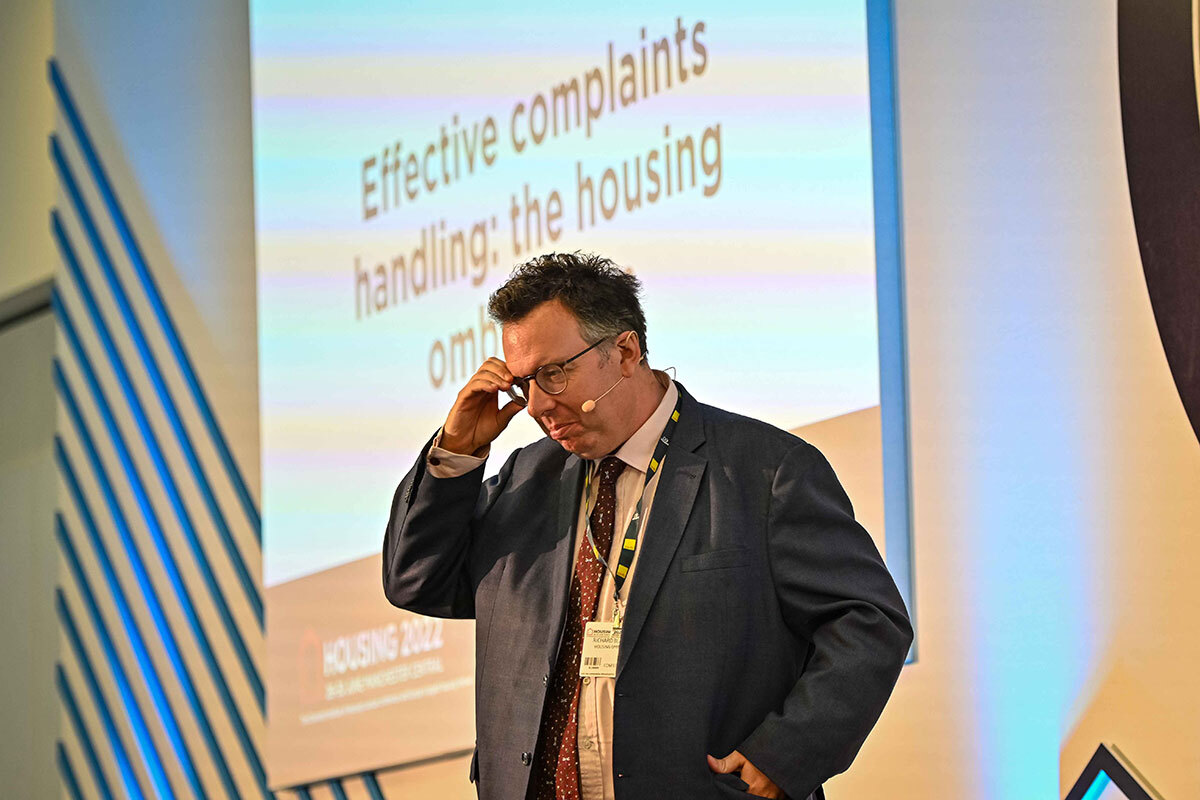
Housing ombudsman Richard Blakeway said: “This is a deeply distressing case.”
He said that Clarion staff have “sought to learn lessons following these tragic events” and that “this tragic case” shows why the recommendations from the watchdog’s noise complaints report are “so important for landlords to urgently address”.
Mr Blakeway added: “Unfortunately, evidence across our casework shows that noise can sometimes be pushed to one side but for residents, this is something that can engulf them.
“In this case, the landlord repeatedly failed to apply a considered and tailored approach to the resident, despite a previous attempt to end his life. That should have been a warning but instead the landlord did not go far enough.”
The ombudsman also found maladministration in how the association handled the noise aspect of the complaint.
In its learning statement, Clarion said it had apologised to the resident’s family, made changes to its automated letters process and has produced an action plan in relation to noise nuisance.
Clarion said: “We offer our heartfelt condolences to the family and an unreserved apology for all shortcomings in the service we provided the resident. We recognise that our communication process should have been far better and we accept the recommendations of the ombudsman with humility.
“The case and actions taken have been reviewed by the senior management team, and our chief customer officer has personally written to the family.
“We continue to make improvements to how we record and act on vulnerability of our residents, and we have reviewed our automated letters process to ensure an appropriate response is issued in line with our vulnerability support policy. Our tenancy sustainment and welfare team, who worked with the resident alongside external agencies, also offer advice to our residents and signpost to extra support when required.
“We have also amended our management transfer policy so that includes a broader consideration of risk which better takes into account exceptional circumstances.
“We have reviewed our approach and produced an action plan to enhance our procedures so that building noise cases of this kind are separated from anti-social behaviour issues. These changes have been rolled out across Clarion.”
The association said it has also set up a new complex case action group to help ensure record-keeping and support is co-ordinated, so that prompt action can be taken and residents receive all the services they need.
If you or you believe a person you know is at risk of suicide, you can reach the Samaritans here – day or night, 365 days a year. You can call them for free on 116 123, email them at jo@samaritans.org, or visit www.samaritans.org to find your nearest branch.
Sign up for our tenancy management newsletter

Already have an account? Click here to manage your newsletters
Related stories