Scrapping stamp duty and council tax could fund additional 100,000 social homes over next decade, thinktank says
A new report has set out how scrapping stamp duty and council tax, and replacing them with a partly devolved annual proportional property tax (PPT), could pay for an additional 100,000 social homes over the next decade.


 Scrapping stamp duty and council tax could fund additional 100,000 social homes over next decade, thinktank says #UKhousing
The Centre for London thinktank believes introducing the levy on property wealth would free up homes, fund social housing and help renters save for deposits.
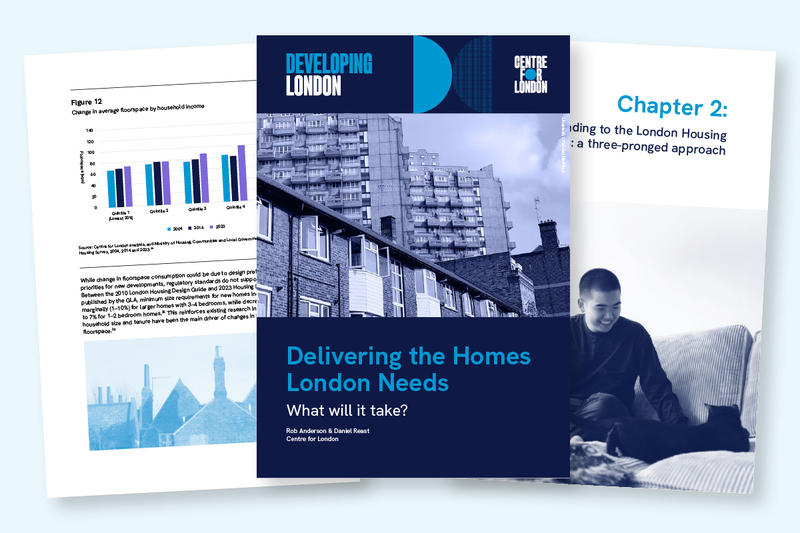
The report, Delivering the Homes London Needs: what will it take?, highlights how grant funding under the current model typically covers around 30-40% of the cost of an affordable home, with the remainder financed through borrowing.
This leads to some registered providers borrowing an additional £250,000-£300,000 per home to balance costs.
The thinktank has modelled a partially devolved PPT applying to all privately owned residential dwellings currently eligible for council tax, payable by the owner and excluding social homes.
Read more
The report states: “If grant levels set in November 2025 carry into the mayor’s allocation from the new London Social and Affordable Homes Programme 2026-36, this additional funding from a PPT added to the £11.7bn programme envelope could deliver around 9,400 social homes a year.
“By 2036, if PPT revenue rose at 2% annually, this could fund delivery of over 100,000 social homes over the course of a decade.”
Homeowners with the largest properties in the most expensive areas would pay the most tax under the proposed system.
PPT would be calculated as a percentage of the value of the home. On those worth up to £800,000, the average base rate of 0.39% would apply. This rate rises on higher-value homes, with those worth up to £999,999 paying an additional 0.01% charge.
For homes worth over £1m, an additional 0.02% increment is applied for every £200,000 up to a property value of £5m.
Under the proposals, a £500,000 home in Band D in Greenwich would have an annual PPT rate of 0.39%, or £1,950, saving £15,302 in the first 10 years compared with council tax and stamp duty land tax.
Rob Anderson, the director of research at the Centre for London and co-author of the report, said: “By every metric that matters, the housing crisis is at its worst.”
Private and social renters would no longer pay council tax, saving the typical renter more than £1,890 a year, according to the report. With no stamp duty, first-time buyers would save £8,593 across five years of ownership.
Those who are asset-rich but cash-poor, for example those downsizing whose homes have risen significantly in value, would be able to defer the transition to PPT for up to a decade and continue with council tax. The rest would be payable on the sale of the property.
Mr Anderson said: “It is widely acknowledged by economists and politicians from different parties that stamp duty has a disruptive effect on the housing market and both stamp duty and council tax act as an incentive to hold on to property.
“Removing stamp duty on ordinary movers [owner-occupiers moving into their primary home] would release an extra 79,000 homes a year, while raising funds for investment [in] social and affordable housing.”
The Centre for London is calling for help for first-time buyers to save the deposit needed to buy a home in the capital, which was at an average of almost £150,000 for those buying without family assistance in 2024. House prices in London have risen by more than 200% since 2002.
Mr Anderson added: “The problem cannot just be understood as a simple shortage in the number of homes.
“London can build more homes and it must. But if housing policy only focuses on increasing headline supply numbers and beating delivery targets, we risk missing the real problem: a housing system which is not delivering enough homes overall.”
Commenting on the report, Ian McDermott, chair of the G15 group of London’s largest landlords, said: “This is a thoughtful and ambitious report that reflects the scale and complexity of London’s housing crisis.
“One of its most important contributions is highlighting that the challenge is not only about the number of homes, but about who can access them and how housing is distributed across the city.
“The report rightly shows that many Londoners are experiencing worsening overcrowding, insecurity and unaffordability even where overall housing supply has grown. That underlines the importance of increasing the supply of genuinely affordable homes alongside wider housing reform.
“We particularly welcome the report’s focus on increasing social housing delivery capacity, improving grant flexibility, supporting acquisitions during market downturns, and creating more stable long-term funding mechanisms for affordable housing. London needs practical reforms that improve delivery across the whole system while ensuring social housing remains central to the city’s long-term housing strategy.
“The report also makes an important contribution to the debate on how housing and tax policy can better support mobility, affordability and long-term investment in housing.
“London’s housing market operates differently from the rest of the country, and there is a strong case for greater fiscal devolution so the capital has more flexibility to respond to its specific housing pressures and invest in the homes and infrastructure Londoners need.”
Sign up to Inside Housing’s Development and Finance newsletter
Sign up to Inside Housing’s weekly Development and Finance newsletter, featuring a round-up of business, development and regeneration news and analysis.
Already have an account? Click here to manage your newsletters.
Related stories