You are viewing 1 of your 1 free articles
Rent control could reduce housing benefit bill by £600m and increases should be capped at 2%, thinktanks say
Two new reports have called for rent control to be introduced at a minimum of 2%, which could save the government £600m on the housing benefit bill.


 Rent control could reduce housing benefit bill by £600m and increases should be capped at 2%, thinktanks say #UKhousingTwo new reports have called for rent control to be introduced at a minimum of 2%, which could save the government £600m on the housing benefit bill#UKhousing
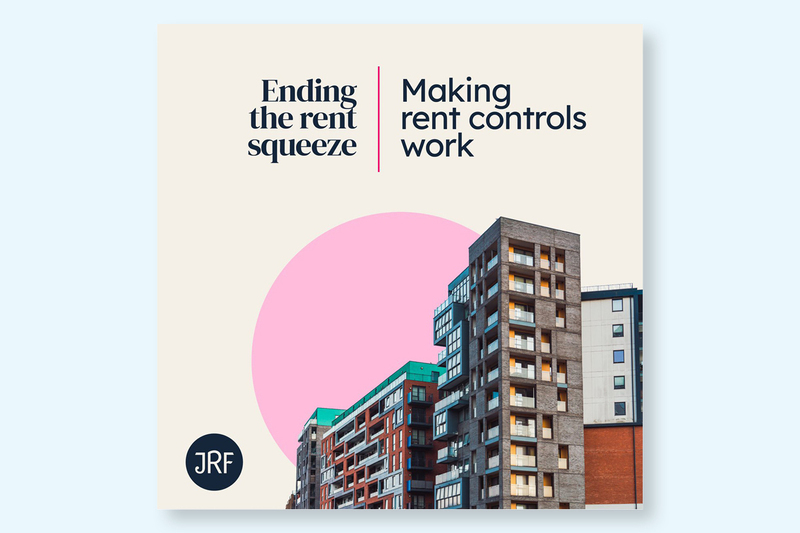
A new report by the Joseph Rowntree Foundation (JFR), How tax reform would make rent controls feasible to deliver, calls for rent control caps at Consumer Price Index (CPI) within tenancy, and CPI +2% between tenancies.
The thinktank’s modelling claims that over six years, this would be sufficient to fund the annual uprating of Local Housing Allowance (LHA) back to the 30th percentile of local rents, while still delivering more than £600m in net savings to the housing benefit bill in 2030.
The UK government is projected to spend over £70bn on housing support payments to private landlords between 2021 and 2026, primarily through LHA.
This subsidy, intended to help low-income tenants, is six times higher than the previous £11.5bn invested in new affordable housing over the same period.
The JRF believes this change would make renting households an average of almost £1,200 per year better off by 2030-31.
The foundation also addressed the contentious argument that rent caps would lead to private landlords selling up, and potentially reducing supply for those with the least buying power, while reducing investment in the existing stock, worsening housing quality.
Read more


The JRF believes this can be partly mitigated by improving the rental tax system, which it described as “inefficient and not well targeted at the landlords making the largest profits”.
The report stated: “The lack of full mortgage interest tax relief, combined with sharply higher interest rates since 2022, inefficiently pushes some landlords towards incorporation and puts downward pressure on the returns of highly leveraged landlords.
“Failure to charge National Insurance Contributions (NIC) meanwhile means that rental income attracts a lower effective tax rate than earned income, meaning that some landlords making large returns are relatively lightly taxed.”
JRF’s modelling showed that by reinstating mortgage interest relief and applying NIC to rental income, the impact of a rent control on landlords squeezed by their mortgages can be effectively mitigated.
The call for rent control was backed by the National Economic Foundation (NEF), which produced separate research pointing out how low-income renters spend nearly half their incomes on rent.
“We cannot tackle the cost of living crisis without addressing this,” the NEF said.
The NEF’s research finds that rising rents are a “national phenomenon”, with private renters in every region of England seeing increases of between 6% and 9% each year.
The report revealed that the lowest-income renters are spending just under half their income (48.5%) on rent, and warned that without further action, affordability will continue to worsen across the country.
The proposals call for an “emergency brake” capping rent increases either at 2% or at the national inflation rate – whichever is lower – paired with a return to a system of “fair rents”, used throughout the 20th century until they were abolished by Margaret Thatcher during the 1980s.
The policy worked on the principle that landlords should receive fair rental income, and in return should not charge renters excessive rents.
Molly Harris, senior researcher at the NEF, said: “No matter who you are, living in an affordable, secure home is the foundation of a good life. But private renters are often pushed into overpriced and substandard homes.
“The Renters’ Rights Act is a valuable step forward in making private renting safer and fairer – but it doesn’t address the UK’s problem of runaway rents.
“Reviving a proven system that was in place for over 70 years, but redesigned for the 21st century, would make life more affordable for private renters across the whole country.”
The NEF paper, A modern system for fair rents, proposes a comprehensive programme of reform, combining immediate action with a longer-term structural framework.
Alongside the emergency brake, the NEF is calling for new powers for mayoral combined authorities to declare local rent pressure and run “fair rent” pilots, with rent levels set by reference to local indices rather than uncapped market rents.
This would mean a gradual implementation of fair rents in areas of the country with runaway rents, through a long-term phased process to avoid rent crashes or excessive churn in tenancies.
The NEF also proposed an exemption for new build properties from these changes, before gradually phasing them into the fair-rent system.
The research highlighted how its proposals draw on international evidence, including from France, Germany, Ireland and Spain, all of which operate rent regulation systems.
Rent control in Paris, for example, has seen rents decrease by 3.7% to 4.2% on average, with no evidence of negative effects on rental market supply.
Public opinion is strongly in favour of action on rent control. Polling by Ipsos MORI in 2024 found that 71% of the public supported capping annual rent rises at no more than the national inflation rate, while just 8% opposed.
A separate YouGov survey for thinktank Common Wealth found 75% support for a quality and location-linked rent control policy.
The government is under increasing pressure to introduce rent control alongside its reforms in the Renters’ Rights Act.
It is something the mayor of London has asked for, and two newly elected Green Party mayors in London wrote to the government about this week.
Green MP Carla Denyer and newly elected Green mayors Zoë Garbett and Liam Shrivastava wrote to housing secretary Steve Reed ahead of the King’s Speech calling for “urgent action to end rip-off rents”.
However, industry trade body Real Estate:UK expressed its concerns about the policy.
Danny Pinder, director of policy at Real Estate:UK, said: “Against a challenging backdrop for the sector broadly, build-to-rent (BTR) accounted for 8% of all new homes delivered in 2025. As the government has rightly acknowledged, BTR typically builds out 30% to 60% [more quickly] than traditional schemes and, as such, has a critical role in delivering the homes the country needs.
“Rent controls will mean this sector builds fewer homes, harming renters and ultimately meaning fewer jobs and less economic growth. Both reports fundamentally misunderstand market realities and the time horizon over which BTR investments are considered.
“At a time when global capital is looking to invest and support housing delivery, ongoing debate does little more than create damaging uncertainty. Rent controls and rent freezes simply address the symptoms of housing shortages, not the underlying cause.”
Sign up to Inside Housing’s Daily News bulletin
Sign up to Inside Housing’s Daily News bulletin, featuring the latest social housing news delivered to your inbox.
Already have an account? Click here to manage your newsletters.
Related stories