You are viewing 1 of your 1 free articles
Service charge caps could have ‘detrimental impact on leaseholders’, housing minister says
After a keynote speech on Wednesday, the housing minister said he does not see the need for a regulator to oversee service charge reform and that a cap would not work.


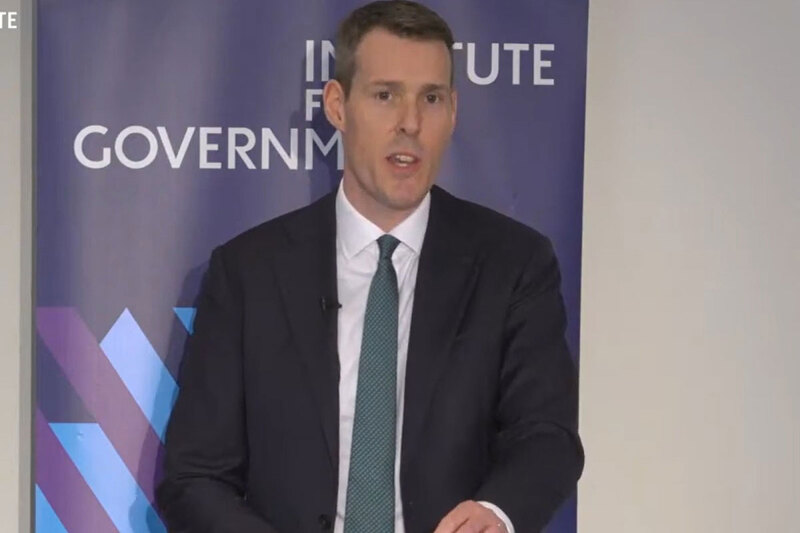 Service charge caps could have ‘detrimental impact on leaseholders’, housing minister says #UKhousingHousing minister Matthew Pennycook has said he does not see the need for a regulator to oversee service charge reform and that a cap would not work #UKhousing
Matthew Pennycook spoke at an Institute for Government (IfG) event in London, where he outlined the government’s planned leasehold reform in a wide-ranging address that highlighted issues with managing agents, shared owners and rising service charges.
During his speech, he told attendees that there are plans to make service charges fairer and more transparent. Rising service charges are increasingly seen as a barrier to flat sales and mortgage providers are unlikely to lend where this charge is more than 1% of the property’s value.
Service charges are going up because of maintenance and building safety issues, which in turn drive up insurance premiums. There is also a lack of transparency about the costs being passed on by freeholders and managing agents.
Asked by Inside Housing whether there was a role for a regulator to play in overseeing the planned service charge reform, Mr Pennycook said he understood why some leaseholders want a drastic intervention such as a cap, but ultimately that would not work.
Read more



He said: “We don’t think things like caps will work. I’ll give you an example of why. If you’re in a building that’s enfranchised, you’ve taken control. You might need to do your roof at some point and you might need to raise money beyond a cap to do the roof. That’s a choice.
“The point is, service charges have to be reasonable and we’ve got to allow people the means to challenge when they’re not.
“At the moment, the fact that you can get hit for litigation costs, the fact that you can’t often see what your service charge means – there’s no standardised form. It’s not transparent.
“People just don’t feel confident enough to go to the tribunal. So that’s the thrust of the reforms. But we’re not looking at caps or anything cruder. I think they’ll end up having a detrimental impact on leaseholders, particularly for those who’ve taken control.”
Responsibility for service charges remains a thorny issue across the sector. During an MP-led inquiry, a sector expert called for service charges to be regulated and said there is an issue with shared ownership being sold as an affordable product.
Last year, Inside Housing reported how shared owners at a block in Battersea could be left footing the bill for services provided to private flatowners on a large estate as Notting Hill Genesis sought to challenge an earlier tribunal ruling.
In addition, executors of extra-care shared ownership properties are struggling to settle their family members’ estates due to rising service charge costs and leasehold concerns.
At the IfG event, Mr Pennycook agreed with the assertion that the draft Commonhold and Leasehold Reform Bill amounts to the biggest change in ownership in the UK in a 1,000 years and that no amount of lobbying or High Court challenges by freehold groups will prevent his government from bringing an end to what he repeatedly described as the “feudal” leasehold system.
He did admit that it was unlikely to pass this parliament. Asked whether house builders have the appetite to build commonhold, he said one major developer had told him that “in practice it doesn’t make a huge difference to their business model what the tenure is, but they want to be ahead of the curve” when it comes to policy announcements.
The housing minister dismissed reports of rent controls as “not serious or credible” and there being a need for a big educational push on how transformative commonhold will be.
For shared owners, Mr Pennycook said he does think the bill addresses their concerns, but does understand why they feel they are sometimes overlooked. If there are any gaps, he encouraged shared owners to get in touch about where more work needs to be done on the consumer experience.
The Commonhold and Leasehold Reform Bill is currently being scrutinised by the Housing, Communities and Local Government Committee to examine whether the measures proposed will work.
The government’s assessment on leasehold reform last year revised up the total cost of the legislation to £4bn.
Mr Pennycook pushed back on claims that Labour has reneged on promises to end leasehold, by explaining that the current system could not be abolished outright and suggestions to do so were a “sound bite”.
The housing minister said those advocating on doing so for the five million or so leaseholders in England and Wales have no plan for how such a ban would be introduced and whether it was even lawful, or its impact on the mortgage market.
It is a process that would require the establishment of tens of thousands of commonhold organisations to be set up.
Mr Pennycook said: “How would it even be feasible for the land registry to delete millions of leasehold and freehold titles and replace them with commonhold ones overnight?
“Or how millions of commonhold associations could instantly be established with hundreds of thousands of directors corralled into overseeing them, or what the consequences would be for the buildings that have already enfranchised, or exercised the Right to Manage?
“So while our detractors will continue to cry betrayal and opportunistic populist parties will continue to try to sell false promises to hard-pressed leaseholders across the country, we will continue with the hard graft of doing what is necessary to bring the system to an orderly end in this parliament.”
Also attending the IfG event was Harry Scoffin, founder of the Free Leaseholders campaign group. He told Inside Housing that the government needs to lean on its majority to push through reform.
He said: “The government appears to think that desperate leaseholders who need the change Labour promised at the last election, namely an end to this feudal system, are naysayers acting in bad faith.
“This was a wasted opportunity for the government to show urgency in freeing millions of leaseholders being looted in their homes and trapped in negative equity. Listening to the minister’s list of excuses, you could be forgiven for missing that this Labour government enjoys the second-largest majority in the ruling party’s 126-year history.
“There’s the [Leasehold and Freehold Reform Act 2024], which they’re allowing to gather dust, while claiming to be powerless as they break their King’s Speech promise to deliver the long-awaited Law Commission reforms on enfranchisement and Right to Manage through their new draft Commonhold and Leasehold Reform Bill.”
The Law Commission made a series of proposals in 2020 that it said would make commonhold the preferred alternative to leasehold for owners of flats.
These include enabling the conversion to commonhold without the agreement of every person and creating a regime for financing commonholds, for example by requiring a fund for future repairs. The commission also recommended that shared ownership leases be granted in commonholds.
Mr Scoffin added: “The minister said the government does not want to leave leaseholders behind, yet now says we must wait even longer for a second piece of legislation to take back rightful control of our homes.
“By failing to take forward both commonhold reforms and the other Law Commission recommendations at the same time, the government is creating a further injustice, trapping existing leaseholders in the feudal past while liberating future owners.”
“The government will regret this empty speech next week when exploited leaseholders in London, Birmingham and Manchester cast their verdict in the local [elections].”
During his speech, Mr Pennycook maintained that the Commonhold and Leasehold Reform Bill will rectify the flaws of previous legislation that had prevented enfranchisement from being cheaper and easier, and that leasehold will only continue to exist in “exceptional circumstances”.
He added: “Existing leaseholders will not be left behind. Our draft bill contains a new and improved process for commonhold conversion, one which brings it into line with wider enfranchisement processes will make conversion possible if at least 50% of qualifying leaseholders agree to ensure more leaseholders are able to convert.
“We will consult upon and prescribe capitalisation and deferment rates well in advance of those fixes being made so that once they are, we will be able to swiftly implement a new valuation process that removes the requirement for marriage value to be paid, and caps the treatment of ground rents in the valuation calculation at 0.1% of the freehold value.
“The provisions in our draft bill that cap ground rent at £250 will further reduce the cost of enfranchisement for many leaseholders.”
The ground rent cap was broadly welcomed by campaign groups at the start of the year. Mr Pennycook also confirmed that plans are in place to ensure the ability to take control of commercial and none-participating leasehold units is affordable.
Sign up to Inside Housing’s Regulation and Legal newsletter
Sign up to Inside Housing’s Regulation and Legal newsletter, featuring a weekly bulletin with news and insight on regulation, key legal rulings, legislation and court cases.
Already have an account? Click here to manage your newsletters.
Sign up for Housing 2026
Join us at Housing 2026 and hear from the sector’s most influential voices. Leading housing organisations curate their stages, showcasing the speakers and discussions that matter most.
Take part in purposeful, tech-enabled networking – see who’s attending, handpick the people you want to meet, and engage in meaningful, in-person conversations.
Connect with every key decision-maker under one roof, from local authorities and housing associations to investors, developers and operators.
Related stories