You are viewing 1 of your 1 free articles
Welsh landlord tells court it made mistake over electrical reports ‘in good faith’
A Welsh landlord has told a court it failed to provide electrical reports to tenants after “misunderstanding” its legal requirements, on the first day of a hearing in Cardiff.


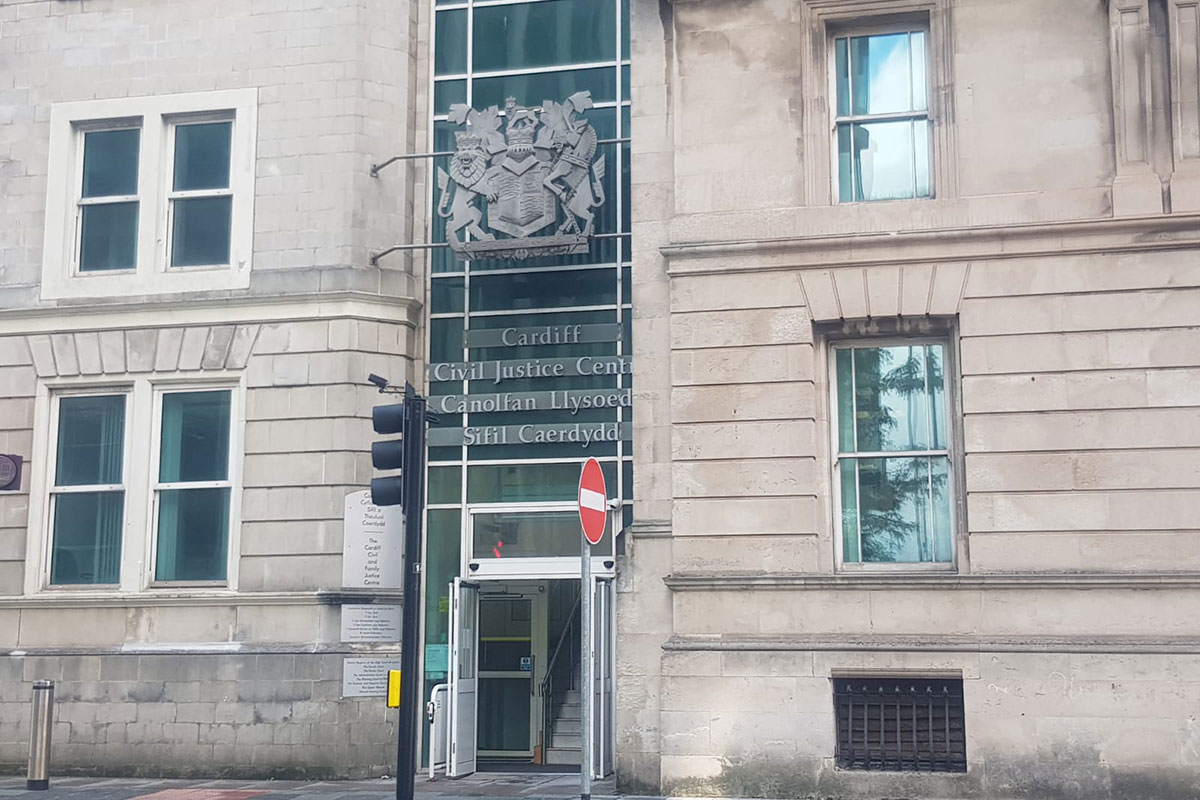 Welsh landlord Beacon Cymru Group has told a court it failed to provide electrical reports to tenants after “misunderstanding” its legal requirements #UKhousing
Debbie Green, chief executive of Beacon Cymru Group, explained to the court on 29 July that the social landlord mistakenly thought it was not required to provide physical copies of electrical condition reports (ECRs) to tenants on converted contracts.
One of the key issues under discussion in the case, which is being heard in the Business and Property Courts this week, is whether these tenants are entitled to be refunded rent because of the landlord’s failure to provide them with a physical confirmation of ECRs.
Read more



Ms Green said the landlord – which was Coastal Housing Group at the time, before its merger with RHA Wales in January – was aware that tenants on new contracts had to be given ECRs. The requirement to provide converted contract holders with copies, however, was not “clear to us, otherwise we would have done it”, she said.
For converted contracts, where residents were already tenants of a social landlord when the act came into force and electrical safety tests had already taken place, there was a year’s grace period. Questions around non-compliance in these cases therefore arise from December 2023 onwards.
Ranjit Bhose KC of Cornerstone Barristers, acting on behalf of the tenants, argued that Coastal knew from mid-August 2022 that it was bound to provide contract holders with ECRs.
“We didn’t know because we didn’t do it. We were at fault in good faith,” Ms Green said.
Serena Jones, executive director of operations at Beacon, told the court that the landlord’s focus was on the requirements changing from needing an ECR every 10 years to needing one every five years.
“It was a tremendously large change,” she said of the legislation overall.
In light of its “incorrect assumption” about converted contract holders, the landlord interpreted the requirements differently, Ms Jones said.
“Now we’re looking at it in isolation, it’s clear,” she said, when shown an example of guidance explaining the obligations.
“We accept we made a mistake,” Ms Jones said.
She added that another area of uncertainty was the time in which landlords had to give tenants an ECR, which was originally within seven days of the occupation date and was then extended to 14 days.
The housing associations involved in this case are Tai Calon Community Housing, Bron Afon Community Housing and Coastal. Valleys to Coast Housing was previously a claimant, but has now withdrawn.
This issue of non-compliance could cost the sector tens of millions of pounds.
The Renting Homes (Wales) Act 2016 came into force in December 2022, which brought about a significant shake-up of housing law. Under the regulation, tenants who know they have not been given a report are entitled to withhold their rent if homes are deemed unfit for human habitation. Landlords must now ensure homes are fit for human habitation from the date the tenant moves in and for the duration of the contract, under Sections 91 and 94 of the act.
In court, Mr Bhose also questioned the chief executives of the housing associations involved on the financial health of the organisations.
Ms Green, Alan Brunt, chief executive of Bron Afon, and Richard Hopkins, chief executive of Tai Calon, all agreed the financial consequences that may arise from failing to comply with the regulations were “100%” their fault.
The housing associations have so far recognised these issues as a contingent liability, with no impact as yet on their accounts, they said.
Mr Bhose questioned Mr Brunt about the financial viability of his organisation. Mr Brunt said the landlord had had to agree waivers with lenders for its loan covenants to avoid breaching them, “entirely because of this matter”.
Ms Green, Mr Brunt and Mr Hopkins also agreed that having to repay rent to tenants would have an impact on their development plans.
The hearing continues.
Sign up for our regulation and legal newsletter

Already have an account? Click here to manage your newsletters
Related stories