You are viewing 1 of your 1 free articles
Fighting fire with fake fire: a different approach to testing building safety in high rises
London’s Newlon Housing Trust is trialling a full power outage and simulating a fire, to see how its systems will respond in an emergency. Chaminda Jayanetti reports from the scene. Photography by Tim Foster


 London’s Newlon Housing Trust is trialling a full power outage and simulating a fire, to see how its systems will respond in an emergency. Chaminda Jayanetti reports from the scene #UKhousing
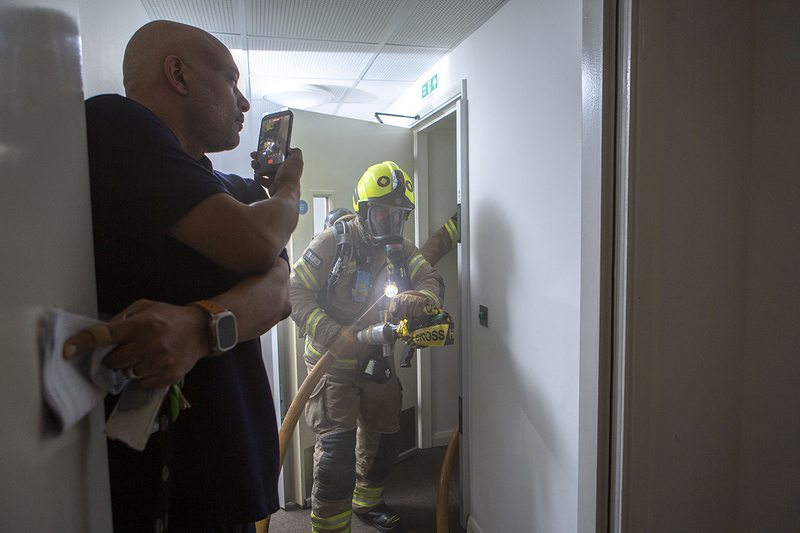
A woman with a pushchair enters the danger zone. She exits the lift onto the seventh floor of the high rise where she lives, to be confronted by firefighters in full gear. They press their backs to the corridor wall to let her pass. To get to her flat, she has to manoeuvre the pushchair – baby aboard – past the unruly, winding fire hose that has established itself across swathes of the carpet.
Laughter breaks out at the incongruous scene. As the mother knows, this is not a real fire. It is just the closest approximation of one that can be safely created in a living, breathing residential block housing around 200 people.
Read more
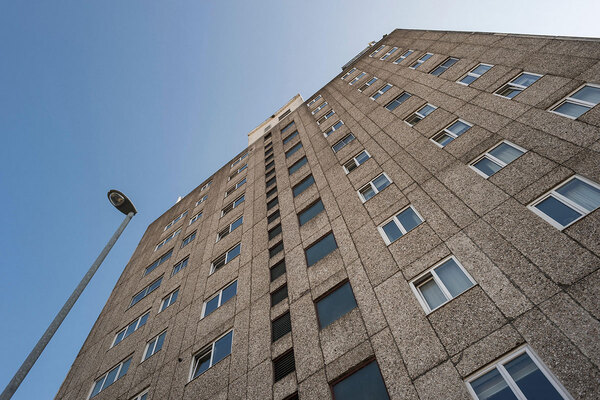
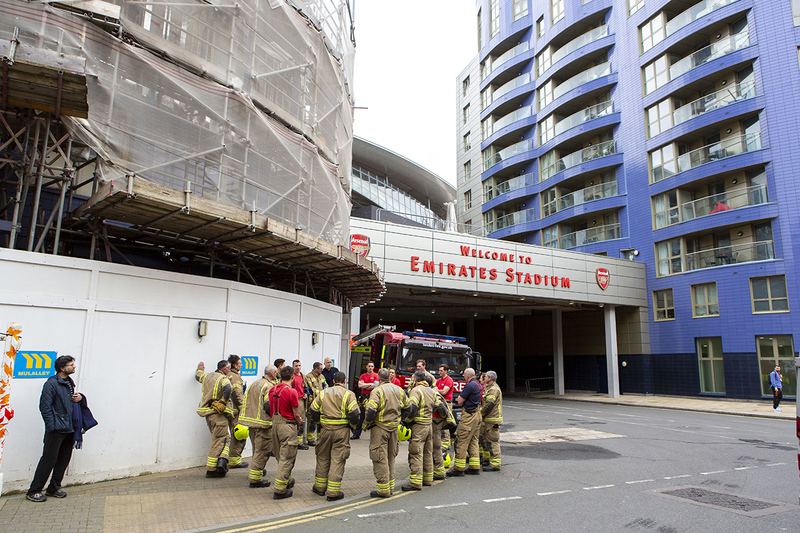
Newlon Housing Trust is running a full blackout test for fire and building safety at its Queensland Road site in Islington, right next to Arsenal’s Emirates Stadium. Inside Housing has been invited to witness the test, which simulates an emergency loss-of-power scenario to test whether the building’s mechanical, electrical, plumbing, fire protection and other critical equipment still work.
The blackout test also replicates a fire – to the extent that safety and practicality allow – in part of the building, with the London Fire Brigade (LFB) attending to ensure all the systems that would be required during a real fire function properly. This isn’t needed to meet building or fire safety regulations, but we have come to find out why Newlon is doing this test anyway.
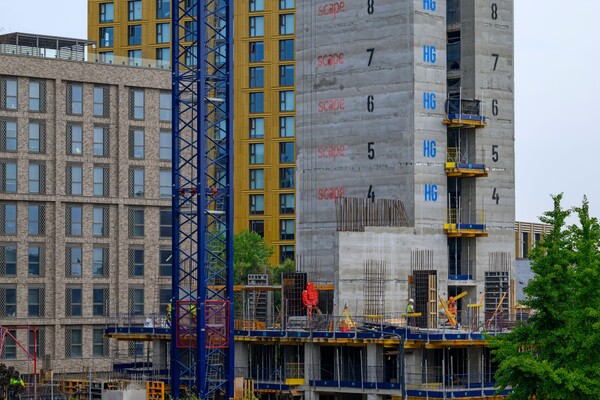
Prior to the Queensland Road test, the building lobby is encircled by more than a dozen staff from Newlon and its contractors – and that is before the fire brigade turns up. There are specialist fire engineers, mechanical and electrical specialists, and lift specialists. The building is currently covered in scaffolding for fire safety remedial work, although the timing of today’s test is unrelated.
Occasionally, residents walk through on their way in or out. They have been told about the test in advance via a Teams meeting, through text messages and in writing, and everything is being carried out in a manner that causes the least disruption possible to them, allowing them to use their homes – even on the seventh floor where the ‘fire’ is taking place.
The firefighters are on site and prepared before the test begins, but they aren’t told where in the building the incident is occurring, since part of the test involves them using the building’s specialist fire panel in the ground-floor lobby to identify that for themselves, as they would in a real emergency.
Newlon staff set up a smoke machine on the seventh floor, which starts filling the corridor with fumes. Orange rubber gloves have been fitted over the smoke alarms; were these to be triggered, an automatic open vent system would be activated to suck the smoke out before the fire brigade even arrived, defeating the point of the test.
“The purpose of the building blackout testing is just to make sure all of the life safety systems that we’ve got in the buildings do what they’re supposed to do,” says Stefan St Hilaire-Brown, assistant director of property services at Newlon, who is overseeing proceedings.
The usual approach would be to conduct a British Standard test, with maintenance contractors testing each piece of equipment in isolation. But Mr St Hilaire-Brown says that standard testing doesn’t pick everything up.
“Even though we’ve got buildings which have got test certificates that say everything’s working, when you test it all as one… and you test it in as near possible to real-life conditions, and you’re stress-testing it, we often find things which you don’t pick up in the standard British test.”
Before the fire crews have even arrived, a glitch on the intercom system in the firefighters’ lift was uncovered. It didn’t fully function while the lift travelled between floors on secondary power. It had worked when the lift was stationary on primary power, and passed its last monthly service check.
When we check in a few days later, Newlon confirms that the problem was caused by a loose connection and setting, and that these have been fixed as a result of the test.
The housing association has been running blackout tests for three years and developed the testing approach incrementally.
“The purpose of the building blackout testing is just to make sure all of the life safety systems that we’ve got in the buildings do what they’re supposed to do”
“There was no eureka moment which said, ‘do it’,” says Mr St Hilaire-Brown. “It was just a combination of us initially investigating buildings, because our buildings had defects as they were built 20 years ago in some buildings.
“Obviously then you had Grenfell. Then the Building Safety Act came out, Fire Safety (England) Regulations came out, and so a number of those things just made us develop the process.”
Newlon fully tests each building every two years and carries out full blackout tests on buildings it is set to take over, for example under Section 106 agreements.
The first time it carried out a pre-handover blackout test, at Acorn House in Camden, the building had been signed off by the developer, but Newlon’s testing deliberately replicated an electrical glitch and found that the lift used by firefighters didn’t operate as expected if it went from the primary to the secondary power supply and back again.
“Because it was never tested in that scenario, it wasn’t picked up,” Mr St Hilaire-Brown says.
Carrying out the tests pre-handover means that it falls to the developer to remedy any issues. He adds: “It’s really nice to just go in and say, ‘Well, here’s our list’. And actually, we picked up about 40 things [at Acorn House]. Some of them are really small, but some of them were quite big.”
The test begins
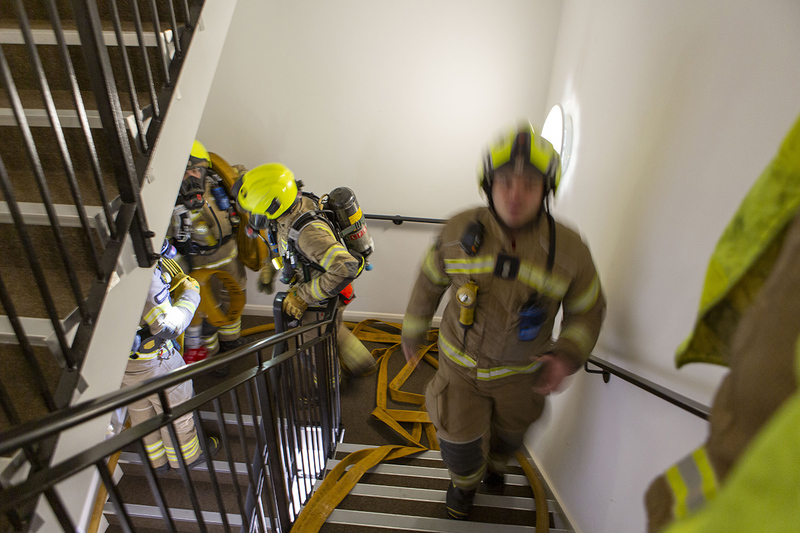
Having identified the seventh floor as the site of the test, the fire crews take the firefighters’ lift to the fifth floor, set up base there, and bring a firehose up the stairwell to the seventh-floor entrance door.
There is no all-guns-blazing headlong charge to the fire – everything is carried out in stages. Firefighters in oxygen masks arrive, their breathing sounding like Darth Vader. Water is pumped up through the hosepipe; as it is brought to life, it jolts like a mildly electrocuted anaconda. The gathering fire crew have to pick their way over it. The firehose won’t actually be activated – there’s no fire to put out – but the building’s water supply for firefighters is being tested.
Finally, everything is ready. The door to floor seven is opened and the firefighters enter. The corridor is full of smoke. The sprinklers have been switched off, and for safety reasons the heat is no more than warm, but visibility is minimal. Walkie-talkies blurt out communications.
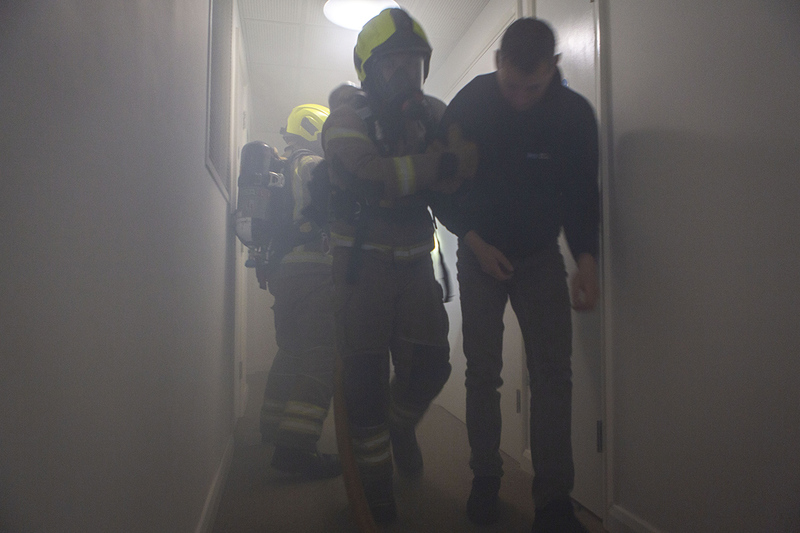
The fire crew attend to a Newlon staff member who is playing the role of casualty, sat in the corridor as if injured and struggling to breathe. He is helped to safety. The suction fans are activated, and the corridor is soon cleared of smoke.
There is a damp patch on the carpet – the hosepipe got knocked, spilling water. “It wasn’t me, I wasn’t overexcited,” says the casualty, joking about how he didn’t wet himself.
The test has been the first chance for the LFB to check whether the building’s dry riser – which carries water up the floors for firefighters to use – is working. The smoke extractor worked very quickly once it was activated.
“It’s really good for us in terms of training, making sure that all our policies and everything that we do operationally work. Everyone gets practice so they know they can do it”
Other problems that can arise are doors that don’t automatically open in a fire situation, or automatic open vent systems that redirect smoke to the wrong place – although both worked properly in the Queensland Road test.
The test is labour-intensive but not as costly as it might seem. Newlon’s contractors – Earp Consulting, Lift Specialists and AJS – are required to carry out a firefighting test on the lift once a year, so this is scheduled to coincide with the full blackout test. Aligning planned preventative maintenance checks with the blackout test minimises what would otherwise be a £5,000 to £7,000 cost per test.
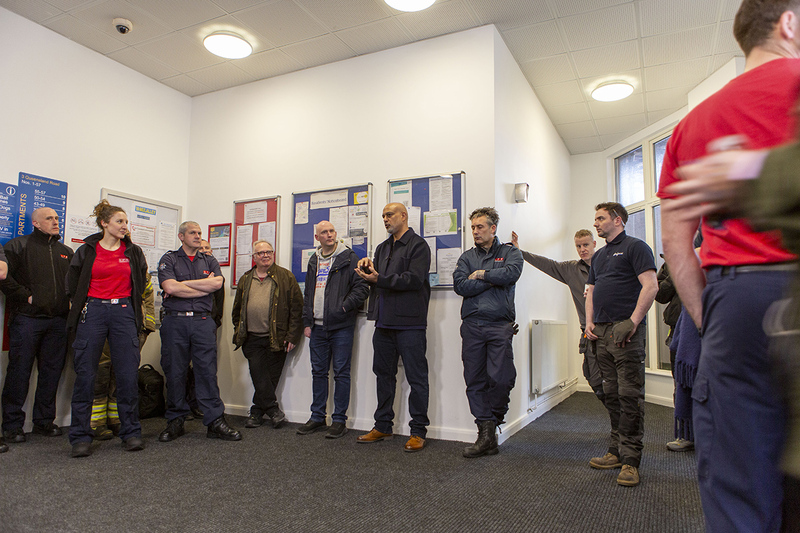
The firefighters just need some sandwiches and a drink. The LFB doesn’t charge Newlon, because the test – which takes place on the fire crews’ training day – has value to the brigade as well. It cannot commit to every one of Newlon’s blackout tests, but it is involved every couple of months and Newlon has worked with fire crews from Haringey, Islington, Waltham Forest and Tower Hamlets in the past six months.
Terry Simmonds, the officer in charge of Islington Fire Station’s Red Watch, one of the fire crews taking part, says he is considering suggesting to its training team that it be rolled out further across London.
“We have certain procedures for high rises that we don’t necessarily have that much opportunity to train in doing,” he says. “We have some venues internally, but this is an opportunity for us to put our systems in place on a real-life building.
“It’s really good for us in terms of training, making sure that all our policies and everything that we do operationally work. Everyone gets practice so they know they can do it, so when a real-life scenario actually does happen, we’ll have a better level of training to do that.”
Other recent building and fire safety long reads
PAS 9980: is government-backed cladding guidance resulting in safe buildings, or allowing developers to dodge responsibility?
PAS 9980 was intended to help solve the country’s most pressing building safety risks, but the guidance appears open to exploitation. Peter Apps speaks to experts to find out more
Indoor air: the danger of quick-fix solutions to damp and mould
Positive input ventilation units are marketed to the social housing sector as an easy and affordable solution to damp and mould, providing “fresh, filtered air”. But if improperly installed, they can have dangerous health impacts. Peter Apps reports
Residential PEEPs: how will they work and are landlords ready?
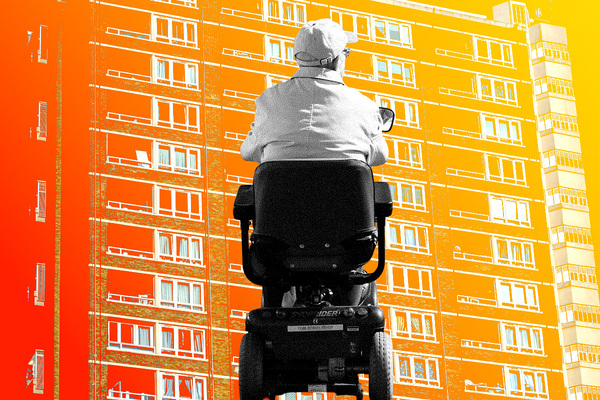
Personal emergency evacuation plans, which come into force next month, will require landlords to identify residents in higher-risk buildings who may find it difficult to escape from a fire, and take steps to make them safer. But will the regulations work? And do they go far enough? Peter Apps finds out
Sign up to Inside Housing’s Building and Fire Safety newsletter
Sign up to Inside Housing’s fortnightly Building and Fire Safety newsletter, now including a monthly update on building safety from Inside Housing’s contributing editor Peter Apps.
Already have an account? Click here to manage your newsletters.
Related stories