Derby: ‘The pursuit of net zero targets has become more critical than ever – our vision is multi-faceted’
Since becoming the cabinet member responsible for climate change, transport and sustainability, Carmel Swan has focused on keeping the city’s manifesto at the heart of her aspirations and actions


 Since becoming the cabinet member responsible for climate change, transport and sustainability last May, Carmel Swan has focused on keeping the city’s manifesto at the heart of her aspirations and actions #UKhousing
Go back to the Cities Encyclopaedia
Given the pressures faced by many councils, the pursuit of net-zero targets has become more critical than ever. This urgency requires council leaders and officers to work in partnership to address key challenges and discover viable solutions. Here in Derby, we are rethinking how we plan the city and meet the diverse needs of our residents.
Our vision is multi-faceted, underpinned by environmental, economic and societal sustainability. At its core is our ambitious mission to curb greenhouse gas emissions and achieve net-zero carbon status by 2035.
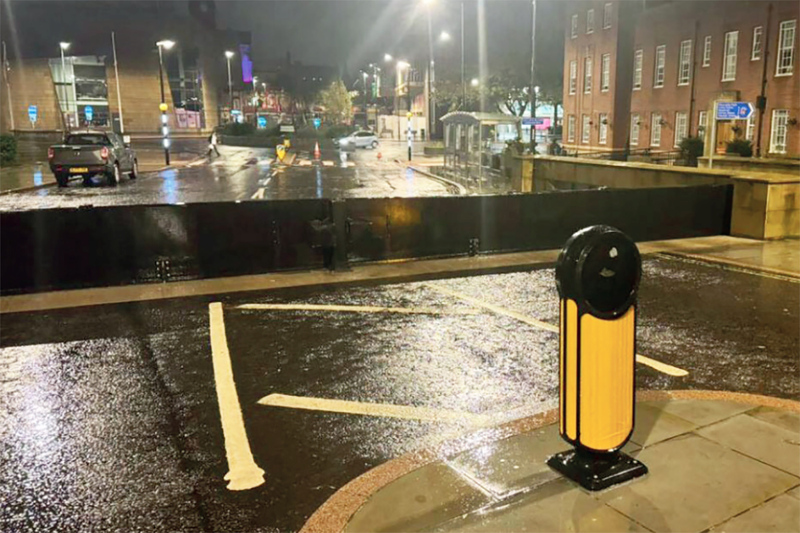
Well before Derby City Council declared a climate emergency in 2019, we were focused on climate change action, in part because of Derby’s position by the River Derwent. Derby has always experienced flooding. While the river was once the city’s strength, driving silk production in England’s first factory, the Derwent has also been Derby’s threat.
Flood alleviation is a key element of protecting people, properties and infrastructure. Derby’s approach is recognised as being unique, in that we are unlocking opportunities for regeneration alongside flood alleviation.
Following a public consultation, we adopted the Environment Agency-led Our City, Our River (OCOR) masterplan in July 2012, and planning for the first phase of the project was received in October 2015.
The award-winning scheme has already transformed miles of land along the river, bringing new business opportunities, improved resilience and enhanced biodiversity. In all, around 2,000 properties have benefitted from increased flood protection.
Read more

 Latest housing research: decarbonisation is an opportunity to transform relationships with residents
The scheme proved its worth in 2019 and again during Storm Babet in 2023, when the river reached its highest level. Topping out at 3.58m, the previous record from 8 November 2019 was broken. In all, the three highest river levels in the centre of Derby since records began 89 years ago have occurred in the past five years. With major floods becoming more frequent, Derby is future-proofing to cope with the effects of climate change.
The next stage of our OCOR scheme will improve resilience along the east bank of the Derwent as it flows through the city centre.
Equally, when the time came to refurbish Council House in 2012, we took advantage of the building’s location on the riverbank to achieve the highest possible environmental sustainability rating. Features such as adiabatic cooling, rainwater harvesting, solar panels and hydroelectric power harnessed from the river earned Council House an Energy Performance Certificate rating of Band A+ and a BREEAM Excellent classification.
“We are rethinking how we plan the city and meet the diverse needs of our residents”
Our first climate change action plan, approved by cabinet in June 2022, comprised a staggering 106 actions and projects, largely focused on what the council could do regarding its own emissions. The action plan is overseen by a programme board spanning the whole council, with progress monitored and reported quarterly.
We have started on our goal of weaving climate impact into council business by introducing a climate change impact assessment. This is an Excel-based tool that generates an infographic with a simple visual key to the main climate costs and benefits of any given proposal.
By using this tool, we can include climate change as a mandatory consideration whenever we make decisions. It means net zero is beginning to be embedded across the whole of the council and is not the responsibility of one department or budget line.
Derby is a compact city with a growing population. Our local plan proposes more new homes and jobs up to 2028. New developments will contribute to our carbon emissions, so we’re taking action to make our developments carbon neutral as soon as we possibly can.
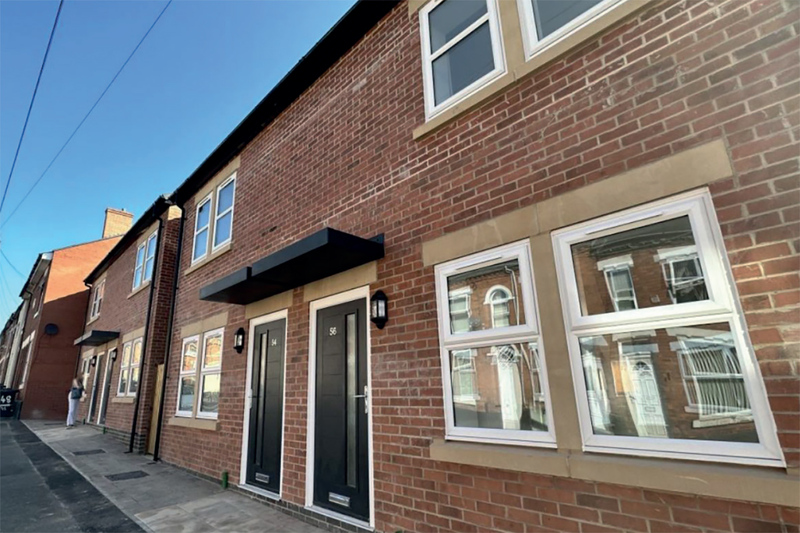
At the end of 2023, Derby Homes (our ALMO) finished building the first carbon-negative council properties in the city. The four two-bedroom homes generate more energy than they consume across a year, making them even better than net zero. The aspiration is, where possible, for all future Derby Homes and Derby City Council development projects to be built to this specification.
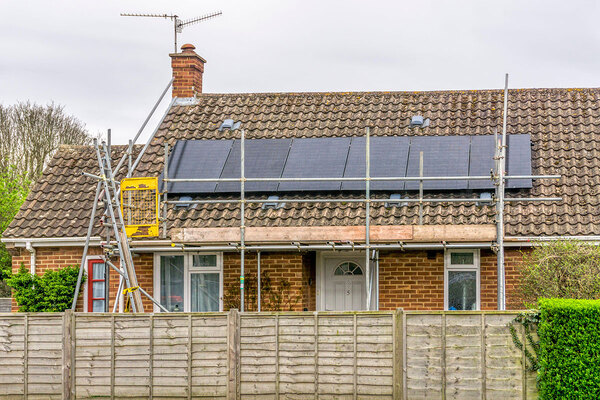
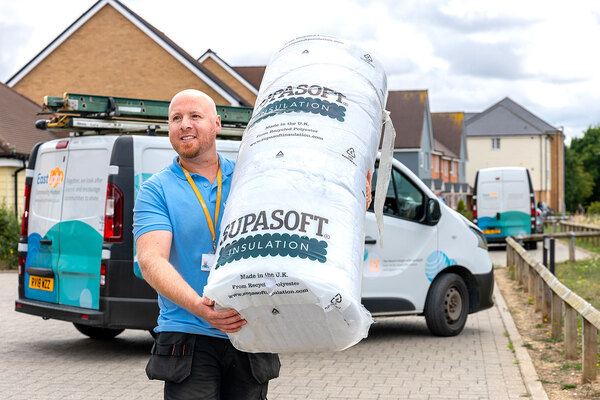
We’re investing in existing stock, too, by improving insulation in some of our coldest properties and installing solar panels on roofs, which is ever more important in the current cost of living crisis.
We learned a lot over the past two years, and we’re keenly aware that tackling the climate change challenge requires collective effort.
Leading from the front
As a local authority, we need to lead from the front, setting a good example for others to follow, while recognising that we don’t have the remit, expertise or resources to resolve the problem on our own. The revised climate change action plan we’re now working on will include actions to help organisations and residents across the city to play their part in tackling this issue.
I have also invited diverse stakeholders across the city to collaborate as a strategic Derby sustainability partnership board, fulfilling a second manifesto promise. So much more can be achieved when ideas are exchanged, innovations discussed and information shared.
Major city employers, such as Rolls-Royce, Toyota and Severn Trent, along with the University of Derby, the Environment Agency and the Derby Climate Coalition are working with us so we can gain a deeper understanding and a co-ordinated plan of how to achieve our targets.
In addition, we host a community climate forum, in partnership with the Derby Climate Coalition, enabling an open dialogue of ideas and proposals, shining a light on good practice from other parts of the UK. I often come away with an idea or a concept, and task officers to explore the possibilities for Derby.
For colleagues at the council, we have created a climate change employee network. It aims to harness the passion of our staff in working towards net zero and, through them, reach more of our business community and residents.
Partnering with the university
Our partnership with the University of Derby has yielded several noteworthy projects. These include national research aimed at bolstering the resilience of care facilities to extreme weather events, work-based opportunities for students pursuing a BSc in environmental sustainability (with a focus on housing retrofit and adaptation planning) and identifying training needs for local businesses in the emerging green economy. Research tells us that Derby emissions are marginally above the Centre for Cities thinktank’s 60-city UK average, and below the national (urban and non-urban areas) UK average, with road travel being the largest contributor to transport emissions. Petrol and diesel cars emit the most (about 60% of all transport emissions), a share that has remained stable since the early 1990s.
Derby needs to move away from its high car-dependency to lower-carbon travel alternatives and this is an area we are working on with partners. We have developed a well-defined electric car charging infrastructure plan and, over the following years, these investments will shape our communities and their ability to access car-share clubs.
Demand responsive transport (DRT) is an exciting addition to our transport network, offering citizens in areas less connected by public transport greater and more flexible choices. We have chosen to pilot DRT in the south of the city to offer citizens a way of making continuous journeys to locations which are otherwise harder to get to, such as the Royal Derby Hospital.
We want to do more to improve our transport network while developing our cycle and walking infrastructure, but short-term funding from central government often prevents us from achieving our longer-term plans.
As ever, partnership working is the key to facing the challenges of climate change and finding workable solutions at a local level.
This article was originally published in May 2024
Sign up to Inside Housing’s Sustainability newsletter
Sign up to Inside Housing’s weekly Sustainability newsletter, featuring our in-depth coverage of the sector’s journey to delivering net zero.
Already have an account? Click here to manage your newsletters.
Related stories



CPD webinar on demand: Project management and data – a recipe for warm homes success?SPONSORED ARTICLE