Karbon expects new for-profit provider to launch this summer after choosing investor
Karbon Homes has revealed more details of its new for-profit provider, which it hopes will be operational this summer, after choosing a preferred institutional investor.


 Karbon expects new for-profit provider to launch this summer after choosing investor #UKhousing
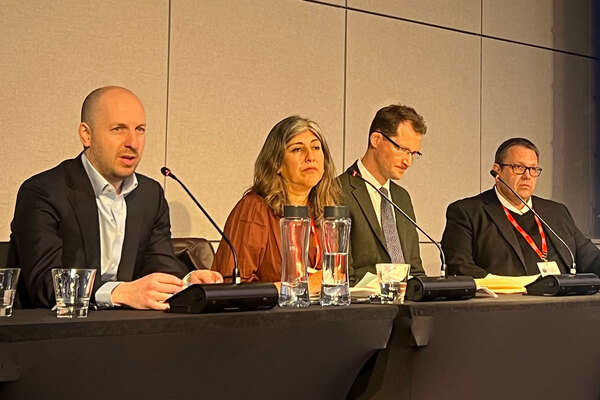
Speaking at the Social Housing Finance Conference in London yesterday (14 May), Scott Martin, Karbon’s executive director of resources, said the for-profit provider is currently at the second stage of registration with the Regulator of Social Housing.
He said Karbon plans to be the “statutory landlord” for the homes owned by its for-profit provider, Graphite Living, and that it will focus on social and affordable rent rather than shared ownership.
“Hopefully it will be operational some time in the summer... that might be a bit optimistic, but hopefully very soon,” Mr Martin told attendees.
He continued: “We think we’ve chosen our preferred investor. It’s an institutional investor in the pension sector.
“Their time horizons are... 40 to 50 years… and we’ve already agreed a set of KPIs that ensures those homes are going to be maintained to the very highest quality standards, making them attractive to customers in the long term.”
Read more



The 34,000-home social landlord revealed plans to launch a for-profit provider in 2024, and last year it appointed a chair and non-executive director to Graphite Living’s board.
Mr Martin said the decision to register a new for-profit provider stemmed from Karbon’s inability to build as ambitiously as in the past, due to the impact of construction cost inflation and increasing safety and quality requirements on landlords.
He continued: “We’re rethinking our assumptions around how we deliver our social housing. So we’ve asked ourselves, really... why do we need to own that asset?
“And is there a way to plug the shortfall in development by moving those new developments off balance sheet, and partnering with other people to access investment and build more new homes?”
Mr Martin recognised that some investors looking to come into the sector think too narrowly to work with social landlords.
He said: “We’re worried about what happens when, for instance, short-term investors get into the world, and we’re speaking to some people... ‘long term’ for them is seven years, and clearly for us, in our model, that’s nowhere near long term.
“And we didn’t want to risk our brand, our customer experience and our quality in that kind of arena.”
Karbon will have asset and property management agreements with Graphite Living, Mr Martin said, and will seek to “provide the same level of service to Graphite customers as it provides to Karbon customers at the minute”.
He also said Karbon has submitted “quite an ambitious bid” for the Social and Affordable Homes Programme, including Graphite Living, and stressed that the financial model will not work “unless Homes England is there to... pay us the grant levels that we need”.
Mr Martin also described the planned structure for the for-profit provider, whereby Karbon identifies properties that can be bought by a holding company (HoldCo).
“That HoldCo will own the for-profit, investor-backed organisation Graphite, and that will be financed by a mixture of debt and equity from the pension company,” he added.
When asked whether “investor pressure” may impact on the level of service provided to Graphite Living residents, Mr Martin stressed that there will be no “differential between service levels”.
“We’re not talking about having a premium or a substandard service. It is the same service for those Graphite customers that Karbon has with its current clients,” he said.
But Mr Martin recognised that for-profit providers do require a higher rate of return than housing associations, making the model more expensive.
He added: “But that transfer of risk outside the housing association, that inability of a housing association to be able to develop at that point in time, means that this is the route that we’re having to go down.
“So yes, it is slightly more expensive, there is a bit more grant involved in that, but we are still able to deliver those much-needed homes in our communities throughout the North East and Yorkshire, and ultimately get people into housing.”
Sign up to Inside Housing’s Development and Finance newsletter
Sign up to Inside Housing’s weekly Development and Finance newsletter, featuring a round-up of business, development and regeneration news and analysis.
Already have an account? Click here to manage your newsletters.
Related stories