You are viewing 1 of your 1 free articles
There are signs that the Building Safety Regulator and firms are working more closely to improve the situation, writes Allan Binns, national director at Project Four Building Safety Experts
The beginning of this autumn season’s headlines in building safety, highlighting empty flats and approval delays from the regulator, might leave many thinking it’s all doom and gloom in the sector. Far from it.
Yes, early September flagged just 32% of higher-risk-building (HRB) applications passing through the 12-week window – a 47% drop from a year earlier.
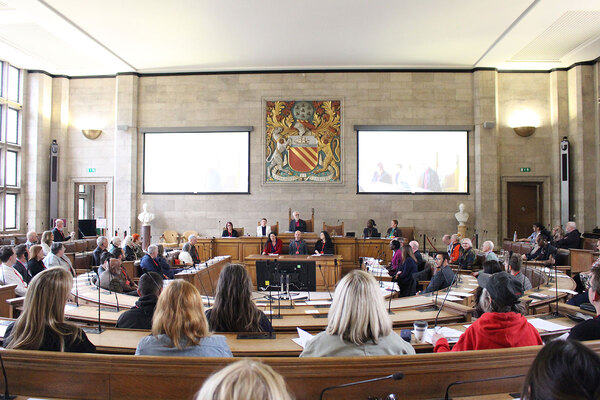
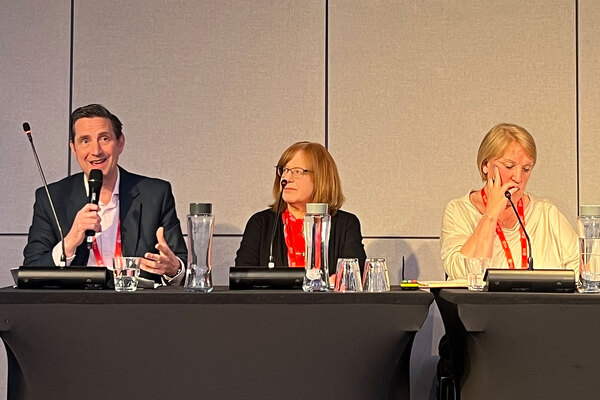
I appeared before the Housing, Communities and Local Government (HCLG) Select Committee and reiterated our backing for the Building Safety Act’s intent. I also impressed upon them the importance of a transformative effort to generate a cultural shift in the industry.
My sentiment that no conflict exists between the act’s safety-focused ideology and the government’s housing targets was also shared by Andy Roe, chair of the Building Safety Regulator (BSR), on the day.
I’m not going to hide the facts about the industry’s operational strain. By mid-July 2025, the Gateway 2 process bottlenecked more than 30,000 new homes across 961 applications still “under review” or awaiting further information. Average approval time for new HRBs was 25.5 weeks, more than twice the 12-week target.
Talk of delays impacting sector viability, redundancies and project cancellations were all very real especially in purpose-built student accommodation. Some developers were pulling out of the market altogether.
A few months is a long time in the building safety industry though. Following on from Mr Roe’s Christmas promise to the committee on large-scale regulator improvement, things are shifting at pace.
Closer scrutiny has shown that lack of resources, and poor operational systems and processes have been stumbling blocks to progress. Add proportionality as a factor and we can see why these have become added constraints. For example, Project Four found that 91% of applications concerned existing HRBs that endured the same procedural rigour as larger projects.
So how is the future looking brighter? Certainly, dedicated teams handling small works more efficiently without compromising safety will be helping to improve proportionality. I believe the industry has now taken stock and begun empathising with the regulator, working more closely than ever before.
Urging it to standardise decision-making via professional guidance and industry-aligned desirable submissions is the way forward, too. We also need a professional development pathway. I’ve already recommended to the committee the different ways of bolstering system capacity, maintaining oversight and quality.
Scalable housing is achievable through proportionate processes, appropriate levels of investment in professional resources and consistent regulation.
Earlier this month, we submitted two applications that were validated within just seven days. A regulatory lead was then appointed promptly followed by a multi-disciplinary lead who provided initial comments in just three weeks, and we then responded within five days. This is not untypical.
There were further signs in October that the regulator and firms are working more closely to improve the situation. I’ve personally supported and completed several further Gateway 2 applications for new HRBs, and all are progressing promptly.
All that said, this is a double-edged sword with the responses to RFIs expected within two days. This means that design teams need to be ready to literally drop everything to achieve this while the application is being determined.
“I believe the industry has now taken stock and begun empathising with the regulator”
The new regulatory system has also done as much to elevate safety in the design of new higher-risk buildings as it has done to slow much-needed remediation works. For me, the original system did not approach these typologies proportionately, as mentioned above. Indeed, we’ve seen a 76-storey tower go through the same approval process as a proposal for new fire doors!
While both types of works must rightly demonstrate compliance before the works are done, I have long championed how a dedicated team for smaller works could enable swifter handling without compromising safety. We are thankfully starting to see this proportionality with the innovation unit specialising in new builds.
So what does November and early December activity look like, and is it going to help Mr Roe’s Christmas goals? Well, I’m hoping the seasonal slowdown can provide a much-welcome break, giving the regulator time to further calibrate its approach. Equally, clients, consultants and contractors may also be looking to utilise any additional capacity in the lead-up to the festive break to improve their processes.
With our recent submissions and approvals, there is just cause for optimism. I’m looking forward to seeing even more collaborative working substantially paying off in the run up to Christmas.
Allan Binns, national director, Project Four Building Safety Experts
Sign up to our new revamped building and fire safety newsletter, now including a monthly update on building safety from Inside Housing contributing editor Peter Apps.
Already have an account? Click here to manage your newsletters.
Related stories