You are viewing 1 of your 1 free articles
Latest housing research: How temporary accommodation is affecting children’s early life experiences
A new report by Shelter examines the impact of insecure temporary accommodation on children’s education and well-being – and ultimately, their life prospects, writes Kerri Farnsworth, member of the Thinkhouse Editorial Panel


 Latest housing research: How temporary accommodation is affecting children’s early life experiences #UKhousing
Thinkhouse is a website set up to be a repository of housing research. Its editorial panel critiques and collates the best of the most recent housing research.
This month’s review from Thinkhouse focuses on recently published research by housing charity Shelter, called Homelessness in the Classroom, which focuses on a little-covered aspect of the UK’s ongoing housing challenges: the impact that living in insecure temporary accommodation has on children’s school education, health and well-being – and ultimately, their life prospects.
One in 78 children in English schools are currently classed as homeless, ie living in short-term, insecure temporary accommodation – the highest level since records began in 2004.
That temporary accommodation is also often sub-standard on a number of decent housing metrics. For example, almost 7,000 families are in temporary accommodation where they live in only one room, such as B&Bs or bedsits, making it difficult to carry out basic life functions such as cooking, cleaning, drying clothes and sleeping, let alone studying or doing homework.
In addition, temporary accommodation is not always close to a family’s previous living location. This not only adds obvious logistical challenges for those children getting to/from school, but also emotional and psychological impacts from being disconnected from familiar surroundings and support networks in the form of wider family and neighbours.
Read more

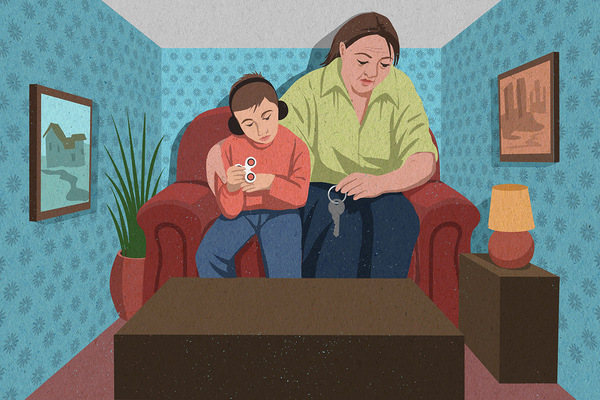
We know from previous research that homelessness affects children’s health, especially their mental health. For example, in previous Shelter research, almost 60% of parents reported that living in temporary accommodation had a negative impact on their children’s physical or mental health, with a quarter of parents saying that it actively made their children unhappy or depressed.
Neurodivergent children and those with a learning disability are especially affected, with a quarter of parents reporting that it aggravated existing behavioural issues.
In this groundbreaking piece of research, Shelter collated qualitative and quantitative data to extract deep insights into how homelessness affects children. Using a daily survey app called TeacherTapp, which reaches 11,000 teachers every day in England, the charity surveyed school teachers at primary and secondary level across England about the extent of homelessness among their pupils.
Shelter then worked with the teachers’ union, NASUWT, to develop and issue a questionnaire to teachers to explore their experiences of working with children who are homeless in more detail. The key findings of this research are stark.
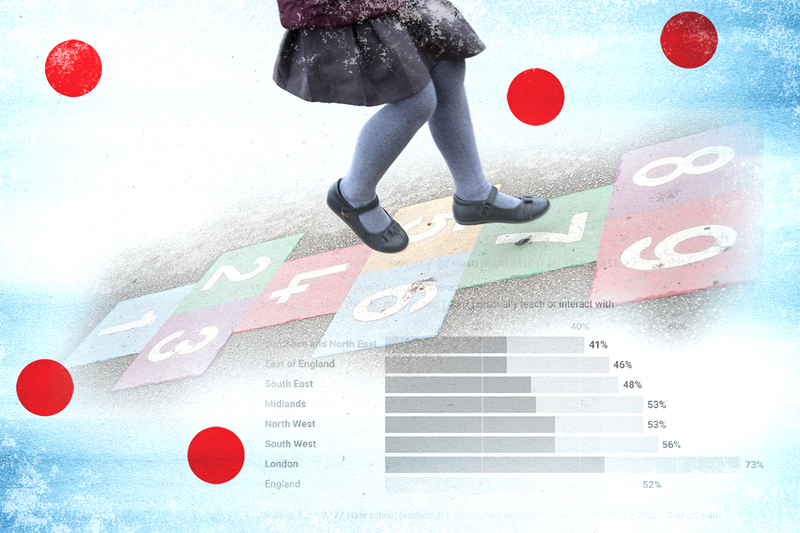
The scale and distribution of the issue was the first research revelation. It found that more than half of all state school teachers work with pupils who are homeless or have been homeless within the past 12 months. This rises to 72% in schools with a higher intake of lower-income families. London is the most affected (73% of teachers), with the South West, the North West and the Midlands also above average.
The report then looked in detail at the impacts of homelessness on children in a school setting. As well as the logistical challenges that children face when there is a large distance between their temporary accommodation and their school and previous support networks (for example, wider family), it affects their ability to get to school on a regular basis, on time and in a condition fit for learning.
Some are having to undertake daily commutes that would be inadvisable for adults, let alone children: one primary school teacher in Birmingham reported some pupils travelling 2.5 hours each way to and from school, leaving them exhausted and unable to concentrate or participate fully in class.
73%
State school teachers in London who have worked with children who are homeless, or have been homeless, in the past 12 months
92%
Teachers in England who reported that homeless children arrived at school tired
71%
Teachers in England who reported that homeless children arrived at school in unclean or inadequate clothing
Almost 90% of teachers reported that homeless children often arrive at school late, and 92% said that they arrive at school tired. Half (52%) of children have missed school due to their homeless status, with 37% missing more than a month’s schooling. Almost half of all children living in temporary accommodation have had to move schools at least once, thereby losing friends and other social bonds in the process.
Poor standards in a large proportion of temporary accommodation in England also affect children’s lives. Nearly three-quarters (71%) of teachers reported children arriving for school in unclean or inadequate clothing, which causes them intense embarrassment and shame, and leads to low self-esteem. This, combined with the shared familial mental strain of their living situation, often leads homeless children to withdraw from school participation.
Almost half of children have lost friendships, through either moving schools, being ostracised or self-ostracising. Food poverty is also affecting homeless children, with teachers reporting that many arrive at school hungry and unable to participate in school to the fullest.
Given that so many children are already anxious, stressed, tired, hungry and cold before they get to school, it is no surprise that teachers also reported an increase in behavioural issues.
“Almost half of all children living in temporary accommodation have had to move schools at least once, thereby losing friends and other social bonds in the process”
As one teacher commented: “Their focus now isn’t on school, it’s on survival and what will happen to them.”
The cumulative impact on the academic performance of homeless children is also unsurprising. The negative impact was confirmed by 91% of teachers: struggles to keep up with the curriculum or complete homework, and a decline in and/or poor performance in assessments and exams.
There was almost universal reporting of the ongoing negative impact that living in temporary accommodation has on health and well-being – notably mental health, confidence and self-esteem – which exacerbates existing challenges, such as sustaining valued school friendships. These issues are made worse in particular for children with special educational needs and disabilities, or with other learning challenges, who struggle to adjust to routines being disrupted or new surroundings.
One secondary school teacher in Luton wrote: “Coming to school late, incomplete uniform, without breakfast, clothes being dirty: these things later on affect their behaviour, self-esteem, [participation] in classroom activities and [they] try to remain alone.”
School is a foundation for life
The final part of the Shelter report concludes with what I found to be one of the most saddening aspects. School isn’t just about education. It’s a foundation for learning for life – full of play, exploration and creating social bonds – which enhances children’s ability to thrive and achieve their full potential. Yet 91% of teachers who responded to this survey said that children experiencing homelessness have lost this enjoyment, as well as the irreplaceable life skills and experiences it could give them.
Only time will tell what the long-term societal impacts of all of this will be, but it is incumbent on all of us to continue to work together to ensure that the current generation is the last one to face this.
Kerri Farnsworth is founder of placemaking organisation 360° Cityshapers, and a member of the Thinkhouse Editorial Panel
Sign up to Inside Housing’s Homelessness newsletter
Sign up to Inside Housing’s Homelessness newsletter, a fortnightly round-up of the key news and insight for stories on homelessness and rough sleeping.
Already have an account? Click here to manage your newsletters.
Related stories