You are viewing 1 of your 1 free articles
What does procurement data tell us about the lead-up to Awaab’s Law?
Inside Housing has analysed £8bn of tender documents to find out how the nation’s landlords are responding to new regulations on damp and mould. Katharine Swindells reports


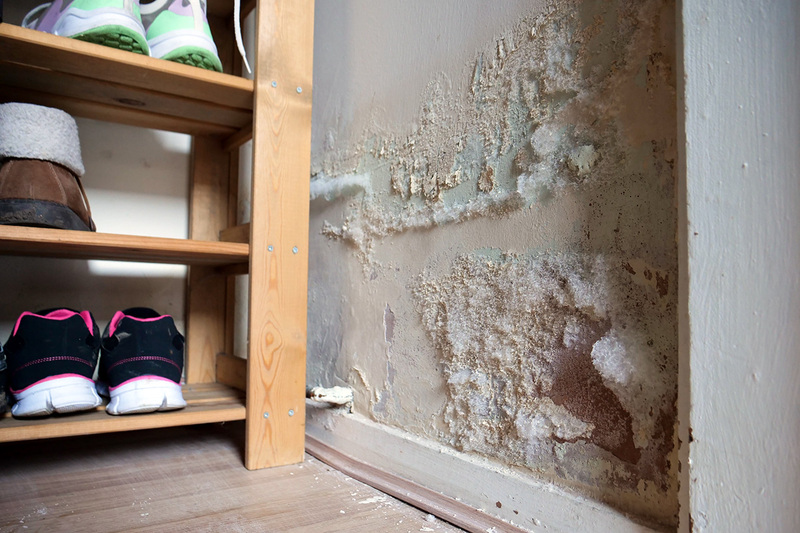
In November 2022, a coroner ruled that the 2020 death of two-year-old Awaab Ishak was caused by prolonged exposure to black mould. The senior coroner said at the time: “The tragic death of Awaab will, and should, be a defining moment for the housing sector.”
On 27 October 2025, Awaab’s Law came into force in England, ruling that all emergency hazards and all damp and mould hazards that present a significant risk of harm to tenants must be addressed within strict timescales.
So what happened in the almost three years in between? And how did housing providers go about finding the skills and resources to be prepared for the change?
Tender data can go some way in giving us the answer. In one contract – a £5m award by Newcastle City Council to construction firm MGM – the council wrote that it was “encountering an unprecedented demand for damp and mould remediation”.
In a £7m damp and mould contract awarded to Bell Group in late 2025, Lewes and Eastbourne Councils wrote: “With the upcoming implementation of Awaab’s Law, it is more important than ever for social landlords to take proactive, consistent action to address damp and mould in their properties.”

Inside Housing has analysed nearly 500 awards made between 2022 and 2025 by councils, housing associations and consortiums that relate to damp, mould, stock condition or Awaab’s Law, totalling more than £7.8bn. Sourced from thousands of public tender portals, compiled by database BidStats, this data is not an exhaustive list, but offers a representative perspective of the UK housing sector’s use of external contractors.
Our analysis has been conducted by calendar year, rather than financial, to reflect the period from the coroner’s ruling on Awaab Ishak’s death, to the implementation of Awaab’s Law.
It shows that damp and mould procurement by councils and housing associations rocketed almost £1bn in 2023. When procurement by consortiums and procurement organisations is included, it reached a high of £4.6bn in 2024, then decreased in 2025, as the organisations tendered repairs frameworks ahead of the implementation of Awaab’s Law.
This comes as overall repairs and maintenance spend in the sector rose 13% annually to reach £10bn in the 2024-25 financial year, as we reported in our Repairs Tracker 2026.
Some organisations boosted internal teams to tackle damp and mould remediation, but tender data shows where they used external labour, services and products to tackle the issue.
Chris Patient is head of consultancy at Rand Associates, which provides stock condition surveys, asset management strategy and procurement consultancy. He recalls that prior to the coroner’s ruling on Awaab’s death, most organisations were handling their damp and mould teams through their generic repairs systems and contracts.
“Then what we saw was the set-up of damp and mould specialist teams, and then following along behind that was specialist procurement,” he says.
The largest tender involving damp and mould awarded by a single housing provider in three years was Riverside, which procured a £657m “framework for the delivery of disrepair and complex work in England and Wales”, across 12 regional lots.
“We decided to look at it in the round and sort of say, ‘We know that this is going to get bigger,’” says Helen Marsh, director of group procurement at the housing association.
“We anticipated that the number of repair cases would rise due to Awaab’s Law, so we worked on putting a framework together which covered damp and mould [and] disrepair, but also general repairs. We have now witnessed a significant increase in repairs associated with Awaab’s Law following its launch and profile in the media.”
As Riverside is a national organisation with almost 80,000 homes, Ms Marsh explains, she wanted a framework that could be flexible to the needs of the asset management teams in different parts of the UK. She also was keen to incorporate small-to-medium businesses and local suppliers, so created a framework that was split by geography but also by value.
Although it has been successful, Ms Marsh notes, in late 2023 when it opened up the tender, many smaller contractors weren’t yet fully equipped to handle the complexity of Awaab’s Law.
“We didn’t know the actual timescales that we would have to follow, but we knew that there were definitely going to be some target dates that had to be achieved and we would need some support around the management of the process, so we could adhere to the deadlines,” she says.
Over the past few years, a number of repairs contractors have withdrawn from the repairs market, and Ms Marsh wonders whether the added scrutiny dissuaded smaller businesses from taking on the work. But as Riverside looks to renew the framework over the next year or so, it will be doing so with full clarity on Awaab’s Law and the new regulations of the Procurement Act 2023, which are more flexible than the old procurement regime, but also require more transparency.
“We will want to just be very clear in what our requirements are, absolutely nailed down, so that we can get the best service that we can for the customer.”
Midland Heart had the second-largest tender award, a £100m contract for a “strategic partner” for repairs, damp and mould, and modernisation. A spokesperson clarifies that this was “an integrated contract of which only a tiny proportion links to damp and mould work”, with the “vast majority” of the spend for delivering its Homes for Modern Living energy efficiency programme.
Assessing the scale of the problem
But let’s go back a few years. Before organisations could tackle damp and mould, they had to understand what the problem was. In early 2023, as the sector was reeling from the inquest into Awaab Ishak’s death, it was also contending with how little it knew about its own stock.
“In the last two to three years, we’ve done more surveys than we’ve ever done in the previous years. It’s been a massive ramping up,” says Rand Associates’ Mr Patient. “Landlords are supposed to refresh their stock condition survey data every five years, but it was kind of just guidance, and now they’re catching up with it. So we’ve had our busiest years ever.”
But as its clients redoubled their efforts on damp and mould, Mr Patient said that Rand’s services had to adapt, too. “We’ve changed our internal processes to make sure we’re advising clients much more swiftly and on a much more rigid basis than clients perhaps would have asked us to in the past.”
“We will want to just be very clear in what our requirements are, absolutely nailed down, so that we can get the best service that we can for the customer”
In early 2023, Magenta awarded a £40,000 contract to Rand for the immediate survey of 850 properties where damp and mould had been reported, an interim measure while it tendered for a full stock condition survey, saying: “Internally, resource is at capacity and this is something that needs to be a quick solution considering the recent damp and mould incidents in the media.”
Thirteen Housing Group was among the first off the mark. In December 2022, one month after the inquest into Awaab’s death, it awarded a £200,000 contract to Storm Tempest for damp and mould surveying services. As the organisation saw an increase in damp and mould cases being reported, spurred by the national conversation, it awarded the contract “via exception to standing orders”, which allows typical procurement rules to be waived for emergency flexibility.
Then, in the early months of 2023, the housing association awarded multiple more surveying contracts, totalling more than £1.1m.
It paid to be ahead of the curve. By late summer 2023, Thirteen was awarding contracts in the millions for damp and mould remediation, and by spring 2024, it had awarded a £64m framework “to provide support to the investment and maintenance in-house teams on an ‘as and when’ basis during periods of peak workload”.
“The coroner’s ruling in late 2022 was a major moment for the housing sector, and it reinforced the importance of acting quickly to keep customers safe,” says Stephanie Lawlor, director of repairs and maintenance at Thirteen.
“With more national conversation and attention around damp and mould, we saw an increase in the number of customers reporting cases to us. During that time, we had a good understanding of our homes and where damp and mould cases were, but we also wanted to look at the way we manage damp and mould repairs day to day, making sure we had the right focus, capacity and specialist support in place.”
Sharon Thomas, chief investment and property officer at Thirteen, says that as the organisation began stock condition surveys, it found it “had a good picture of where damp and mould was being reported, and in many cases our surveys were picking up issues in homes where work was already under way”.
The organisation now aims to survey every property at least every five years. “If a surveyor spots any sign of damp or mould – even something small – it’s passed straight to our dedicated damp and mould team to follow up. We’re also improving the information our surveyors have, so that they’ll have quicker and easier access to previous damp and mould reports for the home they’re visiting and can check whether past issues have been fully resolved.”
Southwark Council topped the list for single-largest spend on stock condition surveys, awarding £9m in autumn 2025 to Property Tectonics for a four-year programme that the council calls “Britain’s biggest survey of council homes”, and that will begin informing a management plan from 2026.
Margaret Goddard, group assets director at Torus, says the organisation’s heavy investment in stock condition surveys – which saw it spend £4.5m on stock condition surveys from Savills in autumn 2023 – has been “vital in really getting to know our housing portfolio and is used to develop long-term investment programmes, including retrofit as well as understanding future repairs and maintenance liability”.
Bolton at Home awarded a £180,000 contract to Anderton Gables for surveying services in October 2023, and then a further £48,938 to RPP. But Fiona Summerscales, head of procurement and contract delivery at the 19,000-home association, explains that the remediation was largely being addressed through building works contracts.
“Then it became quite clear that actually, although we could deliver the work through that, we were probably looking for something slightly different,” she says. “We needed more of a focus on Awaab’s Law and doing the work within the timescales that were prescribed.”
The tender said: “Services are to be completed in line with required legislation as stated throughout the specification and timescales to adhere to the relevant laws and Bolton at Home internal policy.”
So Bolton at Home set up its own framework, awarded to six contractors for £3.1m, specifically for mould surveys and eradication, which began in September 2025 ahead of Awaab’s Law coming into force.
Ms Summerscales says: “We wanted to be in a position that by the time [Awaab’s Law] went live in October last year, we would be set up and ready to go.”
Bolton at Home made changes to its internal teams, too. “We set up a specific damp and mould team within our repairs and maintenance, and then started to increase people’s knowledge around what the [Awaab’s Law] requirements were going to be.”
Understanding stock condition is far from a ‘one and done’ – in fact, it is the opposite. Spending by housing associations and councils on stock condition surveys actually increased in 2025, with the average spend per award more than doubling, as providers looked to secure long-term rolling contracts.
Mr Patient says he has seen increased procurement for “top-up” services for damp, mould and repairs, to bolster internal teams. And clients want Rand to train internal staff in surveying, too.
Training up non-specialist staff members in damp and mould can be advantageous, he says.
“What we are seeing is they don’t necessarily have that technical background, but what they are bringing with them is the softer skills, so they were better able to manage those difficult conversations around Awaab’s Law,” he says. “They were much better equipped to have those difficult conversations with the residents about damp and mould.”
What’s next for damp and mould procurement?
So what’s next? Mr Patient is seeing “much more demand” for new methods of treating mould, as well as a big increase in interest in sensors and remote monitoring.
“It won’t just be around temperature, relative humidity. I think general air quality within properties will be the next big issue that we’ll be looking at,” he says.
Bolton at Home has also seen the value in investing in tech and data capacity.
“We’ve tapped into our complaints data and wherever we see damp, we’ve pulled all that together into a heat map to see, ‘Is there a specific estate that we need to focus on?’” Ms Summerscales explains. “We’ve also set up an app that any colleague can access, so if they’re in a property and they identify any damp, they can report it straight away. And we’ve also given our contractors access to that.”
Tender data shows that landlords are looking for technological solutions, but are still spending relatively low amounts compared to the contracts discussed earlier.
In late 2023, West Dunbartonshire Council awarded a £4m contract for the “supply and fit of environmental sensors”, which Gurpreet Singh Johal, the council’s convener of housing and communities, says are “a vital part of ensuring our housing stock remains at a high standard for tenants and avoids costly repairs further down the line”, which “empowers tenants to take responsibility for air quality in their homes”.
Awaab’s Law will come into force in Scotland in October this year.
In summer 2024, L&Q spent £1.2m on sensors for detecting mould, and says it has also invested in wall-mounted and portable mould control units from ArcAirTech for homes affected by damp and mould that are awaiting more complex repairs.
David Lewis, executive group director for property and investment at the association, says: “By regularly checking homes and using technology to monitor conditions, we can take a more preventative approach to damp and mould and resolve issues before they spread.
“Investment in these areas helps us to keep residents’ homes safe, healthy and well maintained, while making sure we meet the standards they rightly expect.”
And it is far from over. On 2 January 2026, Thirteen awarded a £3m contract to a firm for the purchase and installation of extractor fan and positive input ventilation (PIV) systems, “to improve indoor air quality and eliminate condensation and mould problems in homes and buildings”.
And The Guinness Partnership awarded a contract to TIC Mould Control, a company that provides dry fogging, which it says is an “innovative mould solution that kills 99.999% of mould and fungi”.
As spending on damp and mould ramps up, there is more focus on the quality of what is being procured, as Inside Housing recently reported.
Ms Marsh says that Riverside has a strategy in place for ventilation and PIV, but that the organisation is also keen to see what other solutions come into the market over the coming months.
“It’ll be interesting to see what the suppliers bring forward in terms of potential new products to help with the damp and mould challenge, which offer value for money,” she says. “Gone are the days where you just go in and give it a wash.”
Sign up to Inside Housing’s Asset Management newsletter
Inside Housing’s Asset Management newsletter brings you comprehensive in-depth news, comment, insight and analysis of how affordable housing providers are managing their homes.
Already have an account? Click here to manage your newsletters.
Sign up for Housing 2026
Join us at Housing 2026 and hear from the sector’s most influential voices. Leading housing organisations curate their stages, showcasing the speakers and discussions that matter most.
Take part in purposeful, tech-enabled networking – see who’s attending, handpick the people you want to meet, and engage in meaningful, in-person conversations.
Connect with every key decision-maker under one roof, from local authorities and housing associations to investors, developers and operators.
Related stories