You are viewing 1 of your 1 free articles
New report calls on government to commit extra £100bn to SAHP for social rent homes
The government has been told that an additional £100bn needs to be pumped into the Social and Affordable Homes Programme (SAHP) to deliver new social rent homes.


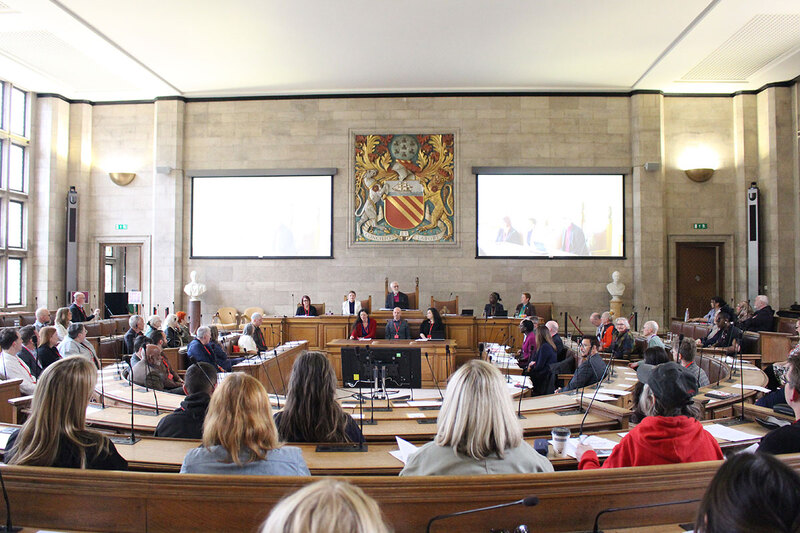 New report calls on government to commit extra £100bn to SAHP for social rent homes #UKhousingThe government has been told that an additional £100bn needs to be pumped into the Social and Affordable Homes Programme to deliver new social rent homes #UKhousing
The call is one of more than a dozen recommendations made in a new report by the Manchester Social Housing Commission called It’s time for a social rent revolution.
The report stated: “The government must significantly increase its target for building new homes for social rent from 18,000 new homes per year to 90,000 net additional homes per year, while protecting tenants from onerous rent increases.”
The current SAHP has a target of 180,000 homes over the 10-year period. The increase to 90,000 homes a year annually is something Inside Housing and dozens of organisations across the sector were calling for ahead of the SAHP.
Read more



The report highlighted that building 90,000 social rented homes each year over 10 years would yield an estimated £3.50 in economic benefits for every £1 spent and would pay back the public cost of building within 11 years, in part through savings on welfare support from lower rents and temporary accommodation costs.
The commission also believes that councils’ £17bn Housing Revenue Account (HRA) debt should be cancelled as this prevents them from building new homes and retrofitting existing stock. This in addition to a review of the 2012 HRA self-financing system.
Social landlords should get longer-term access to the preferential rate borrowing via the Public Works Loan Board to finance new build and retrofits, and with SMEs to develop an alternative social housing supply chain.
The Manchester Social Housing Commission is made up social housing tenants, grassroots community organisations, senior public and voluntary sector leaders, housing and planning professionals, academics, housing campaigners, politicians and officers at Manchester City Council.
It was created by the Social Homes for Manchester coalition (SH4M), a network of community and voluntary sector organisations in the city.
SH4M was formed in 2023 with the aim of building a city-wide movement for housing justice. This was because “communities in Manchester had seen enough of luxury high-rise towers being erected across the city’s skyline while records were being broken for levels of homelessness and children living long-term in poor quality temporary accommodation”.
The coalition sees the climate and cost of living crises as critical aspects of the housing emergency and that retrofitting existing stock while building homes with better insulation and onsite renewable energy would reduce both carbon emissions and people’s energy bills.
Among the report’s recommendations included amending the definition of social and affordable housing in the National Planning Policy Framework to define these different tenures in relation to local household income.
Introducing tougher targets and minimum requirements for social rent in all developments based on local housing need assessments that explicitly calculate the amount of social housing needed to eliminate temporary accommodation and homelessness.
In London, this target was recently cut from 35% to 20% under the justification that housebuilding rates of crashed over the past 18 months.
In contrast, the Manchester Social Housing Commission wants to ensure private developers make their contribution to social rent delivery by reforming the viability percentages in planning practice guidance and introducing a national requirement for developer contributions to set a nonnegotiable minimum target.
Legislation on land disposal should be modernised to give local authorities and other public bodies explicit consent to use public land to subsidise social housing delivery.
The report also called for the implementation of Shelter’s 2024 ‘Home Again: a 10-city plan to rapidly convert empty homes into social rent homes’. This plan includes a mix of targeted grant funding, stronger compulsory purchase powers, tougher and mandatory council tax premiums on empty homes and short-term lets, and ringfencing all second home and empty home premiums for acquiring empty homes.
Plus, the English Devolution and Community Empowerment Bill should be amended to improve community rights and participation in planning and regeneration.
The changes should focus on the duty of regional mayors and create an obligation for the government to assess and report on the right to participate in decisions, the right to a healthy environment and the right to a healthy home.
Writing in Inside Housing alongside the report’s launch, Venus Galarza, commissioner and former policy manager at Shelter, said: “Ministers and frameworks change, and communities and the sector are just expected to adapt each time.
“However, we know homes are not built at the speed of politics. A nationwide social homes programme will take planning, investment and co-ordination in the long term.
She added: “The need for continuous commitment is becoming harder to ignore. Waiting lists and private rents remain high, and more families are being placed into temporary accommodation for long periods of time.
“Working people are struggling to find homes they can genuinely afford. For younger generations, owning a home is only a dream. The focus on delivering social homes cannot disappear with the next election or cabinet reshuffle.”
Sign up to Inside Housing’s Daily News bulletin
Sign up to Inside Housing’s Daily News bulletin, featuring the latest social housing news delivered to your inbox.
Already have an account? Click here to manage your newsletters.
Related stories