You are viewing 1 of your 1 free articles
The King’s Speech: housing resolutions decades in the making
Jules Birch analyses the key takeaways for the social housing sector from this week’s King’s Speech



Jules Birch is an award-winning blogger who writes exclusive articles for Inside Housing
 Jules Birch analyses the key takeaways for the social housing sector from this week’s King’s Speech #UKhousing
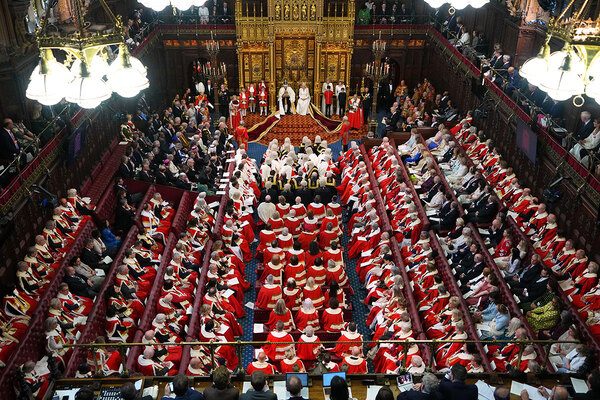
If anyone is able to avoid the wall-to-wall coverage of Labour’s personalities and internal politics, then they would find that Wednesday’s King’s Speech signals some significant progress on housing policy.
As the background briefing document makes clear, the government is attempting to resolve problems that have dogged housing for years, decades and in one case more than a century.
Taking those problems in reverse order of intractability, the Social Housing Renewal Bill will finally kill off three zombie policies that were introduced by the Conservatives 10 years ago but never implemented.
Read more


A set of requirements – for local authorities to introduce fixed-term tenancies, charge higher rents for higher-earning tenants and sell off high-value homes – threatened the very existence of social housing, but became untenable in the wake of the Grenfell Tower fire. Now they will be repealed, with the government arguing this will give providers greater confidence to invest in new homes.
The same bill will introduce the previously announced significant changes to the Right to Buy: increasing the eligibility threshold from three to 10 years, reducing percentage discounts up to a maximum of 15% and exempting new homes so that they cannot be sold for 35 years.
These measures should dramatically reduce demand for the Right to Buy, especially when accompanied by reductions in maximum cash discounts to pre-2012 levels and an extension of ‘cash floor’ protection.
“The government could have used its huge majority to follow Scotland and Wales by abolishing the Right to Buy... but has instead opted to curb it”
But they will not kill the policy completely. The government could have used its huge majority to follow Scotland and Wales by abolishing the Right to Buy, or allowed local authorities to apply for exemptions for areas of high housing stress, but has instead opted to curb it.
Meanwhile, the Remediation Bill aims to deliver on Labour’s manifesto commitments to fix the cladding crisis and make those responsible pay towards fixing the problem they caused.
Nine years on from Grenfell, the government says the bill “will tackle those who are blocking remediation, restore confidence in the housing market and make sure no building, and no resident, is left behind”.
Measures will include allowing developers and others who have paid to fix buildings to pursue construction product manufacturers “rather than being blocked by technical legal barriers”.
It would also give regulators powers to impose “severe sanctions” to punish those who “continuously and egregiously block remediation”, mandate how external wall assessments are carried out and introduce a register of mid-rise buildings between 11 and 18 metres.
The bill would introduce a new legal duty to remediate to compel those responsible for buildings, such as freeholders, to fix them, and fix gaps in previous legislation to protect residents in cases where building ownership is unclear or negligent. It would also introduce a remediation ‘backstop’ to allow a third party such as Homes England to step in and do the work if necessary.
On the face of it, the bill will fix many of the problems that have emerged in the wake of the building safety crisis and have affected the construction and management of many, if not most, blocks of flats built during this century.
However, End Our Cladding Scandal (EOCS) called it “too little, too late” and said it did not deliver on the manifesto commitments.
The campaign group said: “The bill is silent on the key issues Labour spoke so strongly about in opposition: non-cladding defects, non-qualifying leaseholders, the failing Developer Remediation Contract, weak risk assessment standards, extortionate buildings insurance and shared ownership.
“As it stands, the bill will do nothing to improve the lives of leaseholders and residents any time soon. In fact, the harm being done – to ordinary people, to communities and to the wider housing market – risks becoming entrenched.”
EOCS added that time was running out for Labour to take control of the crisis with a co-ordinated national programme to make all affected buildings fully safe.
This is just the beginning for the bill, and there will be plenty of opportunities to amend it as it goes through parliament, but it could be far from the end of the crisis.
Finally comes the most intractable housing problem of all: leasehold. Attempts at reform of the feudal system of land ownership date back to 1884 and have repeatedly foundered on opposition in parliament from property owners who fear breaking laws written to protect their interests.
“All this gives the government a good, if slow-moving, story to tell on housing policy that is being crowded out by the personalities and the politics”
The Commonhold and Leasehold Reform Bill should, finally, mark the beginning of the end for leasehold in England and Wales. The headline proposal is to cap ground rents at £250 a year for 40 years before they reduce to a peppercorn. Up to 900,000 leaseholders currently pay more than £250 a year.
That’s combined with measures to make commonhold a genuine alternative to control by third-party freeholder landlords, and to make it easier for existing leaseholders to convert to commonhold, plus a ban on new leasehold flats and the abolition of forfeiture.
If that sounds like the epitome of incremental change – leasehold itself would effectively be on a lease – the caution will be justified if the legislation manages to withstand challenges from freeholders who have already taken more modest changes to court.
The complexity of the reforms is illustrated by the need for amendments to legislation introduced in 2024, that was meant to make it cheaper and easier for leaseholders to extend their lease or buy their freehold, but has still not been fully implemented. And even freehold ownership can be open to exploitation, as shown by the need for new measures to protect freehold homeowners from unfair enforcement of estate management charges.
Some will argue that this falls short of Labour’s manifesto pledge that it “will act where the Conservatives have failed and finally bring the feudal leasehold system to an end”, but even if “finally” only means “eventually”, it will be more than previous governments have achieved.
All this, plus the Renters’ Rights Act coming into force this month, gives the government a good, if slow-moving, story to tell on housing policy that is being crowded out by the personalities and the politics.
How quickly it should be sharpening the narrative on housing will be a key question in the developing Labour leadership contest.
Jules Birch, columnist, Inside Housing
Sign up to Inside Housing’s Best of In-Depth newsletter
Sign up to Inside Housing’s Best of In-Depth newsletter, a weekly compilation of our best features and comment.
Already have an account? Click here to manage your newsletters.
Related stories