Birmingham: A review of the city’s key learnings on its net zero journey to date and how this influences its future plans
As a civic leader, major local employer and service provider, Birmingham City Council recognises the need to do all it can to reduce greenhouse gas emissions and increase climate resilience


 As a civic leader, major local employer and service provider, Birmingham City Council recognises the need to do all it can to reduce greenhouse gas emissions and increase climate resilience #UKhousing
Go back to the Cities Encyclopaedia
With a stated aim of making Birmingham net-zero carbon by 2030 (or as soon as possible), how is it going, and what have been the key learnings to date?
The council declared a climate emergency in June 2019. The full council unanimously made the commitment to take action to reduce the city’s carbon emissions, and to do so in a way which reduces inequalities and brings communities with us. The stated ambition is to accelerate the pace of net zero to 2030. However, we recognise that to achieve this level of acceleration city-wide requires significant system and organisational change beyond areas in the direct control or influence of local government, and which will need to balance economic, environmental and social outcomes.
Accelerated ambition sharpens focus. Since the 2019 declaration and the council’s formation of a ‘route to zero carbon’ team in 2022, it has made positive progress in its greenhouse-gas accounting, leveraging of key policy powers and on-the-ground delivery. However, building the scale and pace of delivery, and the investment needed to facilitate this, takes time, resources and capabilities that are beyond the scope of local government alone. As a civic leader, a major local employer and service provider to the city and its citizens, we recognise the need to ensure we are doing all we can to address the dual challenges of greenhouse gas emissions reductions and climate adaptation and resilience, but we can’t meet net zero without partnerships, innovation in approach and the buy-in of stakeholders.
“We can’t meet net zero without partnerships, innovation in approach and the buy-in of stakeholders”
Birmingham’s territorial emissions include all those within the city’s boundary. The Department for Energy Security and Net Zero (DESNZ) publishes annual local authority and regional greenhouse gas emissions data on industry, commercial, public sector, domestic, transport, land use, land-use change, and forestry, agriculture and waste activities. These are the most reliable and consistent breakdown of greenhouse gas emissions across the country and show annual emissions from 2005, with the 2024 publication providing data for 2022. We use this to track progress in reducing the city’s territorial emissions. Using these nationally derived statistics, the Birmingham is realising a level of greenhouse gas emissions reduction in line with UK Core Cities. This will continue to be highly influenced by UK carbon-budget policies, most particularly in private-vehicle transport, building heat decarbonisation and investment in renewable and low-carbon electricity.
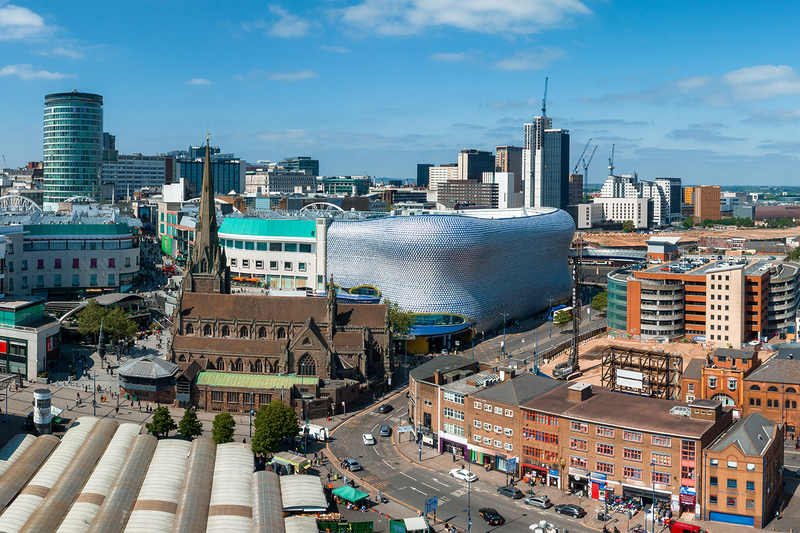
The domestic (32%), transport (26%) and industrial (22%) sectors make the greatest contribution to Birmingham’s territorial emissions. While the council is not directly responsible for these city emissions (other than those within the scope of its own day-to-day activities), it does have the ability to influence change through its placeshaping powers.
Our most recent activities include:
- A new set of planning policies aimed at accelerating the reduction of embodied and operational greenhouse gas emissions from the built environment. These policies are expected to commence in 2026.
- Preparation of a heat network strategy to direct the significant opportunity heat network zoning powers present: 20% or more of existing heat demand could be supported by heat networks, tackling one of the most complex decarbonisation challenges.
- Influencing changes to the way people and goods move around our city using transport as a key enabler. We need to achieve a rapid shift away from single-occupancy private car use. The Birmingham transport plan sets out the dramatic decrease in vehicle kilometres travelled required to deliver transport decarbonisation and outlines how the city’s transport system needs to be transformed to meet the challenges of the next decade.
- A waste strategy review to align the city’s future municipal-waste responsibilities with net-zero ambitions.
The council’s direct organisational greenhouse gas impact contributes less than 1% to the city’s total greenhouse gas emissions. However, in seeking to demonstrate leadership, our Greenhouse Gas Protocol (GHG)-aligned annual account enables us to identify the council’s greatest emissions sources and focus our own decarbonisation efforts. Around 50% of the council’s emissions fall under Scope 1, arising from the combustion of fossil fuels, primarily gas, in our buildings and diesel in our fleet vehicles, and 50% fall under Scope 2, arising from the consumption of electricity by our buildings and the city’s streetlights.
Our Scope 3 emissions are much more difficult to determine, because they occur up and down our supply chains, fall outside our immediate control and are often shared with other parties (eg contractors and suppliers). This makes gathering consistent data on these activities much more challenging, and we are currently unable to provide accurate figures. We are taking steps to improve our data and have used the GHG Protocol Corporate Value Chain (Scope 3) Standard to screen and estimate the potential scale of these emissions.
The scope of activities that fall within the council’s Scope 3 emissions is significant, and we estimate our Scope 3 impact to be significantly greater than our Scope 1 and 2. This is partly due to the size of Birmingham’s administrative boundary and asset base, but also reflects the size of the role of a metropolitan district council. For Birmingham City Council, our Scope 3 emissions are dominated by three activities: procurement of goods and services (the products and services we purchase to deliver our services); council housing (which we use to provide homes for our citizens); and the energy-from-waste plant (which we use to manage our citizens’/city’s waste).
Read more
What have been the key learnings to date?
Net zero is a term encompassing a vast range of activities and sectors. It can appear an overwhelming challenge without clear focus, so it is essential to create a baseline of where you are and identify priorities. This will be influenced by your level of direct control, scope of role or powers as a local authority (or business) and timeframe for influence.
In local government, structuring the net-zero challenge is an immensely complex undertaking, and different tiers of local government have different scopes and roles. Undertaking an annual GHG Protocol-aligned account of emissions has been a key early step in our route to zero carbon, but the effort required to collate information held in multiple parts of the organisation, and captured in different ways, was no small undertaking. The second year has been easier and, as we improve data-gathering and automation, we expect to build it into business-as-usual reporting.
Local government powers are driven by different objectives and UK policy directives, so areas of clear alignment with net zero need to be established and embedded into options assessments early on. We are working collaboratively across various teams, but the timing of opportunities to influence do not always align, or take multiple years to realise change – these timeframes need to be mapped.
How fundamental is the decarbonisation of heat to delivering your net-zero aspirations and regeneration across the city?
Heat decarbonisation is one of the most critical, but difficult, challenges we face in achieving net zero. We need to fundamentally change how we heat our buildings – the heat source, the input fuel, the type of system. But these changes also require major investment in infrastructure, a whole-building approach that considers the optimum package of measures to ensure affordability, and supply-chain investment in new skills and capabilities. It is a system-change challenge of awesome complexity. With limited policy direction to date on the level of energy performance expected of our existing built environment, there is a focus on core energy infrastructure and grants to support the switch from gas-fired heating to heat pumps, such as the Public Sector Decarbonisation Scheme. Demand reduction and demand management play important roles in ensuring the switch to an electrified heating future is suitable and affordable for each building in its local context. The energy hierarchy remains a key tenet.
In the domestic sphere, we recognise that improving energy-inefficient homes not only contributes to emissions reduction, but can reduce the cost of living, lead to improved health outcomes, provide employment opportunities and even facilitate placemaking and community cohesion. The council is taking a very targeted approach.
“It is essential to create a baseline of where you are and identify priorities”
Homes are responsible for over 35% of Birmingham’s greenhouse gas emissions, largely due to the use of natural gas for space and hot-water heating. Over two-thirds have an Energy Performance Certificate rating of Band D or below. This means that more than 300,000 homes will require investment just to meet the minimum recognised standard of energy performance targeted by government-supported schemes like the Warm Homes: Social Housing Fund, Warm Homes: Local Grant and Energy Company Obligation (ECO) 4.
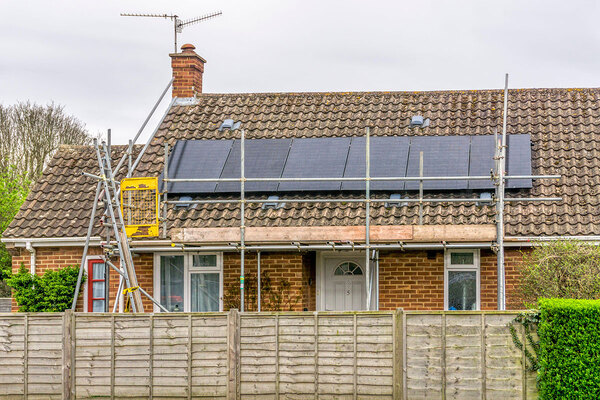
Across Birmingham, government data suggests that 23% of the population live in fuel poverty. In some wards, independent analysis suggests this could be up to 50%. This can be significantly reduced through appropriate retrofitting. The council is committed to scaling up retrofitting. This can be seen in our ambitious projects under the Social Housing Decarbonisation Fund Wave 2 which are well progressed. The programme ensures over 2,000 council-owned homes receive a package of retrofit measures before September 2026. This includes 300 homes which are receiving multiple measures under a whole-house retrofit approach.
Building on this, we are appointing a cohort of retrofit delivery partners who will secure funding through the ECO programme and invest across all housing tenures in targeted areas of Birmingham. This privately funded investment, expected to be in the region of £60m per year, is provided via the large energy companies, and aims to support the most vulnerable families living in the most inefficient homes. Working with our new ECO partners, the council will take a strategic and evidence-based approach to retrofitting at least 3,000 homes per year over the next five years. This is expected to reduce fuel bills in the region of £1.2m per year and save 3,000 tonnes of carbon dioxide equivalent emissions annually.
In scaling up our retrofit programme, we are developing a place-based approach which builds on our learning from a successful Local Authority Delivery (LAD) scheme. This place-based approach prioritises areas of greatest social need, as well as areas with greater numbers of energy-inefficient homes. It will enable collaborative working with other social housing providers and an offer for all tenures, avoiding the fragmentation of delivery that can lead to poor value for money.
It also allows the council to consider the impact and opportunities retrofitting presents for energy-system decarbonisation, using the Local Area Energy Planning+ (LAEP+) tool to test the impact of renewable-energy generation and heat-pump installation on local systems. LAEP+ has been provided as part of an Ofgem-funded project led by the West Midlands Combined Authority. Alongside the assessment undertaken on heat network zones as part of the DESNZ pilot, it allows us to assess the deliverability of community retrofit schemes and identify areas of opportunity for community-based energy infrastructure.
What infrastructure challenges do you need to address to decarbonise heat across the city?
We ultimately need a blueprint that demonstrates the most viable decarbonisation pathway for each community or area of the city. This will provide clarity for those living, building and investing in each community, but also a basis on which to plan and time energy-system investment and identify opportunities for community-based energy investment. We have been working with DESNZ over the past 18 months to assess the opportunity for heat network zoning: regulation will designate locations where heat networks present the most cost-effective route to decarbonise heat for buildings. Within these zones, certain types of building or those with a specified heat-usage threshold will be mandated to connect to a heat network developed by an appointed delivery partner.
The scale of opportunity for heat network zones in Birmingham is significant: an estimated 20% of current heat demand could be supported by heat networks utilising existing renewable and waste heat in the city’s boundary. While this presents an exciting opportunity for decarbonisation, realising this scale of infrastructure investment will take decades and require significant coordination. As we work to develop a heat network strategy for Birmingham, the locations, timing and route to market of potential zones will need careful planning, as will the resources and capabilities required to fulfil the proposed local government zone coordinator function. While we anticipate that heat network zones will reduce the scale of demand for electricity in a local area and thereby reduce grid investment, the pace at which a zone can grow may itself be constrained by local grid capacity.
Work undertaken as part of the advanced zoning programme identifies the total heat supply and demand within proposed heat network zones. This work has created a high-level masterplan for delivery. One of the most notable findings is the significant difference between the heat demand within a zone and the supply available, with some zones having a heat surplus and some a deficit. This presents a challenge to delivering zonal heat networks in the city, as policy consulted on to date does not anticipate interaction between zones. To ensure valuable heat resources are maximised and the full scope of heat decarbonisation via heat network zones can be realised, this critical interplay between areas must be accounted for and managed at the local level.
“Homes are responsible for over 35% of Birmingham’s greenhouse gas emissions, largely due to the use of natural gas for space and hot-water heating”
In most non-heat network zone areas of the city, heat decarbonisation for most buildings is likely to involve the electrification of heat via building-level heat pumps. However, heat-system change requires a whole-building approach that considers the role of energy-demand reduction, demand management, efficiency, and generation and storage to ensure suitable and affordable options are selected. Space, building orientation, neighbourhood characteristics and local grid capacity need to be considered and can limit the options available.
This is where we see the role of place-based decarbonisation that considers the needs and opportunities within a local geography and seeks to align investments and funded initiatives. Spatial energy planning is therefore a crucial component of a city-wide heat decarbonisation blueprint, as buildings, transport and industry will all place increased demands on the electricity network. Local government coordination with the Regional Energy Strategic Plan function of Ofgem will be critical to ensure the right infrastructure is available to support the right demands in the right locations and at the right time. The DESNZ-funded Local Net Zero Accelerator is one example of a place-based approach. It aims to gather evidence which can be used to develop investment-ready business cases for patient capital and impact investors. The focus is greenhouse gas emission reduction through housing retrofit, but the project also seeks to identify non-housing interventions that support delivery of a neighbourhood net-zero plan and decarbonise ‘place’.
Castle Vale, a housing estate in the eastern area of the city, has been selected as a focus due to its representative building types. It therefore has the potential to transfer learning to other areas of the city, but also to support a community energy cooperative and align with transport, natural-environment and wider social and economic activities.
How do you measure the social value impact of your work across the city?
By working in targeted communities, we are able to develop relationships with community groups, community leaders and local champions to better engage citizens and energy consumers. The council has a critical role to play in the promotion and delivery of net-zero programmes, but local, respected community organisations are far better equipped to raise awareness and build trust. This collaborative approach leads to far higher take-up of grant-funded initiatives and reduced drop-out rates.
In the case of housing retrofit, it is important that we recognise that these projects involve working in people’s homes. Time is needed to engage, inform and generate buy-in, which only comes when we focus on the benefits to the household rather than the required outcomes of the funding programme. We must start by understanding people’s challenges, drivers and concerns. The best way to do this is to engage early through trusted organisations.
Organisations across Birmingham are delivering change at a neighbourhood level. Civic Square in Ladywood, the MECC Trust in Balsall Heath, Retrofit Balsall Heath and Acocks Greener work with local households on a community-led and neighbourhood-based approach to decarbonising energy and homes.
These organisations and several others have developed invaluable knowledge on retrofitting, and worked with the council to drive interest for funded programmes. Through our retrofit scale-up programme, we hope to support these organisations in community-led engagement and upskilling other organisations, thus growing capacity and capability across the city. The scaling-up of retrofit delivery is a great example of how far-reaching social-value impacts can be realised if programmes of work are properly planned and co-ordinated.
“To ensure valuable heat resources are maximised and the full scope of heat decarbonisation via heat network zones can be realised, this critical interplay between areas must be accounted for and managed at the local level”
The council is developing a housing decarbonisation route map, which will establish timescales and the number of homes we need to retrofit to meet net zero; as a conservative estimate, we believe this to be around 10,000 homes per year for the next 25 years. This scale of need has the potential to create a retrofit market in Birmingham of at least £180m per year (based on 10,000 homes being retrofitted annually at a conservative cost of £18,000 per property). The council is keen to see the majority of this investment remaining in the city and benefitting the businesses and people of Birmingham. Therefore, opportunities for community-led investment and new local skills and jobs in the retrofit market are a priority. To this end, we are working closely with schools, colleges, universities and local businesses to develop career pathways into retrofitting, energy and heat. Stage 1 of this work, supported by DESNZ, has seen material developed for school curriculums, as well as retrofit training equipment being installed in our colleges.
Birmingham is the youngest city in Europe, with 40% of the population under 25. Unfortunately, right now, one in five of our young people is unemployed. By developing these career pathways, providing training and apprenticeship opportunities and demonstrating the potential of being involved in a retrofit career, we aim to tackle this challenge.
The council has also commenced a programme of capacity building among small and medium-sized enterprises (SMEs). If we are to achieve the number of home retrofits required per year to meet net zero, building capacity in construction SMEs is critical. At present, retrofit is often seen as risky due to years of funding peaks and troughs and scheme failures. The accreditation process can also be a burden for small businesses that must focus on installations to maintain viability. By developing a committed route map and incrementally building delivery demand over the coming years, we aim to establish a long-term pipeline of opportunity and a network of support allowing local SMEs to get involved.
Sign up to Inside Housing’s Sustainability newsletter
Sign up to Inside Housing’s weekly Sustainability newsletter, featuring our in-depth coverage of the sector’s journey to delivering net zero.
Already have an account? Click here to manage your newsletters.
Related stories



CPD webinar on demand: Project management and data – a recipe for warm homes success?SPONSORED ARTICLE