Brighton & Hove: How we plan to decarbonise a city
As the sunniest city in the UK, solar power is an obvious focus, says Tim Rowkins, cabinet member for net zero and environmental services at Brighton & Hove City Council, but that is only the start


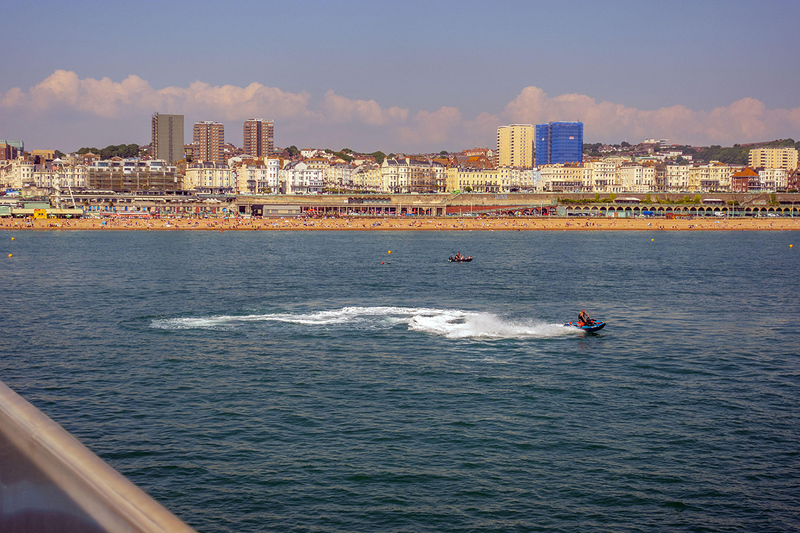 As the sunniest city in the UK, solar power is an obvious focus, says Tim Rowkins, cabinet member for net zero and environmental services at Brighton & Hove City Council, but that is only the start #UKhousing
Go back to the Cities Encyclopaedia
In December last year, we published our decarbonisation pathways study, a report that examines the energy systems in Brighton & Hove in detail.
Aside from giving us a more granular understanding of how our city uses energy, it also identifies what a net-zero Brighton & Hove might look like in terms of heat pumps, fabric improvements, heat networks, renewable-energy generation and electric-vehicle (EV) infrastructure. It identifies 110 priority projects and gives us an idea of the scale of investment required to deliver them.
Part of this work inevitably involves significantly ramping up the decarbonisation of our own operations, and we’re making good progress. We are in the final stages of delivering our largest roll-out of rooftop solar power to date, including 293 solar panels on our city-centre swimming and leisure complex.
Our capital commitments for energy efficiency and renewables mean we are on track for 90% of our 12,000 council homes to have an Energy Performance Certificate rating of Band C or better by the end of this year. We have 70 fully electric vehicles across our fleet, including 10 HGVs in our waste collections service.
I’m very proud of this work. However, the reality is that the council is only directly responsible for about 2% of the city’s emissions. Even if we are 100% successful in decarbonising our own operations, we’re still 98% short as a city. As such, our decarbonisation pathways study marks a shift in focus to the emissions not directly in our control.
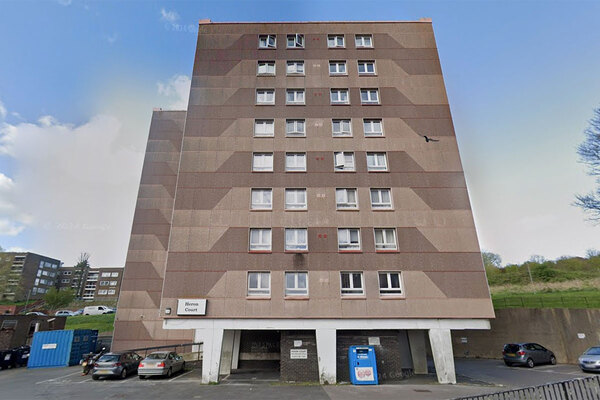
There are several numbers that spell out the scale of the challenge. The decarbonisation of the city requires: 105,000 properties (out of 136,000) to have some level of fabric improvements; 73,000 property-level heat pumps and 44,000 properties connected to low-carbon heat networks; 10,000 public EV chargers; 74MW of photovoltaics (up from the current 15MW) and around £800m worth of grid upgrades.
Electric charging infrastructure
Some of this is relatively straightforward. We already have the best EV charging coverage outside London, and we’re installing a further 550 chargers each year. The city’s first fully electric buses are on the way and the charging infrastructure at the depot means further electrification can take place. This is all the more significant because Brighton & Hove has the highest bus usage after London.
We have a large commercial property portfolio, with lots of potential rooftop solar capacity. Plus, we are officially the sunniest city in the UK, with a full 15 minutes more average daily sunshine than second-place Plymouth. If all the rooftop potential here were realised, it would be enough to meet more than 70% of the city’s energy demand.
Clearly, this makes an early focus on solar a priority. It will help bank carbon savings early and will also free up grid capacity for the large-scale electrification of heat.
The biggest challenge in the short term is how to attract sufficient external investment to deliver the pipeline of projects we consider to be priorities. We’ve been working in partnership with the National Wealth Fund to evaluate potential investment and delivery models, including lookin at what is happening elsewhere and how some of that may be relevant here in Brighton & Hove.
What we’re focused on is how to package obviously monetisable projects with some of the more difficult elements of the programme. For example, investing in a city-centre heat network may be very attractive, since a return can be made by selling the heat to the many homes and businesses in the area over a prolonged period.
“We see net zero as central to our plans for economic growth, both in the city and region”
But how do you attract investment into things like retrofit, where there isn’t an obvious route to getting your money back?
We see net zero as central to our plans for economic growth, both in the city and region. As part of Sussex Energy and the Greater Brighton Economic Board, we are already thinking beyond the city boundary. I’m very pleased that Sussex and Brighton is one of six regions confirmed as being on the Devolution Priority Programme.
This increases the likelihood of having both more powers and more funding to deliver net-zero projects, and places us at the centre of Great British Energy’s Local Power Plan and the Warm Homes Plan.
The world is dangerously off track to meet its emissions targets, with few people now believing that limiting global temperatures to 1.5°C above pre-industrial levels is even possible. The situation could not be more urgent, and Brighton & Hove is determined to step up.
Sign up to Inside Housing’s Sustainability newsletter
Sign up to Inside Housing’s weekly Sustainability newsletter, featuring our in-depth coverage of the sector’s journey to delivering net zero.
Already have an account? Click here to manage your newsletters.
Related stories