New homes can bring the generations together – if we build them that way
Our inquiry has shown us what tomorrow’s communities should look like and how to get us there, write Lord Richard Best and Anna Dixon, co-chairs of the APPG on Housing and Care for Older People



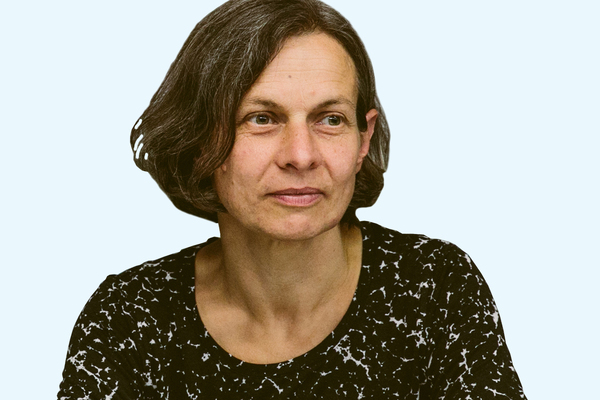
Lord Richard Best and Anna Dixon are co-chairs of the APPG on Housing and Care for Older People
 Our inquiry has shown us what tomorrow’s communities should look like and how to get us there, write Lord Richard Best and Anna Dixon, co-chairs of the APPG on Housing and Care for Older People #UKhousing
The All-Party Parliamentary Group (APPG) on Housing and Care for Older People has just concluded an inquiry into creating intergenerational communities. What we found reflects a pattern that has emerged gradually, without any single decision driving it: the way new homes are developed tends to keep older and younger people apart – and both groups are the poorer for it.
The problem runs in two directions. When major house builders develop large new sites – hundreds, sometimes thousands, of new homes – they very seldom include housing designed specifically for older people. And when specialist later living developers build for older residents, the design can limit meaningful contact with younger people.
Neither outcome is usually deliberate. But the cumulative effect is that new developments are less mixed by age and by life stage than they could and should be.
Read more


This matters because the benefits of intergenerational living are well established. Communities that work for the young and the old can lead to mutual support with everyday activities, reduce loneliness, save health and care budgets and make daily life more rewarding across the board. The case is not sentimental, it is practical and economic.
We visited schemes that show what is achievable when the ambition is there. A social housing provider created an innovative development where older and younger residents live as mutually supportive neighbours. We saw a supported living project bringing together young adults with learning difficulties and older people requiring some care, with residents from both groups providing friendship and mutual support.
In another scheme, 40 older people shared their development with eight university students in shared apartments. The students help organise social activities, assist with outings and shopping and troubleshoot IT problems. These projects work well.
But they remain unusual, not least because they require a degree of flexibility from public and private sector funders that the system does not yet routinely provide.
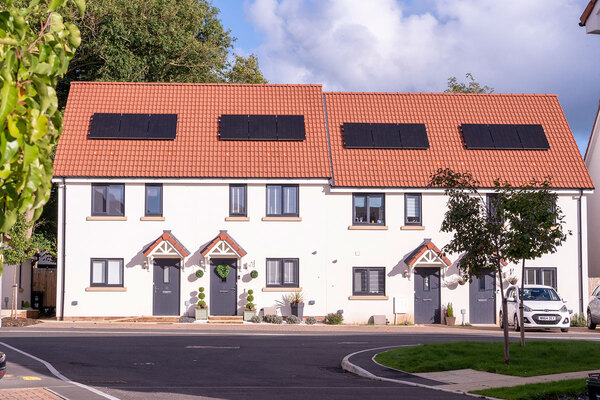
There is a more straightforward route to mixed-age communities that does not depend on bespoke arrangements: inclusive design. Homes built to Part M4(2) or Lifetime Homes Standards – with level entrances and accessible layouts throughout – are suitable for all age groups.
When every new home is designed this way, “unintentional” intergenerational communities emerge as a consequence of good design. People of all ages move in, age in place, and live alongside one another without any special intervention. Accessible design and placemaking would ensure, for example, that tomorrow’s new towns are created as genuinely intergenerational communities.
Meanwhile, our inquiry recommends that planning authorities require the inclusion of some accommodation for later living in every major new development – sometimes with care available, sometimes simply to enable “rightsizing” into more accessible, economical and secure homes. This is not about imposing a particular model. It is about ensuring developments reflect the full range of people who make up a neighbourhood, now and in the future.
We also took evidence on retirement villages – developments designed exclusively for older people. We heard these described as sometimes cutting residents off from the wider social world. But operators and residents told us that, when done thoughtfully, retirement communities can integrate meaningfully into their surrounding neighbourhoods: a café or restaurant open to the local area, a gym with non-resident members, a clubhouse available for community events, an adjacent day nursery.
The now-famous Appleby Blue development in south London has a busy community kitchen where old and young meet regularly to cook and eat together. These developments are not isolating, they show how active effort and commitment to become part of the wider fabric of a place can be hugely successful.
Mainstream house builders and social housing providers, alongside specialist later living developers, need to recognise the placemaking opportunity here. Building for mixed ages is not a planning burden to be managed, but a way of creating places where people of all generations want to live.
Older residents bring time, patience and community commitment. Younger households look out for their older neighbours in myriad ways. The generations may not want to share a home, or even a building, but there are extensive benefits from sharing a neighbourhood.
Our inquiry has shown us what tomorrow’s communities could look like. The task now is to make that vision the norm rather than the exception – and the housing sector is well placed to lead the way.
Lord Richard Best and Anna Dixon, co-chairs, APPG on Housing and Care for Older People
Sign up to Inside Housing’s Care and Support newsletter
Sign up to Inside Housing’s Care and Support newsletter, a fortnightly bulletin featuring care and support news and analysis.
Already have an account? Click here to manage your newsletters.
Related stories