You are viewing 1 of your 1 free articles
To build more social homes we need to do what is right, not what is easy
We need to form partnerships to harness the opportunity presented by the new mandatory housing targets and accelerate housebuilding, says Setareh Neshati, head of development at Westminster City Council



Setareh Neshati is head of development at Westminster City Council
 We need to form partnerships to harness the opportunity presented by the new mandatory housing targets and accelerate housebuilding, says Setareh Neshati, head of development at Westminster City Council #UKHousing
As a country, we need to build more social homes – that’s a fact. But we also need to ensure we are building homes that are sustainable, safe and fit for the future.
In the current operating and economic environment, that’s no mean feat. So how do we get there?
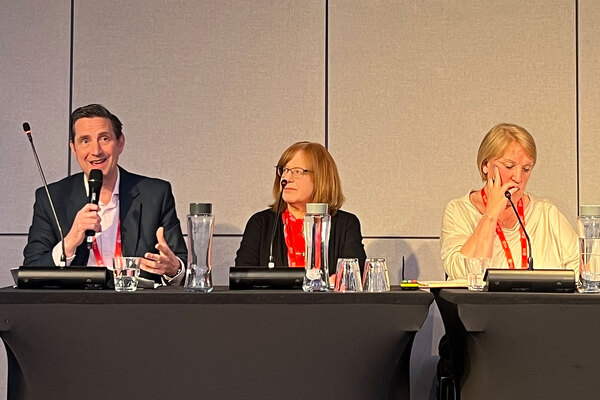
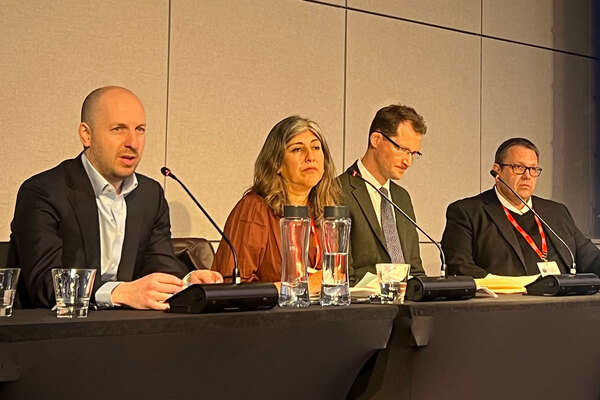
I recently had the privilege of attending Inside Housing’s development panel meeting, structured around the Build Social campaign. The panel shared practical expertise on how best to build a new generation of social rent homes.
Several industry leaders and I took the opportunity to exchange experiences and views on the current state of play and where we think improvements and efficiencies could be made to create more social homes and tackle housing waiting lists.
Read more


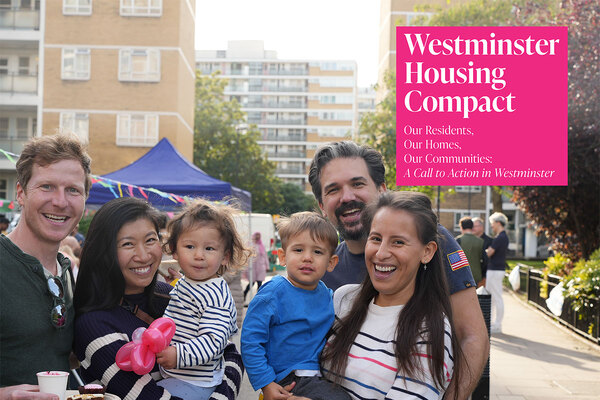
Westminster City Council is fully aligned to the build-social ethos. We have a healthy track record in this area – and we plan to do more.
As a local authority, we have committed to ensuring at least 50% affordable housing across our 4,000-home development pipeline, made up of social rent and London Living Rent.
In 2023, the council completed 263 homes, of which 214 were affordable. Last year, of the 300 homes delivered, more than 200 will be affordable. More than 100 consented market sale homes in the development pipeline have also been converted to social rent.
What was apparent, when speaking to my peers, was that there is a danger in being overly assured when projects are progressing to plan. When the local authority is operating as a developer, we cannot rest on our laurels and fail to meet challenges coming down the line.
We do, of course, welcome the implementation of the Building Safety Act, and the protections it provides to residents up and down the country, including in our borough.
“When the local authority is operating as a developer, we cannot rest on our laurels and fail to meet challenges coming down the line”
But we know that the new legislation brings challenges to construction and housebuilding. These are by no means insurmountable, but we are seeing delays on projects across the board, and the hurdles the industry is experiencing cannot be ignored.
What became clear at the Build Social panel, and something I find particularly positive, is that contractors are already looking at innovative ways in which they can support the Building Safety Regulator. This could be through funding resources to support projects at the pre-application stage, or through collaboration with clients to better understand who is most appropriate to manage risk.
The new regulatory processes have been in place for just over two years and are clearly here to stay. It is my view that the impact on projects is best navigated through clear planning, consistent engagement with guidance from the Building Safety Regulator and support from industry experts, to identify and mitigate delays as schemes progress.
The emerging mandatory housing targets will also give new impetus to everyone delivering new homes in the sector. It is vital that everyone harnesses the opportunity new housing targets can represent, pushing the boundaries of what is possible to achieve, and look to form partnerships that will accelerate delivery. Not just doing what is easy, but what is right.
Westminster City Council’s landmark Ebury Bridge development completed its first phase in December last year and families are now living in their new homes after several years of consultation and relocation.
In the first phase of Ebury Bridge alone, a total of 226 new homes were built, consisting of 16 returning leasehold homes, 110 for market sale and 100 high-quality council homes. This makes it the largest delivery of new council homes in south Westminster for 50 years.
“While there is more detail to come, I am hopeful that this combination of policy, ambition and clear targets will lay the groundwork for the sector to rise to the challenge”
We wanted to make a statement on the Ebury Bridge project, not just to replace an ageing 1930s estate, but to bring new, modern social housing into the heart of Knightsbridge. We strove to push the boundaries of what is possible in terms of design and sustainability, with the new buildings rated BREEAM Outstanding.
Our regeneration and redevelopment plan at Church Street is a significant uptick in Westminster’s ambitions. Across three sites, we will deliver 1,120 new homes alongside new public realm, new market infrastructure and community facilities. Lessons learned on the Ebury Bridge development will now be applied at Church Street and any future projects.
The Build Social panel also took time to consider the incoming Planning and Infrastructure Bill. The new bill has the potential to be one of the most important pieces of legislation the construction industry has seen in a long time, signalling the government’s intent to deliver the homes the country needs to alleviate the housing crisis and provide the firm bedrock for the UK to thrive.
While there is more detail to come, I am hopeful that this combination of policy, ambition and clear targets will lay the groundwork for the sector to rise to the challenge, and that the work done today will have major positive impacts five, 10 and 20 years down the line.
Westminster City Council is ready to play a major role in delivering more homes and helping this government and any future governments hit their housing targets. We are more than just the planning authority, we are an active partner in creating new homes and communities in Westminster, and look forward to rising to the challenge.
Setareh Neshati, head of development at Westminster City Council
Sign up for our development and finance newsletter
Already have an account? Click here to manage your newsletters
Related stories