You are viewing 1 of your 1 free articles
Lessons from an adaptation gone drastically wrong
Sam Crawford battled for years to get her home adapted for her disabled child. Due to failures to properly design the works, this ended up costing £250,000. But what went wrong? And what are the lessons for the wider housing sector to learn? Katharine Swindells reports


 Lessons from an adaptation gone drastically wrong #UKhousingSam Crawford battled for years to get her home adapted for her disabled child. Due to failures to properly design the works, this ended up costing £250,000. But what went wrong? And what are the lessons for the wider housing sector to learn? Katharine Swindells reports #UKhousing
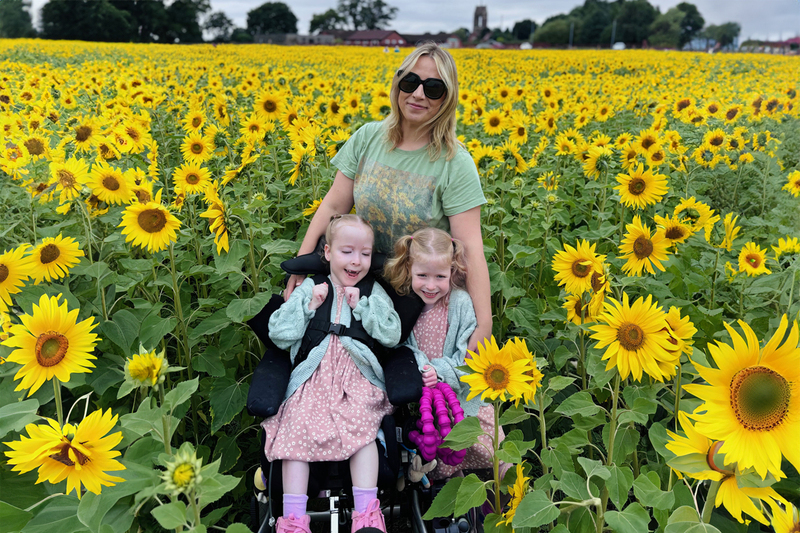
Sam Crawford’s dachshund puppy, Coco, scampers about as we sink into the plush, coffee-coloured sofa. The living room walls are bedecked with photos of her blonde-haired six-year-old twin daughters, Ava and Olivia.
In the downstairs bedroom, an enormous mural of Disney’s Frozen overlooks Ava’s specially designed bed. Ava has cerebral palsy, which means she cannot move herself and struggles to eat or breathe alone, and she also has seizures. The bedroom has ample space for Ava’s bed, chair and wheelchair. There is an armchair for a carer, and a connecting bathroom with an adapted bath.
“It’s our forever home,” Ms Crawford says. “We’re here now for as long as Ava needs it.”
But this beautiful family home didn’t come easily. For Ms Crawford, getting the adaptations for Ava’s needs has been a four-year battle with her housing association, district council and county council. It is an ordeal that has included multiple rounds of major home renovations, and forced Ava to spend weeks in a care facility away from her mother.
It has meant years of Ms Crawford feeling ignored and dismissed, has cost her thousands of pounds, and has left a combined bill to the public purse of almost a quarter of a million pounds.
A Local Government and Social Care Ombudsman (LGSCO) investigation published in October 2024 found the district and county council at fault, and ordered the councils to pay a combined £7,000 in compensation. While the ombudsman said this was a very unusual case, it set out a number of key learnings for the councils. And an array of experts – from the Housing Ombudsman to accessibility specialist and housing association Habinteg – say there are also lessons for the social housing sector on how to better handle complex adaptations cases.
The LGSCO report said: “At the centre of this is a child, who… continued to live in a property which did not meet their needs. They could not access the garden to play, and [their] carers have struggled to provide appropriate care in the limited space available. [The child] also had to stay in respite… impacting [their] right to a family life, which is one of the fundamental rights and freedoms under the Human Rights Act 1998.”
Inside Housing dug into the case to find out how other councils and housing associations can avoid the huge financial and emotional cost in other cases of complex adaptations.
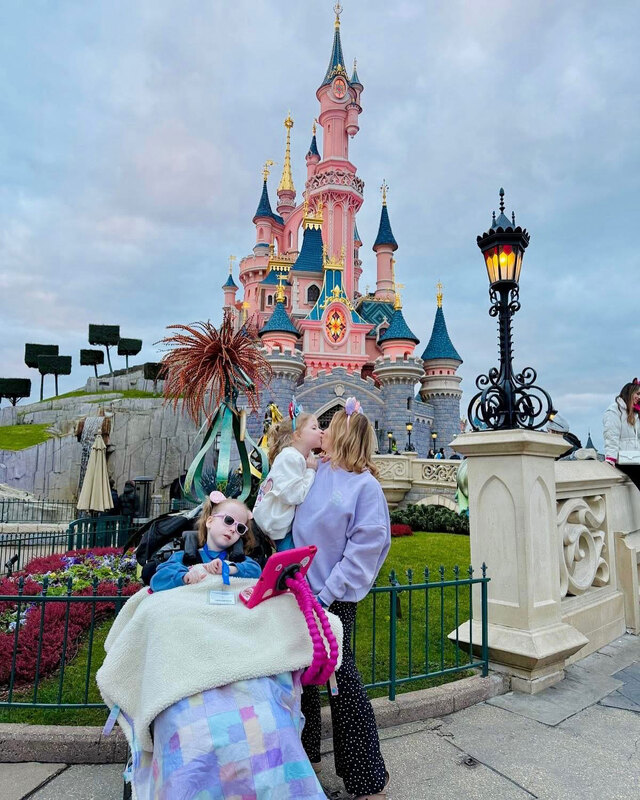
At the heart of it all, Ms Crawford is keen that I remember, is a little girl. She points to a photo on the wall: the family of three in front of the iconic pink castle at Disneyland Paris. It is from a trip the family took just a few weeks before, funded by the Make a Wish Foundation. Ms Crawford’s manicure still has Mickey Mouse motifs. Olivia is in her mum’s arms, giving her a kiss, and Ava is in front in her wheelchair, wrapped in a fluffy pastel blanket. All three are wearing Mickey Mouse ears headbands.
“I don’t know how many years we’ve got with Ava – she could live until she’s 20, she could live until she’s 10, she could live until next week, I just don’t know,” Ms Crawford says. “So we need to enjoy, as a family, as many experiences as we can, and they have taken three years away from us.”
We got in touch with the councils and the housing association involved in this case. Worcestershire County Council and Bromsgrove District Council declined to comment and referred Inside Housing to a joint statement from the time of the publication of the ombudsman’s report in October 2024, where they say they “wholeheartedly apologise” and are “committed to learning from this experience”.
The ombudsman’s report primarily discusses the role of the district council and the county council, as housing associations are not within its remit. However, as Bromsgrove District Housing Trust (BDHT) owned and managed Ms Crawford’s property, and provided the housing allocation and homelessness function for the district council, it was a key stakeholder in this case.
While BDHT wouldn’t address detailed questions from Inside Housing, a statement from chief executive Graeme Anderson acknowledged the “difficult experience” Ms Crawford and her family had been through, and says BDHT had “worked hard alongside the various partner organisations involved in supporting the family to try to provide suitable accommodation in what is a complex case”.
Mr Anderson says: “We acknowledge that our communications and management of the issues with the family could have been better and we are sorry for the impact this has had. We have learnt from this case and improved our services so there is no repeat.”
Ava and Sam’s story
It was February 2018, and Ms Crawford was four months pregnant, when she found out she had a disease called twin-to-twin transfusion syndrome, and had to have urgent, high-risk surgery. Ava and her sister Olivia were born remarkably healthy, and it wasn’t until they were three months old that Ms Crawford started to notice differences in the way Ava was moving her limbs compared with her twin. At around nine months old, Ava was diagnosed with cerebral palsy.
Ms Crawford quickly realised her two-floor, two-bedroom shared ownership house wouldn’t be suitable for Ava’s needs. But, as Ms Crawford had given up work to care for Ava and was a single parent, she couldn’t afford to buy or rent privately a home that fit Ava’s care needs. So in December 2019, the family declared themselves at risk of homelessness to BDHT, the housing association that carries out the housing allocation and homelessness function for Bromsgrove District Council.
At first, BDHT did not accept the duty, but after significant pushback, Ms Crawford was given ‘priority need’ banding in September 2020. But Ms Crawford didn’t know the fight to get suitable accommodation for her daughter was only beginning.
Given the complexity of Ava’s needs, there weren’t any homes the family could move straight into, so an NHS occupational therapist was tasked with viewing properties to ascertain which would be suitable with adaptation.
“This woman had never spoken to me, had never dealt with Ava, but was going around making recommendations,” Ms Crawford says. “There were properties that they said were suitable without even speaking to me, and we were going round and round in circles.”
All this time, Ava was growing – and her needs were growing. By three years old, she couldn’t roll over, sit up or move her arms herself. She had been diagnosed with epilepsy and was having frequent seizures. She was being primarily fed through a G-tube into her stomach. Ms Crawford was just about strong enough to carry Ava up and down the stairs, but Ava’s seizures in her arms made it even more difficult, and dangerous.
The housing association that owned Ms Crawford’s shared ownership flat agreed to buy it back from her, but until the council found somewhere suitable, she was trapped there. And, as Ms Crawford wasn’t working, she was falling into increasing debt by the month.
In June 2021, a BDHT social rent property was offered to Ms Crawford, just around the corner from her sister. Ms Crawford visited with the paediatric occupational therapist who had known Ava since her diagnosis, and they agreed that the property would be well suited to an extension for Ava’s needs.
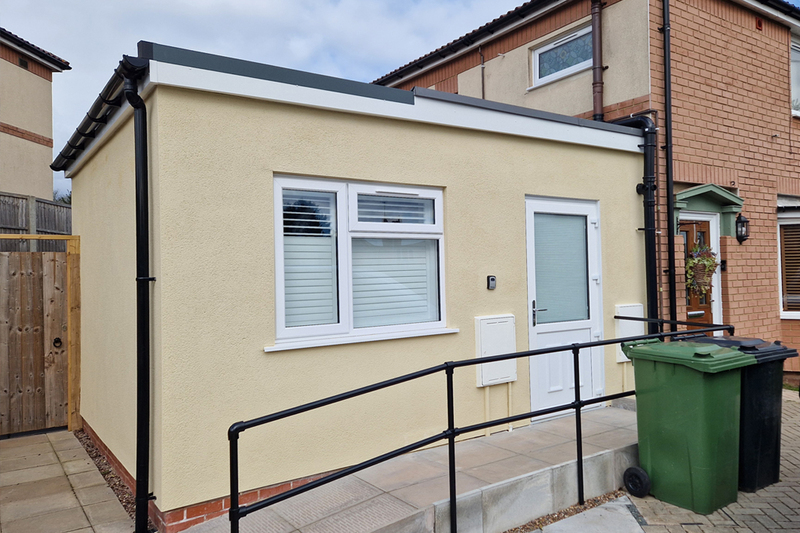
However, BDHT proposed only internal adaptation. After Ms Crawford appealed, an extension was granted, though not as large as she had hoped, as that would have required planning permission.
“I was kind of like, ‘Hopefully they’ll start listening to me now.’ But then it just continued to be problem after problem.”
The funding was agreed by the district council and the county council: the maximum £30,000 from the disabled facilities grant, plus another £20,000 topped up, and the rest to be covered by the NHS and social care.
But still, the ombudsman’s report says, Ms Crawford wasn’t properly involved in the process. Finally plans were agreed, but Ms Crawford still had worries.
“I raised concerns about the size [of the bedroom], and I was told it would be suitable. And I was getting really stressed and going, ‘I don’t believe it.’ And in the end, I messaged the [occupational therapist] saying, ‘If you say it’s big enough, I have to trust this process.’”
When the family moved in September 2022, all Ms Crawford’s fears were confirmed. “Literally, the day I moved in, I said, ‘This isn’t going to work. We can’t even get her chair into her bedroom, I’m bashing Ava’s legs against the wall.’”
The ombudsman’s report found that the council “failed to ensure [Ms Crawford] understood the technical plans before she agreed to them” and failed “to communicate effectively with [Ms Crawford] and the [council’s occupational therapist] about the plans”.
The bedroom wasn’t big enough for Ava’s bed, her wheelchair and a chair for her carer to sit in, and the doors opened inwards rather than sliding, which reduced the space even more. Perhaps the most terrifying aspect was the emergency exit from Ava’s bedroom: a small window more than a metre from the ground. In the event of a fire, an adult would need to lift Ava and push her through. As Ava cannot control her limbs to jump down herself, the other side would be a very dangerous or even fatal drop.
“There were properties that they said were suitable without even speaking to me, and we were going round and round in circles”
Ms Crawford requested an urgent meeting, and asked to come along to advocate for her daughter, but it went ahead without her.
The email from BDHT, seen by Inside Housing, said: “It is felt that it would be appropriate for the multi-agency meeting to go ahead with partners, and we will agree at this meeting who will meet with you to discuss the outcomes and also provide you with the minutes from the meeting.”
At this meeting, the district council and the county council agreed that the works needed to be fixed with a second disabled facilities grant. BDHT removed itself from the process, as, according to the ombudsman’s report, it “did not want to manage any further adaptations at the property”.
The councils proposed that the works should be done inwards, rather than redoing the extension. Ms Crawford insisted that, among other issues, this would significantly reduce the size of the living room, meaning that Ava and her equipment couldn’t be in the room while friends or family were visiting.
By spring 2023, Ms Crawford hit breaking point, and paid around £2,500 for independent reports by an occupational therapist and an architect. These reports, seen by Inside Housing, confirmed that a further extension was needed. A risk assessment by the fire service also confirmed that the bedroom window fire exit was not appropriate.
“It was at that point they then sort of saw all the reports and said, actually, I think we need to meet with you now,” Ms Crawford says.
The council brought in Millbrook, the company that provides its home improvement services, to design the new plans, which were agreed in summer 2023. But by the time the works began, it was February 2024, when Ava was scheduled for major surgery.
“I said, ‘She’s going to have massive surgery, I can’t have the housing work going on at the same time’,” Ms Crawford says. “They were all pretending they were listening to me, but they weren’t.”
Because of the work, Ava had to go into a care facility for five weeks, which the ombudsman’s report said violated her right to a family life, “which is one of the fundamental rights and freedoms under the Human Rights Act 1998”.
Ava’s bedroom was finally finished in June 2024, and the garden in October 2024, ending a more than four-year ordeal for the family. The combined cost, according to Ms Crawford’s notes, came to nearly £250,000.
The LGSCO’s report found: “Whilst [the district council] must use public money carefully… in this case, it allowed those concerns to override [the child’s] needs. Ultimately, this led to significant further costs than if it had ensured the scheme was suitable to meet [the child’s] needs in the first place.”
Learning from the case
This adaptations case went dramatically wrong. But what can housing associations and councils learn for how to better manage similar cases in future? Paul Smith, director of Foundations, the national body for disabled facilities grants and home improvement agencies in England, argues that major projects need a different approach.
“We see a number of cases where people were treating them pretty much the same way as they would a stair lift or a ramp,” he says. Foundations has a “high-cost home adaptation protocol” to help local authorities manage complex disabled facilities grant cases.
Step one of the protocol reads: “If the costs of adapting the property are likely to exceed £30,000, stop and invoke this policy. Inform the disabled person and their family that a specialised process will now be followed to ensure comprehensive planning and funding.”
Then, Mr Smith explains, the local authority would pull together an expert team, including stakeholders from housing, health and social care, to ensure collaboration is co-ordinated.
“All of this is completely avoidable, had things been co-ordinated from the outset,” says Cameron Black, head of policy and communications at the LGSCO.
Richard Blakeway, the housing ombudsman, says: “An ageing and changing population in social housing means this issue requires real focus. Especially as the homes we live in now are not necessarily designed to meet the needs of today.”
He adds: “Our casework shows how landlords can sometimes lose sight of the individual at the heart of a case. This is why we often talk of having human-centric services. This risks residents feeling lost or ignored. This issue can be compounded by cold and uncaring communication.”
Of the 58,600 disabled facilities grants made by councils last year, 35% went to housing association properties. The vast majority of grants are for smaller works – just 10% cost more than £15,000, and around 3% cost £30,000 or more – an average of six per local authority. But the number of large works is rising – pre-Covid it averaged just 3.2 per local authority.
Mr Smith of Foundations would like to see housing associations take a more proactive role in these grants, and play a key role as a trusted point of contact for the resident. But, he says, many housing providers are not yet at that level.
“It’s potentially surprising, given the role that housing associations should have, that they’re not always the most forthcoming in terms of supporting adaptations and helping people and helping their tenants,” he says. “In theory, at least, they should be providing information to the tenants, co-operating with local authorities, and making the process as straightforward as possible.”
“I think a lot of the time in our experience, you’ve got organisations who are very focused on their role and what they have to do, and they’re not focused on the individual”
But in reality, he says, cases like Ms Crawford’s can see the tenant become “piggy in the middle” between the council, the housing provider and social care.
Mr Smith says: “What we suggest in the protocol is that you kind of sit down around the kitchen table or something, get the plans out and get a Sharpie out. Work through what the layouts might look like, what would work, what wouldn’t work.”
He adds: “If they don’t involve family, then it’s almost inevitably going to lead to complaints.”
Mr Black from the LGSCO agrees: “I’ve come across cases like that in the past where the council has completely lost control of adaptations, and what it always falls down on is the person complaining isn’t involved. It’s something that is happening to them.”
Following Ms Crawford’s case, he says one of the key recommendations is about improving and easing that communication, and creating a single point of contact.
A ‘Learning from severe maladministration report’ by the Housing Ombudsman in January 2025, which focuses on adaptations, says that communications should be tailored to the needs of the person. The report adds: “It is also vital that residents are afforded respect by decisions being communicated in a timely way, clear explanations given, and expectations managed appropriately.”
Christina McGill, director of social impact and external affairs at Habinteg, says: “It’s important that they get adaptations right from the outset. A proper person-centred approach is critical to this and social landlords can play a part by deepening their knowledge of tenants’ needs and supporting the adaptations process.”
Mr Black says: “I think a lot of the time in our experience, you’ve got organisations who are very focused on their role and what they have to do, and they’re not focused on the individual. At the end of the day, you’re dealing with a human being, in this case, a human being who has gone through enormous stress and anxiety, to meet the needs of the disabled child.”
Looking back on her fight to get adaptations, Ms Crawford says of the council: “None of them met Ava. I went to a few meetings and slammed a photo of Ava down, going, ‘Just to let you know, this is what she looks like.’”
Ava knows who her family members are, and she has favourite TV shows. She loves baking and playing with her sister and cousin. With the right support, Ms Crawford hopes Ava might be able to use eye-gaze technology to communicate. As Ava’s sensory needs make it hard to go out, Ms Crawford says it is even more important that the home is a good environment to undertake activities that foster Ava’s development.
Ms Crawford believes there are lots of people who need major adaptations, but don’t have the knowledge, time or resilience to fight for them. “You get to the point where you just can’t cope with it anymore, so you’re just going to sleep in the living room. Because it’s easier than trying to fight the system where you’re constantly shut down.”
Sign up to Inside Housing’s Care and Support newsletter
Sign up to Inside Housing’s Care and Support newsletter, a fortnightly bulletin featuring care and support news and analysis.
Already have an account? Click here to manage your newsletters.
Related stories