You are viewing 1 of your 1 free articles
The Northern Ireland Housing Executive (NIHE) invested over £42m in energy efficiency improvements for its social housing stock last year and is “on track” to meet its emissions reduction target.


In its annual progress report to the Home Energy Conservation Authority, the housing executive said energy efficiency measures were delivered via planned maintenance, including on heating, doors, windows and low-carbon works.
As part of Northern Ireland’s commitment to reach net zero by 2050, the NIHE has a short-term target as a landlord to achieve a 6% reduction in emissions by 2025-26.
The report said the NIHE had achieved a 5.3% reduction by the end of 2024-25 through planned retrofit programmes.
In 2024-25, the housing executive invested £42.4m in energy efficiency measures for its housing stock, including £15.5m spent on 3,237 heating conversions, £10.5m on 3,238 double glazing installations and £10.6m on insulation programmes.
Northern Ireland’s housing associations also invested £6.8m in their own homes to install energy efficiency upgrades, including over 1,800 high-efficiency boilers, 500 insulation measures and 600 renewable technologies.
The report also provided an update on the Low Carbon Programme, a whole-house retrofit initiative targeting up to 400 NIHE homes.
At the end of the last financial year, the programme was 20% complete, with early results showing annual bill reductions of 32%.
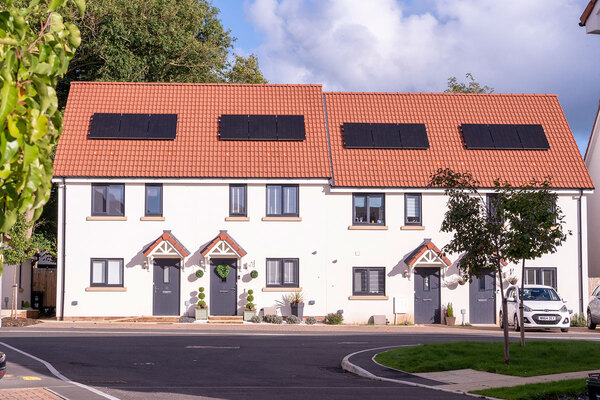
On new homes, the report said 1,410 homes were completed in 2024-25 under the Social Housing Development Programme.
Current building regulations mean that new homes built by housing associations have an average Standard Assessment Procedure (SAP) energy efficiency rating of 83.
“This level of SAP rating is a contributing factor for the higher mean SAP of 72.63 for social housing in comparison to the mean SAP of 65.11 across all tenures of occupied dwellings,” the report said.
It added: “Providing support to housing associations to deliver higher standards in energy efficiency for new social homes is viewed by [the Department for Communities] and the Housing Executive as a vital way of mitigating the effects of climate change, reducing fuel poverty and improving health.”
In January, the government in Northern Ireland announced that it would pay for energy efficiency upgrades in 1,000 low-income homes after adding £2m to its Sustainable Energy Programme.
Sign up to Inside Housing’s Northern Ireland newsletter, a fortnightly round-up of all the key news and insight affecting the Northern Irish affordable housing sector.
Click here to register and receive the Northern Ireland newsletter straight to your inbox.
And subscribe to Inside Housing by clicking here.
Already have an account? Click here to manage your newsletters.
Related stories