You are viewing 1 of your 1 free articles
 Leo Pollak
Why we’re considering building new homes on the rooftops of our existing stock
The housing crisis in Southwark requires the council to look everywhere for space to provide new affordable homes – including rooftops, writes Leo Pollak


 The housing crisis in Southwark requires the council to look everywhere for space to provide new affordable homes – including rooftops, writes Leo Pollak #ukhousingWhy we’re considering building new homes on the rooftops of our existing stock, by Leo Pollak #ukhousingLeo Pollak
The housing crisis in Southwark, London and beyond necessitates the building of affordable homes in every way possible, including new ways of unlocking space to build.
At Southwark we are expanding our council housebuilding programme by beginning discussions with residents on estates where potential new sites have been identified, while trying to maintain a balance of open green space, play areas and storage space on our estates.
While we have also been proactive in building up a strategic land bank for future council housebuilding, we also find ourselves constrained in expanding our holdings further by a land compensation code that sets the valuations for council purchases (compulsory or otherwise) at a price that reflects any alternative or speculative value conceivable to a site.
Read more

This situation has turned our attention to looking anew at what we already have, including taking a critical look at the challenges and opportunities associated with rooftop development.
Councils have traditionally been reluctant to take on rooftop housing at any scale. The anxieties many residents might feel about construction and additional load above their heads could be hard to overcome, leaseholders might challenge the detail of any costs attributable to the development, the numbers of new homes on scheme wouldn’t justify the use of officer time, and so on.
“This situation has turned our attention to looking anew at what we already have, including taking a critical look at the challenges and opportunities associated with rooftop development”
Southwark is taking a different approach to rooftop housing, recognising both the caution and consideration needed to make a credible offer to residents, but also the enormous potential of upward extensions to provide hundreds (if not thousands) of high-quality, durable new council homes on top of existing blocks.
To this end we have adopted a new set of rooftop development principles that define our approach and offer to residents going forward (as well as how we would apply those principles, as far as is practical, retrospectively to our three existing rooftop schemes).
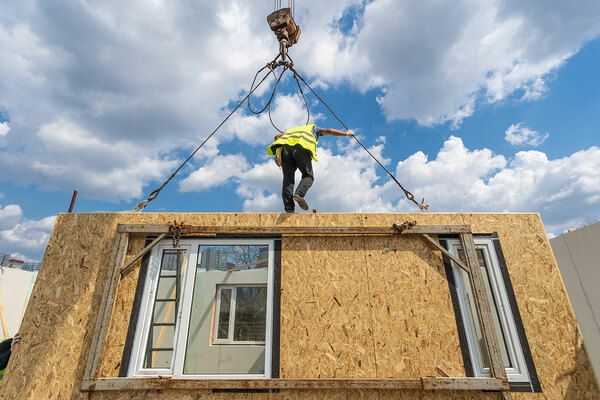
First, we will minimise disruption to existing residents, drastically reducing the works by carrying out most construction offsite, with the ‘on site’ installation – craning new homes in to adapted blocks – taking weeks, rather than months or years.
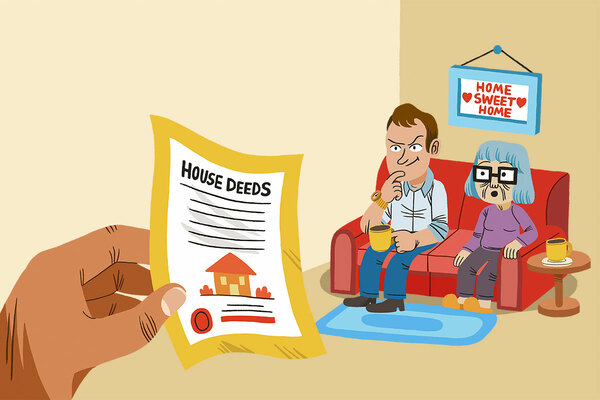
Second, we will offer first dibs on the brand-new rooftop homes to residents living underneath them, with the refurbished vacated homes being made available to people on the wider housing register. This also includes an offer to leaseholders to move the value of their homes upstairs with no rent paid on any difference in value.
Third, we will seek to accompany any rooftop development with improvements to the existing block, with any new roof, lift or landscaping around the block non-rechargeable to leaseholders.
Beyond this core offer we will offer residents full access to all structural and servicing information at all stages to maximise confidence that access to amenities and the integrity of the block are preserved at all times.
“Another attraction of rooftop homes is their relatively low environmental impact. With no need for pile foundations or high-emission concrete, rooftop homes offer a much lower construction impact across the construction supply chain”
We are also developing a new rooftop housing design guide with leading designers and commissioners to tease out the best ways of maximising internal space, complementing and enhancing the ‘host’ block, and building quickly and safely against different materials and methods.
With hundreds of structurally sound, flat-roofed blocks where modest additions could be provided with clear secure access and no amenity impact, we are looking to take a proactive approach, with an enhanced offer that would maximise the benefits and minimise the impacts to residents of rooftop housing.
Another attraction of rooftop homes is their relatively low environmental impact. With no need for pile foundations or high-emission concrete, rooftop homes offer a much lower construction impact across the construction supply chain, as well as opportunities to improve the thermal efficiency of existing homes.
Further than this though, this type of housing offers an alternative way of incrementally increasing density while preserving the embodied energy and carbon of its host building. Redevelopment not only re-releases carbon into the atmosphere, but it also restarts a series of new emissions along the construction supply chain.
Rooftop housing is only one of many untapped dimensions to new housing supply that councils and other house builders need to be pursuing.
We’ll be beginning the conversation discussing these principles for rooftop development to residents across the borough in the coming weeks and months, while retrospectively applying them (as far as is practical) to our three existing rooftop schemes.
Leo Pollak, cabinet member for social regeneration, great estates and new council homes, Southwark Council
Related stories