You are viewing 1 of your 1 free articles
Scottish housing secretary: ‘We’ve been learning a lot from Homes England’
The Scottish government has announced that it will set up a national housing agency in the first year of the next parliament. Ellie Brown speaks to Màiri McAllan, the country’s housing secretary, about what the new agency could look like, what she says on calls with Steve Reed and what her plans are following the election this May


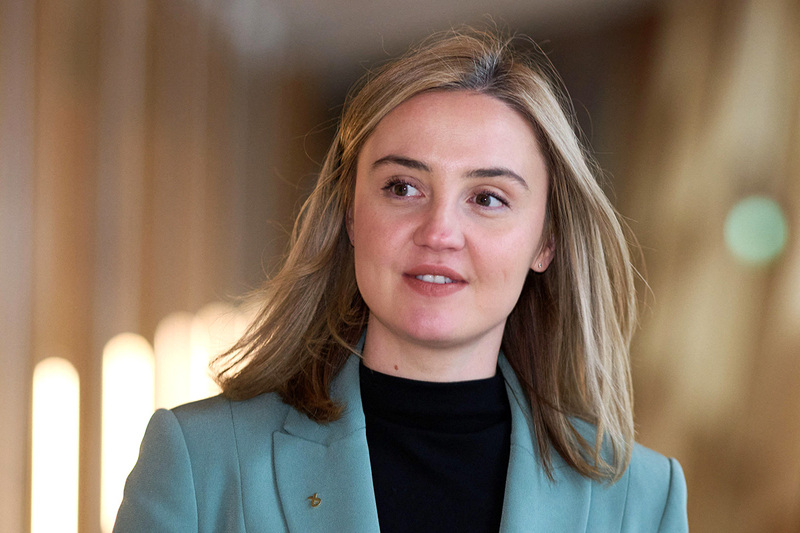 Scottish housing secretary: ‘We’ve been learning a lot from Homes England’ #UKhousingScottish housing secretary Màiri McAllan on what a new Scottish housing agency could look like, what she says on calls with Steve Reed and what her plans are following the election this May #UKhousing
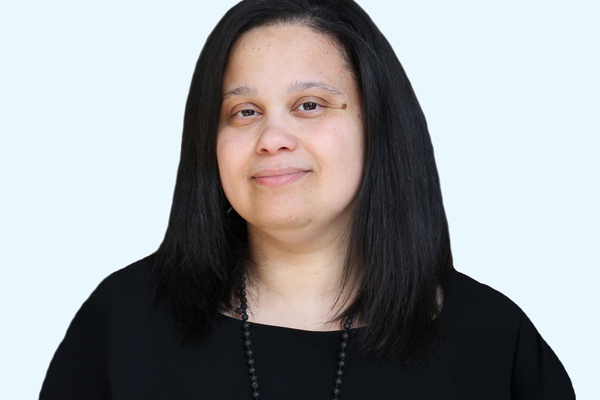
Màiri McAllan became the SNP government’s first housing secretary last June. She took on the role a year into the country’s self-declared housing emergency – and since then statistics on housebuilding and rates of homelessness have continued to worsen.
But speaking to Inside Housing over Teams in early February, the MSP for Clydesdale is focusing on the positives. It is weeks since first minister John Swinney revealed that the administration would be launching a national housing agency, More Homes Scotland, a change that has been hailed by groups across the country’s housing sector.
This, Ms McAllan says, is “a natural progression to everything else that we’ve been working on in response to the housing emergency”.
Work to tackle the crisis during her tenure has included a funding boost and multi-year certainty for the Affordable Housing Supply Programme (AHSP), as well as cash for councils to buy family homes to house some of the 10,000 children stranded in temporary accommodation.
Read more

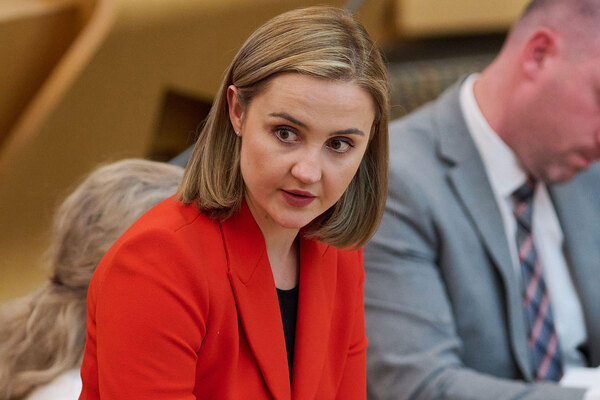
But as she explains, trying to respond on an emergency basis has revealed the limitations of the current system. “[It] can be a little fragmented, and really the housing agency is about trying to bring all of that together,” she says.
She believes that More Homes Scotland will move the dial by pooling expertise and operating at scale, so schemes will come forward quicker and have more homes within them.
“Crucially, I will get more bang for the buck of that massive capital investment,” she says.
Inspiration from afar
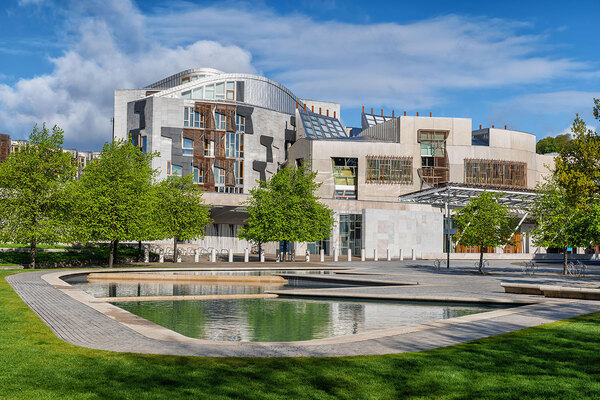
The Edinburgh skyline may dominate the view from her office, but Ms McAllan reveals that she has been looking further afield for inspiration on the new body, which will have powers derived from Scottish ministers.
“We have been meeting with Homes England a couple of times. I met with them, my officials have, so we’ve been learning a lot from them,” she says – although she is quick to note that there are “other models around the world”, and says further discussion of a Canadian-style model is imminent.
While details on More Homes Scotland’s design and operating model are due to be confirmed in March, she expects the Scottish agency to be able to acquire land, probably at a peppercorn amount, and carry out the necessary infrastructure upgrades or remediation to prepare it for new homes.
“And then it was described to me by Homes England, you can pass that back to the local authority as a viable site, which can then be developed,” she explains, adding that the agency will be looking to draw up a “playbook of approaches” for how to do this.
“That’s just one example, but you can see already how we can drive economies of scale, take different approaches to procurement [and] adopt standardisation.”
Ms McAllan says the main partners for developing the model in Scotland are the Convention of Scottish Local Authorities, which represents the country’s 32 councils, and the Scottish National Investment Bank, a state-owned national development bank.
She claims that councils will retain their powers but will be able to take advantage of the “firepower of the agency” to support local developments or bring them together with other local authorities to make a bigger scheme. “It’s not encroaching in any way on what councils already do, it’s just complementing it.”
Asked whether social landlords will be involved and how their voices will be heard, she says that she will work with “everyone with an interest” in the weeks before the planned update to the Scottish parliament, and highlights the role of “invaluable boards” such as the Housing to 2040 strategic board.
“We are very much in a consultation period,” she stresses. “I’m really keen that it’s co-designed.”
The Scottish government estimates that the agency will cost around £2m to set up. It aims for the new body to be operating by the 2027-28 financial year, and Ms McAllan says she is “confident” this can be achieved.
While Homes England is moving to a regional approach for how it distributes money for housebuilding projects, Ms McAllan confirms that in this area at least, More Homes Scotland will not be following suit.
“I’m not in the mindset of creating more layers of devolution as such,” she says. “We are a nimble enough country that I think one agency can serve the whole of the country, coupled together with ministers.
“But what we will continue to have is our local authorities and our regional economic bodies, all of whom will have a part to play in making the case for investment in their areas and taking forward projects.”
A separate issue that has been flagged recently in Scotland is that of underspends in the AHSP. The programme was £327m underspent across the three financial years up to 2023-24. More recent data has not yet been published. The majority of this, some £224m, was for the 2021-22 year and underspends have halved each year since then.
Asked about underspends, Ms McAllan claims that the AHSP has a “really flexible approach”, meaning that money can be moved from one place to another if schemes do not progress. “I don’t ever want us to carry underspends,” she says.
She explains that while, at a council level, projects with the cash that do not go forward could be seen as an underspend in the area, the Scottish government can then move money around the country to make sure it is not lost.
Making Scotland safer
As housing secretary, one of Ms McAllan’s priorities has been safety, especially among groups of people who may be more vulnerable.
She acknowledges that most people experiencing homelessness in Scotland are single men, but adds: “I was concerned with women fleeing domestic abuse. I was concerned with children in unsuitable accommodation, and I was concerned with damp and mould.”
Ms McAllan points to recent changes on these fronts: Scottish social landlords now have the power to evict domestic abusers, Awaab’s Law will be brought in this October, and the number of children in B&Bs and hotels has fallen by 14% – although the overall number in temporary accommodation has not budged and is at record levels.
Ms McAllan also wants to prioritise removing unsafe cladding from people’s homes. Recent statistics show there is slow progress on this in Scotland; as of the end of 2025, just 17 single building assessments (SBAs) have been carried out and interim measures put in place.
The housing secretary is “absolutely determined that the cladding remediation programme move at pace”, and stresses that Scotland is working to the same UK deadline for high-risk buildings: 2029. One delay, she notes, is that Scotland had to bring in primary legislation on this as there are different laws on accessing projects.
She says that “hundreds and hundreds and hundreds” of grant letters have been sent out for more SBAs and the work is done on a “prioritised basis, according to risk”.
Nearly 1,500 high-rise blocks in Scotland are estimated to need remediation, according to the government’s latest update in June last year. The majority of these, around five in six, are expected to need a full set of works rather than partial remediation or mitigation.
But not all buildings are eligible for public funding including cladding assessments, and in November a third of these applications were rejected by the Scottish government, as reported by Inside Housing.
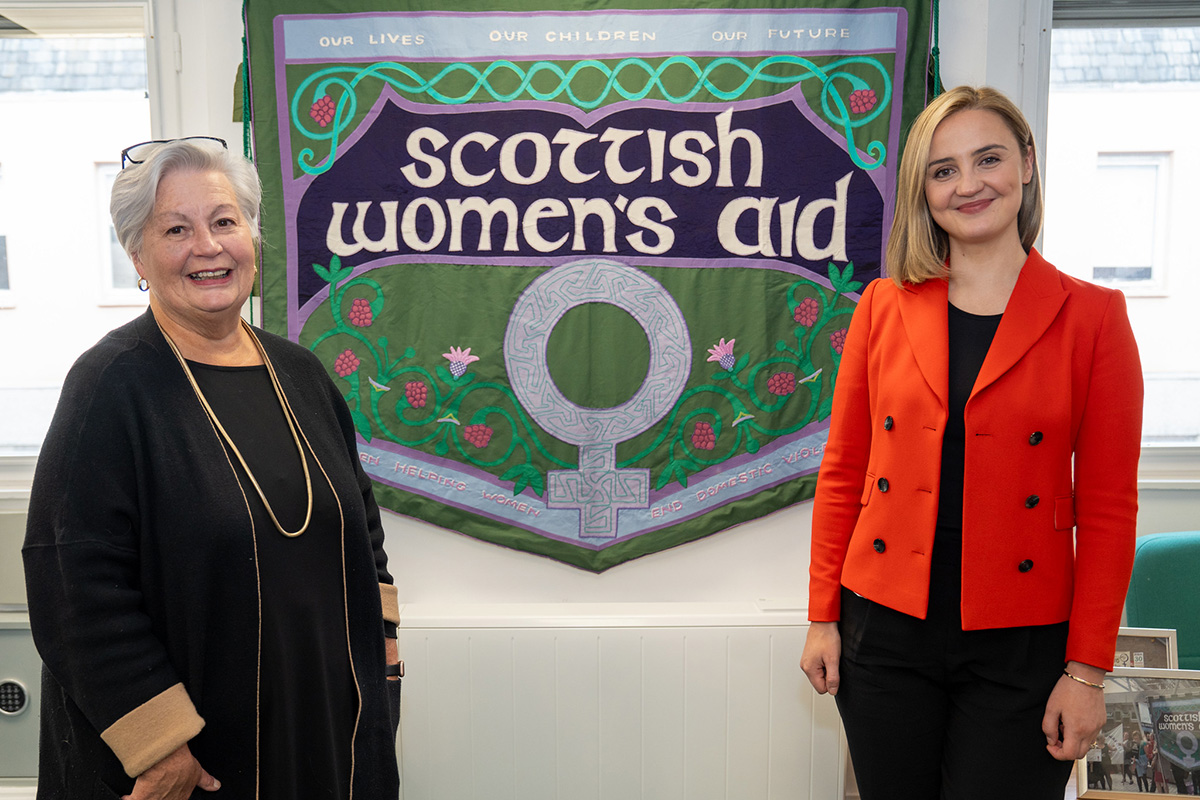
Adaptations to social homes are also an area of focus for the housing secretary, and a housing issue she believes is not talked about enough.
Ms McAllan claims that adaptations, which are the responsibility of councils, are being carried out too slowly for people with lifelong disabilities or developing conditions, and has pledged to review the whole system.
Her work with colleagues south of the border extends beyond developing models for housebuilding; it includes calls with the three other national housing secretaries, who are collectively known as the Inter-Ministerial Group for Housing, Communities and Local Government. The group has met just three times in the past five years, which includes over video earlier this month, according to government records.
Despite having different laws and policies, the four parts of the UK are “in quite similar situations” when it comes to strains on housing supply and demand, and the quartet talk about what works and doesn’t work in solving these challenges.
The calls are also an opportunity for Ms McAllan to raise issues with Steve Reed, the UK housing secretary. One she has flagged is the pressure that frozen Local Housing Allowance (LHA) rates put on Scotland’s social rent sector and those who struggle to rent privately.
Another is the impact of UK asylum policy. Ms McAllan points out that last year, applications to councils by people experiencing homelessness in Scotland fell in every category apart from among those with indefinite leave to remain status, where it grew significantly.
She wants the Home Office to “properly fund” its asylum policy and also calls for longer move-on periods, explaining: “I do fear that with such short time to move on from Home Office accommodation, we’re just creating homeless refugees.”
“I believe really strongly in doing what you can to build the best, strongest, most dynamic economy, creating opportunities and including everybody within the economy that you can”
The statistics, released days before our call, also show that Scottish councils are buckling under the strain of demand on their homelessness services.
Local authorities unlawfully refused temporary accommodation more than 10,000 times last year, with most breaches happening in Glasgow, a major dispersal area for asylum seekers who are granted indefinite leave to remain.
But Ms McAllan stresses that she will not roll back the country’s housing protections because of UK policy: “There’s a debate ongoing about local connection and whether we ought to create the circumstances where people could be referred back to Home Office accommodation elsewhere in the UK.
“But I think that’s wrong in principle, and I think that it would have no effect in practice, because a council might be able to say to someone, you need to go back, but [it] doesn’t necessarily mean that they would, and I fear it would just create more destitution and rough sleeping in our cities.”
Ms McAllan says she has requested a meeting with Mr Reed and Glasgow City Council specifically on this issue.
Glasgow is also where the housing secretary grew up and studied for her law degree, as well as where she set up a Scottish branch of a US social justice law movement called RebLaw. Nowadays, however, she lives in a “totally isolated” area on a hillside in a rural part of her constituency.
The area is where her husband, whom she has known since her school days, is from. “I used to say, ‘Iain, there’s no way I can come and live with you there’, but I honestly wouldn’t change it for the world now, it’s beautiful,” she says.
This must give her an insight into the specific housing challenges of rural areas, I note.
“Definitely,” she replies. “Housing precarity in rural Scotland is not always at the forefront, nor is fuel poverty… where it can be very difficult.”
She has ensured that rural and island housing is the second priority of More Homes Scotland after large-scale affordable housing projects, “because there’s particular need, but also it’s more complicated”.
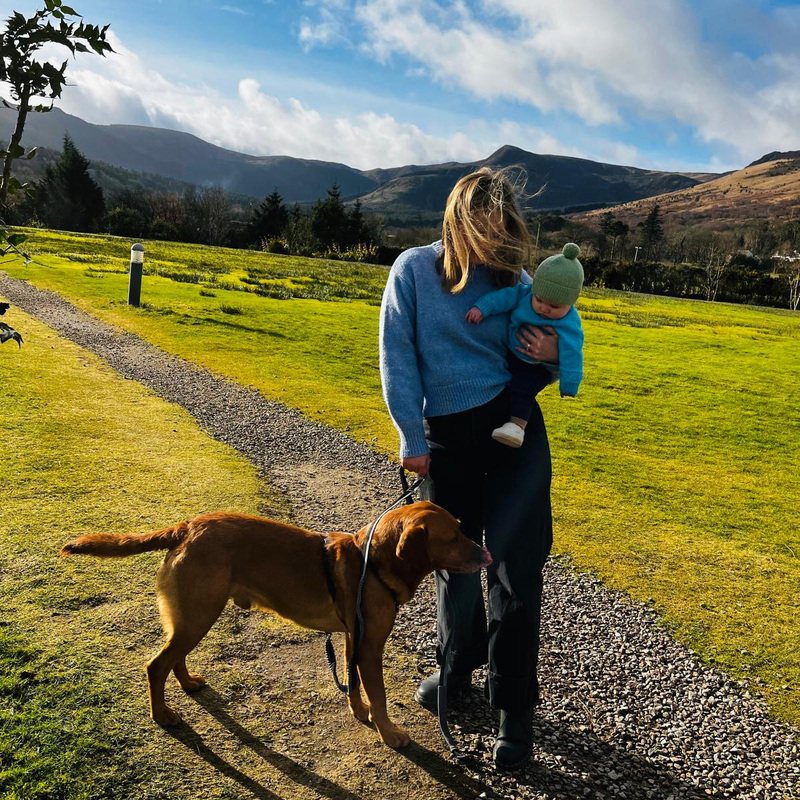
Outside of politics, Ms McAllan enjoys walking in the hills with her dog, but she also claims she has little time to do anything. “It’s very frustrating,” she says.
“I’ve got a little boy, so between being a mummy and cabinet secretary for housing and MSP for Clydesdale, it doesn’t leave a lot of room for anything else.”
Asked what drives her, she says her politics are “very much social democracy”.
“I believe really strongly in doing what you can to build the best, strongest, most dynamic economy, creating opportunities and including everybody within the economy that you can. And I believe, on the other side of that, in redistributing wealth for a fair society,” she explains.
Ms McAllan thinks housing “fits perfectly within that, because it is both a major economic policy, but it’s also the foundation of a life of success and dignity and opportunity”.
It was while working as a property lawyer that she witnessed the importance of homes both to individuals and the wider economy, though as she admits, she did not practice for long.
Ms McAllan’s current cabinet role was only created in June 2025, and the government stressed that the elevation of the portfolio to cabinet level showed how seriously the SNP is taking the issue.
“If we don’t have hope, we don’t have much, and there is hope in these statistics that we are starting to turn things around”
But arguably the choice of Ms McAllan to do the job was just as telling. The 33-year-old is a rising star of the party, having worked as a special advisor to both Mr Swinney and former first minister Nicola Sturgeon.
First elected to the cabinet aged just 28, Ms McAllan has also already held ministerial and cabinet roles in the environment and energy spheres, and some tip her as a future holder of the top job.
In previous interviews she has stressed her belief in current leader Mr Swinney, but also not ruled out a potential leadership bid.
Indeed, around a week after our interview, Ms McAllan confirmed to Scottish media that she would consider becoming deputy first minister following news that the incumbent, Kate Forbes, is due to stand down.
This would not necessarily rule her out from continuing in her current job, however. Only last year, the UK’s former deputy prime minister, Angela Rayner, held the role at the same time as being housing secretary.
Asked by Inside Housing if she would continue as housing secretary after the May elections, Ms McAllan says: “Oh, I would love to.”
“If I were offered the opportunity to serve in housing again, I’d be delighted, yeah, but I’m also laying the groundwork now so that no matter what happens, the industry can go on to succeed, hopefully.”
If she does continue in her post, she is under no illusions about the scale of the task ahead. Referring to the recent homelessness statistics, she says: “I’m in no doubt, there’s a huge amount of work still to be done.
“But I think that we have to have hope. If we don’t have hope, we don’t have much, and there is hope in these statistics that we are starting to turn things around.”
Other recent interviews with politicians
Scottish housing secretary: ‘We’ve been learning a lot from Homes England’
The Scottish government has announced that it will set up a national housing agency in the first year of the next parliament. Ellie Brown speaks to Màiri McAllan, the country’s housing secretary, about what the new agency could look like, what she says on calls with Steve Reed and what her plans are following the election this May
Paula Barker: how Labour can ‘get our sh*t together’ on homelessness
Paula Barker spent less than a year as shadow homelessness minister before Labour came to power. Now she is advocating for homelessness from the back benches. Katharine Swindells meets her in Westminster
Sir James Cleverly interview: regulation is ‘always the wrong answer’
Shadow housing secretary Sir James Cleverly shares his views on Grenfell, the Renters’ Rights Act and the Conservative Party’s pledge to end stamp duty. James Riding reports
Sign up to Inside Housing’s Scotland newsletter
Sign up to Inside Housing’s Scotland newsletter, a fortnightly round-up of all the key news and insight affecting the Scottish affordable housing sector.
Already have an account? Click here to manage your newsletters.
Related stories