How to maximise the value of shared ownership
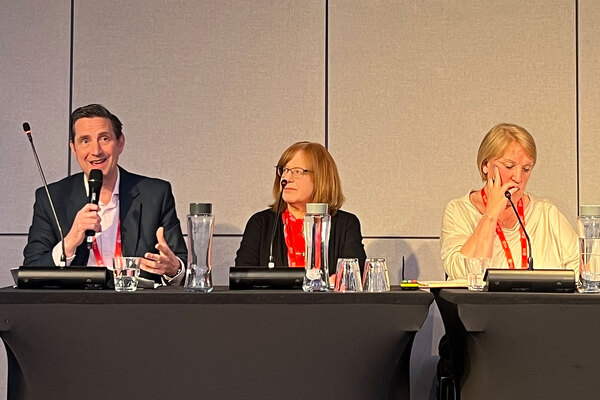
The part-own/part-rent tenure has an image problem. Inside Housing’s expert panel discusses how to overcome it, in a roundtable in association with Pepper Money. Photography by Belinda Lawley


 The part-own/part-rent tenure has an image problem. Inside Housing’s expert panel discusses how to overcome it, in a roundtable in association with Pepper Money (sponsored) #UKhousing
In association with:

Shared ownership is well into its fifth decade. Introduced in the Housing Act 1980, more than 200,000 households in England live in a shared ownership property, while 2023-24 saw 20,364 shared ownership completions – the second-highest number on record.
There is no doubt that this tenure continues to help people into homeownership. In the same year, more than three-quarters of shared ownership sales were by first-time buyers.
Despite its successes, however, the tenure has its critics. Last year, a House of Commons report stated that shared ownership had “failed to deliver” on its central promise of affordable homeownership “for too many people”, citing reasons such as rising rents, complex leases and repairs and maintenance costs.
And many residents themselves have reservations. Last year, the English housing regulator found that fewer than half of shared owners were satisfied with the overall service from their housing provider, compared with seven in 10 social tenants.
Read more


Meeting targets
What does the future hold for this tenure – and how can the sector maximise both its reach and value?
The industry must work out how the tenure can contribute to the government’s 1.5 million home target and boost homeownership and its place in the wider housing market, but also tussle with adapting shared ownership to today’s market conditions and policy environment.
Inside Housing brought together a panel of experts to discuss these challenges and to chart a path forward, in a roundtable discussion in partnership with specialist mortgage lender Pepper Money.
Kelly McCabe, managing director of The Mortgage People and co-founder of The Shared Ownership Exchange, comes straight out to bat for the tenure. “Twenty years ago, shared ownership was the black sheep. It wasn’t talked about,” she says. “Fast-forward to now, and it’s great it gets the coverage it does.”
But, she adds, it still has an image problem. “I still see that banded about, that shared ownership is something to leave. But it can and should be a long-term housing solution for people, and mortgage lenders need to come on that journey, too.”

Ms McCabe dislikes what she considers to be an excessive focus on ‘staircasing’ – the process of shared owners increasing their equity stake in the property.
“Sometimes I feel when we talk about shared ownership, we lose the essence – that it’s flexible, that it can fit different people at different times, and if we keep focusing on staircasing like that’s the whole point… The exit of shared ownership is not the goal of shared ownership,” she says.
Staircasing is not the be-all and end-all of this tenure, agrees Sarah Turner, head of shared ownership marketing at for-profit housing provider Sage Homes and an associate at ARK Consultancy.
She argues for a reframing of what shared ownership is about: “We don’t need to look at somebody and say, ‘Your income has gone up, you need to staircase, as that’s how we measure success.’ We have to say, ‘Did it enable you to move on to the next thing in your life?’ That’s the data piece we often miss.”
Dissatisfaction rates
What has driven the high dissatisfaction rates among shared ownership householders? Sue Phillips, founder of Shared Ownership Resources – an organisation that champions shared owners – says poor marketing and selling practices over the years have left a mark.

“Some of the selling of shared ownership has historically been questionable,” she says. “I think that’s an ongoing conversation in this particular sector; what lies behind the claims made for the product and where does that information come from? Where it comes from marketing, what’s necessary to allow informed decision-making on the part of homebuyers?
“People come in with expectations that are partly shaped by the marketing, and we don’t track to what degree it meets their expectations,” Ms Phillips adds. “That’s a really significant gap in the data.”
Ann Santry is chair of the Shared Ownership Council, a voluntary initiative that has developed a code of best practice for the shared ownership sector, which was launched last month.
“I think shared ownership has a really bright future, but if we don’t sort out the customer feedback and tensions, then we are always going to be on the back foot,” she says.
“What we have found is the inconsistency between how housing associations market [and] how they manage. A lot of focus is on the front end, which is about development and sales. There has been far less focus on what it’s like to live as a shared owner, and what it means for you in terms of resales and staircasing.”
The customer should be central to this debate, agrees Amy Nettleton, assistant development director at Aster Group and co-founder of The Shared Ownership Exchange with Ms McCabe.

“We want [shared ownership] to be better for the customer,” she says. “Yet we get together and we talk about these homes as units, and when people are going to get out of them… and so I think we need to look about how we are talking about this product.”
It is also important to examine the impact of consistent policy changes on the shared ownership sector, Ms Nettleton adds. “These constant tweaks, this tinkering around the edges – we are starting to see a real emergence of lower average shares [as buyers put less equity in] and that hits our viability.”
Another change, she says, is to the shared ownership client base, requiring the sector to re-evaluate what success means for this tenure. “Yes, it’s still driven by first-time buyers, but we are seeing a huge increase in people leaving relationship breakdowns, or downsizing… We have to evolve with that as well, because there’s going to be a cohort of our buyers that never want to staircase.”
As with every tenure, demand for shared ownership outstrips supply. “Don’t make the mistake of ignoring what’s going on out there with the shared ownership market,” says Rupi Hunjan, chief executive of specialist mortgage broker Censeo Financial. “We see it at ground level more than anyone. We see the demand. It’s 20 people [applying], and only one gets a property. The rest are disappointed.”
Attracting outside investment could scale up shared ownership delivery; but that requires providing potential backers with additional information, says Stanimira Milcheva, director of the Affordable Housing Hub, which brings together academics, industry experts and stakeholders to work collaboratively on solutions to housing affordability, and professor of real estate finance at University College London (UCL).

Data gaps
“There are a couple of gaps in the data,” she says. “The major one is really on staircasing… It’s really hard to track, and that is very, very important if we want to scale up shared ownership, especially if we think about turning shared ownership into a securitisable product, packaging it into bonds and selling it further.”
Patchy data is a problem, agrees Ms Santry. “It ought to be captured centrally by Homes England or the regulator,” she says. “What I see on the Shared Ownership Council is lots of really good work in pockets… and people don’t share terribly well, or if they do, it’s only part of the picture. It could be much more coherent if the government said, through one of its agencies, ‘OK, on your annual returns we want to see this.’ That would be a major step forward.”
It is an easy win, suggests Ms Nettleton. “It’s just a couple of extra lines on something we already do, and we have the data. That would solve a lot of problems.”
Wider market
The government lacks sufficient understanding of the role shared ownership plays in the wider housing market, adds Robert Barnard, relationship director at Pepper Money. His organisation is compiling a white paper that aims to fill these knowledge gaps.
“The thing that concerns us a little bit is, when you’re looking at this injection [of funding] into affordable housing, there seems to be a nervousness and quietness with regard to shared ownership. And that worries me,” he says. “There seems to be a lot of talking about social rental properties, but very little about shared ownership.”

“I think the way the government sees shared ownership is very much in comparison with affordable rent,” says Dr Milcheva. “And then the question is: why divert money into shared ownership? Why not just fund affordable and social rent? To demonstrate this financially, we need the data, we need the modelling, and the government does not have that.”
Shared ownership is a very complex model, she adds. “We need a more homogeneous product.”
Ministers must be persuaded of shared ownership’s benefits, Ms Santry argues.
“There are some quick wins if the government is behind this,” she says. “[But] the reputation of shared ownership is damaged. There is no doubt about it in the minds of some politicians, and those are the people we have to influence to try and make a step change.”
The code that has been developed by the Shared Ownership Council will attempt to remedy this, she adds.
It is not a moment too soon, according to Ms McCabe, because that reputational damage could obscure the contribution the tenure has made to date.
“My concern is always that if we bash shared ownership too much, then [we risk losing]… the shared ownership that we’ve got,” she says. “There are so many people that are served by this, and so many people that are served well.”
Participants
Martin Hilditch (chair)
Editor, Inside Housing
Robert Barnard
Relationship director, Pepper Money
Rupi Hunjan
Chief executive, Censeo Financial
Kelly McCabe
Managing director, The Mortgage People
Stanimira Milcheva
Director, Affordable Housing Hub, and professor in real estate finance, UCL
Amy Nettleton
Assistant development director, Aster Group
Sue Phillips
Founder, Shared Ownership Resources
Ann Santry
Chair, Shared Ownership Council
Sarah Turner
Head of shared ownership marketing, Sage Homes, and associate, Ark Consultancy
Sign up to our Best of In-Depth newsletter

We have recently relaunched our weekly Long Read newsletter as Best of In-Depth. The idea is to bring you a shorter selection of the very best analysis and comment we are publishing each week.
Already have an account? Click here to manage your newsletters.
Related stories