You are viewing 1 of your 1 free articles
The Building Safety Regulator has a plan to speed up remediation decisions. But will it work?
The Building Safety Regulator’s Remediation Improvement Plan aims to get remediation projects moving through its system faster, and fix its long-standing problem with delays. Peter Apps examines whether these changes will do the job


 The Building Safety Regulator’s Remediation Improvement Plan aims to get remediation projects moving through its system faster, and fix its long-standing delay problem with delays. Peter Apps examines whether these changes will do the job #UKhousing
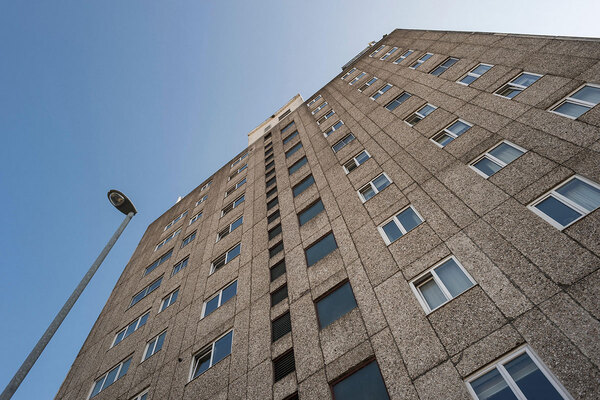
“It was a small job: two 1960s tower blocks and quite a small scope of work in each of them. We shouldn’t have needed more than two months on site,” says Jonathan Stewart, a director and a building regulations principal designer at Cowan Architects.
“We started work on the design drawings in mid-2023 and submitted the application to the Building Safety Regulator [BSR] in January 2024.”
The team did not get approval until December 2024. By then, the team had to wait for the principal contractor to finish other jobs. Getting the team remobilised took months, and when changes became necessary during the job, the change control process also stalled.
Work didn’t complete until July last year. As of today, Cowan is still waiting for final sign-off from the regulator.
“That’s just one example of how something which should have taken two months on site has gone on for nearly three years,” Mr Stewart says.
This is far from the only example of how the BSR is slowing down projects.
Amy Farr, head of building safety and construction compliance at commercial property management firm Workman, says: “I’m working on multiple student housing buildings where there are significant instances of breached compartmentation.
“But it will take up to a year to get the surveys, designs, tendering and then sub-contractor design to a place where we can submit them to the BSR, and then months after that before we get approval to start working. All that time the risk will still be there, and that just doesn’t seem right to me.”
These buildings – and hundreds of others like them – are the reason delays to remediation work on high-rise buildings have become such a headache for the BSR and the sector.
Work that, by its nature, needs to be dealt with quickly is getting stuck in the mire of the regulator’s systems, with costs spiralling, residents waiting for years for their homes to be fixed and risks remaining unaddressed as a result. This problem is long-standing – and we covered it in detail in October.
Read more
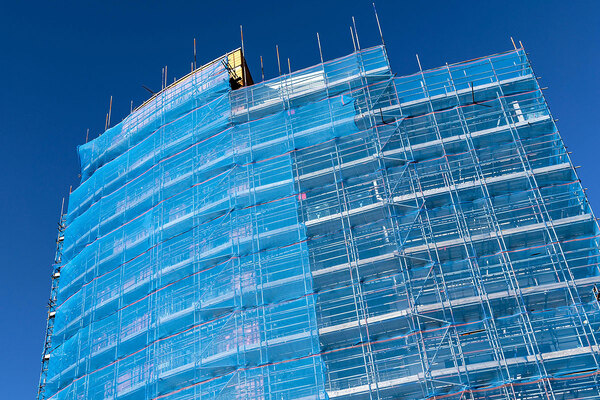

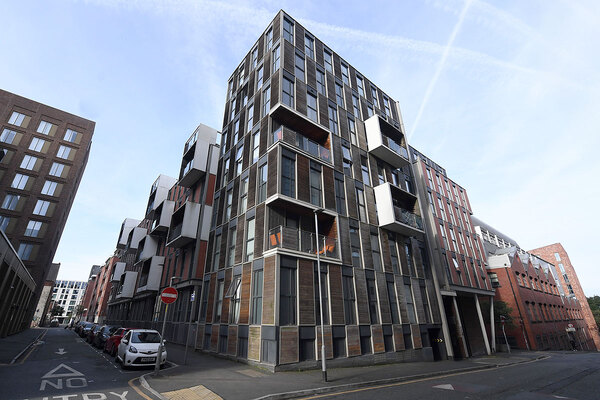
In response to these concerns, the BSR put out its Remediation Improvement Plan earlier this month, which it hopes will change this picture and get remediation work through its systems much faster. So what changes is it planning to make? And will they work?
John Palmer, operations director at the BSR, sets out a now familiar diagnosis when asked what initially went wrong with the regulator’s system to cause the delays: with limited guidance about its requirements, applicants struggled to understand the regulator’s requirements in the early years, which left it spending much longer per project than it had anticipated.
This combined with a much higher volume of ‘Category B’ work than expected – less extensive projects that still come within the statutory definition of ‘building work’ – putting further strain on the regulator’s capacity.
And then it faced a serious struggle putting together the ‘multidisciplinary teams’ used to assess projects. The regulator assigns a ‘regulatory lead’ from its own team to each application, but they are supported by (as a minimum) a senior building control officer, a structural engineer and a fire engineer.
There were not enough of these professionals, they were booked up and even when they were brought in from external organisations, they could not always dedicate the time needed to the projects the BSR had for them. The result was extraordinarily lengthy delays stretching to well over a year in the worst cases – sometimes with very little work being done at all for months.
“That distributed model was causing us real issues. It’s like managing a football team when all your players also play for other teams and you’ve got no idea what their schedules are”
This is the challenge the regulator needs to fix. Its Remediation Improvement Plan borrows from some changes already brought in for new build projects – in particular the establishment of an ‘innovation team’ and the batching of applications that remove the need to build up a multidisciplinary team from scratch every time a new application comes in.
This will see the regulator either contracting professionals for set days per week and handing them projects, or batching up applications and sending them off to a single consultancy in bulk.
“That distributed model was causing us real issues. It’s like managing a football team when all your players also play for other teams and you’ve got no idea what their schedules are,” Mr Palmer says.
“The innovation unit approach means you are cutting out that dead time upfront when nothing is happening, because we’re building up the team to look at it.”
This approach has paid dividends in the new build side of the BSR’s work already: it has almost cleared a historic backlog of cases and brought the approval time for non-complex new build projects down to 22 weeks.
On top of this, the regulator is bringing in more of its own staff to reduce caseloads. Mr Palmer says this is getting easier: “We were having real trouble recruiting people. That’s changed now, and we’re regularly getting emails from people who want to come and work with us.”
A more difficult area is a move to permit more ‘approvals with requirements’ to at least get projects started. This is used where one or two elements of a remediation job prove difficult to resolve, but much more of the work is approved and ready to go. An approval with requirements allows the work to start and the approval for the outstanding elements to come in due course.
However, this does create a risk.
“Sometimes you can only confirm an issue when we’re on site and opening up more, and this allows us to do that,” Mr Stewart says.
“But there is a potential risk that if contractors or project managers think it can become a tool for not providing enough detail at the application stage, I can imagine them saying ‘just get the application in and we’ll deal with that later’. I think it’s important the BSR stay quite tight on that.”
“We’re acutely aware of that danger,” says Mr Palmer when I put this to him. “The guidance we’ve set out for our teams is to make judicious use of approval with requirements. There’s a danger otherwise of it being a slippery slope and that leads us back to where we were, with people working out designs as they go.
“We also don’t want to create another stop/go point, where if you hit delays discharging requirements while teams are on site, then costs are being incurred. Our absolute overriding guidance to teams is that it cannot be used for things that are fundamental to compliance. If it’s fundamental to compliance, that’s not an approval with requirements, it’s a rejection.”
Finally, the regulator is bringing out additional guidance for applicants within the coming weeks, which will deal with practical lessons about what is and isn’t expected for a successful application.
“It’s going to be the real details about what we often find are missing from applications, from real-world examples – things like wind loading, how you tie your new cladding to the structure, [whether] the structure [is] going to be able to take the weight. Time and again we see these missing,” Mr Palmer says.
“A big part of the challenge is still around ‘what does good look like’, and a lack of consistency in how that’s being applied”
So will these changes be enough in the real world? There are long-standing frustrations in the industry about a general lack of efficiency from the BSR.
“Many problems our members experience in the Gateway system are not design or law-related, but about gaps in BSR processes and a lack of communication with applicants and within the BSR. These bureaucratic problems have caused delays at both Gateway 2 and 3 approvals,” says Ben Oram, technical director at architecture firm Buckley Gray Yeoman and founder and chair of the Architectural Technical Leads Group, a forum for architects to discuss technical issues.
Account managers have recently been invited to give a direct contact to some larger contractors and housing associations – but this is not available to everyone.
Beyond these generalised issues, the people Inside Housing spoke to identified two main challenges with the current approach: the regime’s consistency and proportionality.
Inconsistency, because different multidisciplinary teams will come to different conclusions and have different requirements about the appropriate level of information and evidence required.
“We feel there is a lot of inconsistency from their side in the way they assess the applications,” says Pauline Niesseron, assistant director of building safety at Riverside.
“Some of the teams seem to be very diligent and say ‘you need to give me x, y and z’, whereas some are taking more pragmatic approaches. That makes it very difficult for contractors to plan appropriately.”
Dan Hollas, director of building safety at Clarion, says: “A big part of the challenge is still around ‘what does good look like’, and a lack of consistency in how that’s being applied. The Remediation Improvement Plan is a step in the right direction, but I’m not sure it fully gets to that issue yet.”
Mr Palmer says the regulator is introducing convention committees, where leads from each sector can work out common approaches and solutions to regularly arising problems. “They will go through it and say that we suggest that if BSR comes across this in an application, this is what you might ask for, this is what you might want to see,” he says.
But for some, clear guidance and set standards around what is and isn’t expected would make the system run far more smoothly.
“I know they don’t want to spoon-feed the industry, but if people are told what they need to do, what the key mistakes are and what the regulator wants us to do, we will make sure we bake that into our applications. We do need hand-holding through things sometimes. We’re not all blue-sky thinkers,” Ms Farr adds.
Proportionality problem?
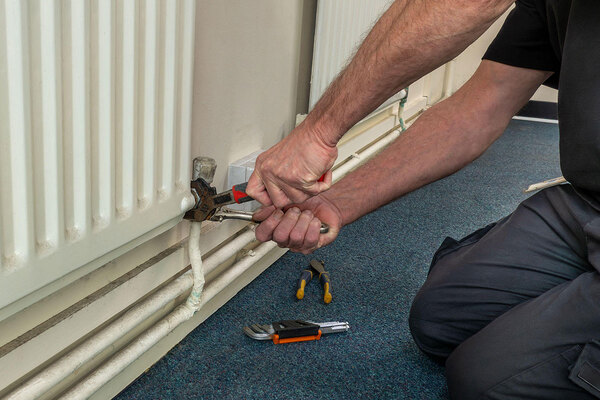
Then there is the question of proportionality. The BSR oversees all building works to high rises, not just fire safety remediation. This means a huge volume of work – from replacing pipes in communal boilers to window upgrades – comes under its remit.
For Clarion, which has to complete fire risk assessments on dozens of high rises every quarter, many of which will create the need for work, this is a problem.
“The whole process appears to be disproportionate. It is holding up the amount of fire remediation work we can undertake,” Mr Hollas says.
“I think that it’s imperative that we get a rational approach to minor works in [high rises]. We do fire door replacements and compartmentation works day in, day out and if we can get a competent contractor working to approved details that can sign off their work, that would speed up making these [high-rise buildings] so much safer for the residents,” Ms Farr adds.
Ms Niesseron gives one example of a building where Riverside is simply removing timber decking.
“It’s not proportionate to go through a whole application for that when it doesn’t have any structural impact,” she says.
Mr Palmer acknowledges this issue, but says the BSR has been given limited flexibility by the legislation.
“The legislation is narrowly drafted in many respects, so while we always want to be a pragmatic and proportionate regulator, sometimes the legislation just doesn’t allow us any latitude,” he says, noting that moving a smoke alarm 30cm in a flat would be considered Category A work and would – in theory – require the same level of paperwork as the construction of The Shard.
The regulator is working with the Ministry of Housing, Communities and Local Government on changing the regulator’s remit, noting that it does not want to encourage an effective black market where people simply bypass its systems because they are too expensive and long-winded.
Various consultations are open, some of which will see works downgraded to a Category B (which requires less oversight) and others that may move things such as fire door replacements and fibre-optic cabling out of the BSR’s remit altogether and into the remit of some form of competent persons scheme, where approved contractors are licensed to carry out the works without individual approval from the regulator.
“All of the problems we have to fix are because things weren’t done properly in the first place”
Fire doors are a particularly long-standing bugbear in this area, because of how important it is to replace them swiftly, and some are starting to step out of the BSR’s oversight by insisting that they constitute emergency works.
“We had an application for a Victorian higher-risk building, an apartment block, just six storeys with shops on the ground floor,” says one advisor to a housing association, who prefers not to be named.
“All the apartment doors were found not to be fire-rated properly. So the client wanted us to put in an emergency repairs application to replace the fire doors, which the BSR rejected, saying it didn’t count as an emergency repair. But the building didn’t have fire doors, and that would have left it unsafe for a year or more.
“The client was advised by their lawyers to draft a document saying, ‘We believe that this constitutes an emergency repair and we’re going to go ahead and do it’. And sure enough, we didn’t hear anything back from the BSR. The housing association wasn’t prepared to take the risk of something happening while they waited for approval.”
While moving towards a more consistent and proportionate approach may take time, some changes could be introduced more quickly.
“The good news is that these issues could be improved quickly if the correct processes are put in place and communication improved,” Mr Oram adds. The BSR is confident its plans will result in noticeable change relatively quickly.
“I think what we’d like to see is determination times for remediation works to be around the 12 to 15-week mark by September or October of this year. But alongside that we want approval rates of 60-65%, because it’s no good if we’re deciding applications more quickly but rejecting them all,” Mr Palmer says.
Is there a risk that a target for positive approvals creates an incentive for the BSR to approve applications that are not, in fact, suitable?
“We had a big internal debate about that,” Mr Palmer says. “But we’re here to enable the sector as much as we are to police it. So that’s why part of our plan is to work with applicants to improve the quality coming in through the door, so it is our problem if the application quality is poor.”
The BSR is not the only one with targets. The government has set a strict target of 2029 for cladding remediation to complete and is planning to bake this into law, with serious penalties for breaching it. But to meet this target, the BSR’s plan is going to have to work.
“If they are still taking this amount of time to make the determinations, it’s going to be a massive challenge to get everything done by 2029,” Ms Niesseron says.
Overall though, despite its problems, she sees the value of what the system is trying to achieve.
“All of the problems we have to fix are because things weren’t done properly in the first place,” she says. “I don’t think this is an industry that you can expect just to self-regulate. The focus on quality, on compliance, on building regs is right. For me, the problem is the proportionality element.”
Mr Hollas agrees: “On fire door replacements and smaller jobs, it’s much more difficult to see the advantage [of the BSR’s involvement].
“But for external wall system work and larger remediation jobs, I think there is an advantage. If you look at our buildings, the problem is primarily not around design, it’s about quality of construction. So it’s that bit that is critical to the success of the regime.
“Undoubtedly, if they can improve that, it would make our buildings safer and better constructed. It is an important process but it’s got to work.”
Join our Building Safety & Tenant Voice stage at Housing 2026, on 22-25 June. Sign up here.
Sign up to Inside Housing’s Building and Fire Safety newsletter
Sign up to Inside Housing’s fortnightly Building and Fire Safety newsletter, now including a monthly update on building safety from Inside Housing’s contributing editor Peter Apps.
Already have an account? Click here to manage your newsletters.
Related stories