You are viewing 1 of your 1 free articles
Grenfell Inquiry day 39: firefighters reveal dramatic rescues of children
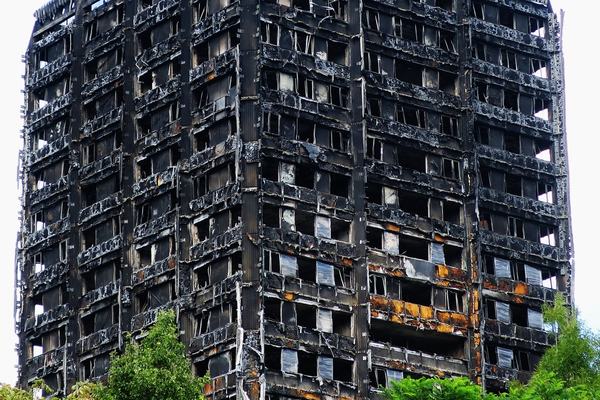
Children – and firefighters’ efforts to rescue them – were at the centre of evidence at the Grenfell Inquiry today.


 Grenfell Inquiry day 39: firefighters reveal dramatic rescues of children
Key points
- Firefighters describe difficulties rescuing families with children from the tower
- They describe carrying children down flights of smoke-filled stairs
- Firefighter recalls disorientation in building and feared “we could easily die here”
Firefighter Ben Gallagher, of Paddington Fire Station, told of how he helped rescue a mother and daughter from the ninth floor. He went to the foot of the tower to get breathing apparatus for the pair, but was initially concerned the breathing apparatus would not fit on the child.
“I was taken aback because the daughter was so young and I thought I don’t know how we will put a set on her,” he told the inquiry. “They were very, very calm.”
Read more

Another firefighter Agnel Fernandes told of the dramatic rescue of a small girl.
“As we start to descend the staircase firefighter Williams passed me the child,” he recalled in his written evidence. “I took hold of the child in my right arm. The child was quite light in weight and I was able to carry her by one arm. I kept my left arm around the staircase handrail using it as a guide.
“As we descended I could hear further screams for help. I was unable to help, my priority was to get the small child to safety at the bottom and I knew I was running low on oxygen myself. I had to keep moving.”
He later revealed that she was “unconscious and frothing from the mouth” as she was taken away by medical professionals. Mr Fernandes admitted the incident “troubled him for days” afterwards but he later found out the child survived.
Meanwhile, in evidence submitted by crew manager Raoul Codd he recounted the “freaky” sight of three children unharmed on one of the higher floors of Grenfell Tower.
Mr Codd was asked to reach floor 22 but as he climbed the stairwell lost his partner and found the children.
“As I [went] up the stairs I got to the landing, I was just about to turn the turn to the next flight of stairs when these three kids appeared… the eldest one just cuddled me, I think out of relief.
He added: “It was really weird, they had no signs of smoke inhalation and they weren’t coughing. It was freaky.”
Meanwhile firefight Theresa Orchard, of Soho Fire Station, said she feared for her own life with her rescue efforts on floor 14.
“By the time I had gone backwards and forwards a couple of times, I had lost where the door was that I had come in,” she wrote. “So you’ve got then try and find your way back to it. That is when I stopped at Flat 94. That was quite a scary moment.
“I could not see the numbers. You could not see the layout of the floor. Everything was heavily smoked-logged. Pete was in front of me. Eventually we found the flat that we had been sent to. It was a process of following the wall.
“At this stage, because we had gone back and forward to try and find the flat. I was quite disorientated. I remember thinking as we’ve got no water. There were no communications. I remember thinking we could easily die here.”
The Grenfell Tower Inquiry
Closing statements
Day 85: victims' lawyers attack the fire brigade
Further expert evidence
Including some additional evidence from emergency call handlers, bereaved and relatives
Day 84: further evidence from survivors and relatives
Day 83: swift evacuation of tower possible if residents alerted
Day 82: initial fire was extinguished but then returned to the flat
Day 81: overheating fridge-freezer most likely cause of fire
Day 80: fire doors installed did not match product tested
Day 79: resident advised to stay put despite fire in flat
Day 78: insulation and cladding material below required standard
Day 77: molten plastic spread blaze down tower
Day 76: 'stay put' should be dropped when fire spreads across floors
Other witness evidence
Police, ambulance, gas suppliers, council, TMO and call room operators give evidence
Day 75: call room operators give evidence
Day 74: further evidence from TMO officers
Day 73: TMO boss failed to pass information to firefighters
Day 72: fire finally extinguished when gas switched off
Day 71: further questions over stay put advice
Day 70: the police evidence
The bereaved, survivors and relatives’ evidence
Day 69: video shows smoke billowing through fire door
Day 68: KCTMO removed self closing mechanism and never replaced it
Day 67: gaps in cladding fixed with duct tape
Day 66: 'don't fix broken system with a sticking plaster'
Day 65: survivor dragged disabled man down nine floors to safety
Day 64: KCTMO 'did not replace broken fire door'
Day 63: foam insulation inside cladding 'exposed' says survivor
Day 62: father gives harrowing account of son's death
Day 61: council’s management organisation slammed for faulty electrics
Day 60: stay put advice ‘led to deaths’, residents say
Day 59: residents describe problems with new windows
Day 58: survivor describes how daughter saved his life
Day 57: firefighter evidence ‘a slap in the face’, says survivor
Day 56: relations with contractor were ‘toxic’
Day 55: resident 'never happy' with stay-put advice
Day 54: tenant gives evidence about housing association
Day 53: stay put advice 'felt like trap'
Day 52: resident saved by son's phone call
The firefighters’ evidence
Day 51: firefighter feared encouraging residents to jump
Day 50: the LFB commissioner
Day 49: fire chief reveals frustration over lack of building plans
Day 48: internal fire spread 'bigger story' than cladding
Day 47: fire officer considered evacuating crews over building collapse fears
Day 46: 'we were improvising' senior firefighter admits
Day 45: firefighter urged for abandonment of 'stay put' policy
Day 44: firefighter recalls radio signal difficulties
Day 43: call hander 'uncomfortable' with insisting residents stay put
Day 42: residents only told to leave if they called fire brigade back
Day 41: breathing equipment delay 'hampered rescues on upper floors'
Day 40: chiefs told firefighters to abandon policy
Day 39: firefighters reveal dramatic rescue of children
Day 38: firefighters issue aplogies to families
Day 37: council 'unable to provide tower plans'
Day 36: QC defends inquiry process
Day 35: Javid would welcome interim recommendations
Day 34: water from hose 'too weak' to reach the flames
Day 33: 'oh my god, we've been telling people to stay put'
Day 32: further fire fighter describes lack of equipment and low water pressure
Day 31: 'incredibly difficult' task of recording information outlined
Day 30: struggle to maintain control over rescue operation described
Day 29: fire service 'overwhelmed' by survival guidance calls
Day 28: 'the building beat us'
Day 27: firefighters 'forced to abandon plans to reach roof'
Day 26: poor signage hindered rescue efforts
Day 25: water pressure left firefighting equipment 'like garden hose'
Day 24: decision to abandon 'stay put' explored
Day 23: TV images 'could have assissted' rescue effort
Day 22: description of hectic scenes in the control centre
Day 21: account from the fire service 'nerve centre'
Day 20: firefighter describes 'huge volume' of calls from trapped residents
Day 19: firefighter 'given no training on cladding fires'
Day 18: evacuation would have been 'huge catastrophe'
Day 17: firefighters describe access and lift issues
Day 16: scenes of carnage likened to 9/11
Day 15: firefighters recount trauma of survival guidance calls
Day 14: firefighters describe spread of blaze
Day 13: firefighters recall radio difficulties
Day 12: "it was like a war zone"
Day 11: questions raised over fire fighters' radios
Day 10: watch manager emotional under questioning
Day nine: lead firefighter 'not trained in stay put policy'
The expert reports: authors give evidence to inquiry
Day eight: where the fire started
Day seven: what was in the cladding?
Day six: the cause and spread of the fire
Day five: expert highlights key issues
Day four: firefighters defend response to fire
Day three: council and contractors appear for the first time
Day two: lawyers for the survivors make their case
Day one: expert evidence released on cladding and stay put
The commemoration hearings
30 May: Grenfell Council 'recognised it should not house disabled victim above four storeys'
29 May: Anger on day six of the Grenfell Inquiry
25 May: Grenfell families 'forced to live in chimney with stay put policy'
24 May: Grenfell family complained about father being housed on 17th floor
23 May: Tributes to children on third day of Grenfell hearings
22 May: Emotions run high as Grenfell bereaved shown footage of the tower burning
21 May: Grenfell victims share tributes as inquiry opens
Never Again campaign
In the days following the Grenfell Tower fire on 14 June 2017, Inside Housing launched the Never Again campaign to call for immediate action to implement the learning from the Lakanal House fire, and a commitment to act – without delay – on learning from the Grenfell Tower tragedy as it becomes available.
One year on, we have extended the campaign asks in the light of information that has emerged since.
Here are our updated asks:
GOVERNMENT
- Act on the recommendations from Dame Judith Hackitt’s review of building regulations to tower blocks of 18m and higher. Commit to producing a timetable for implementation by autumn 2018, setting out how recommendations that don’t require legislative change can be taken forward without delay
- Follow through on commitments to fully ban combustible materials on high-rise buildings
- Unequivocally ban desktop studies
- Review recommendations and advice given to ministers after the Lakanal House fire and implement necessary changes
- Publish details of all tower blocks with dangerous cladding, insulation and/or external panels and commit to a timeline for remedial works. Provide necessary guidance to landlords to ensure that removal work can begin on all affected private and social residential blocks by the end of 2018. Complete quarterly follow-up checks to ensure that remedial work is completed to the required standard. Checks should not cease until all work is completed.
- Stand by the prime minister’s commitment to fully fund the removal of dangerous cladding
- Fund the retrofitting of sprinkler systems in all tower blocks across the UK (except where there are specific structural reasons not to do so)
- Explore options for requiring remedial works on affected private sector residential tower blocks
LOCAL GOVERNMENT
- Take immediate action to identify privately owned residential tower blocks so that cladding and external panels can be checked
LANDLORDS
- Publish details of the combinations of insulations and cladding materials for all high rise blocks
- Commit to ensuring that removal work begins on all blocks with dangerous materials by the end of 2018 upon receipt of guidance from government
- Publish current fire risk assessments for all high rise blocks (the Information Commissioner has required councils to publish and recommended that housing associations should do the same). Work with peers to share learning from assessments and improve and clarify the risk assessment model.
- Commit to renewing assessments annually and after major repair or cladding work is carried out. Ensure assessments consider the external features of blocks. Always use an appropriate, qualified expert to conduct assessments.
- Review and update evacuation policies and ‘stay put’ advice in the light of risk assessments, and communicate clearly to residents
- Adopt Dame Judith Hackitt’s recommended approach for listening to and addressing tenants’ concerns, with immediate effect
CURRENT SIGNATORIES:
- Chartered Institute of Housing
- G15
- National Federation of ALMOs
- National Housing Federation
- Placeshapers
Related stories